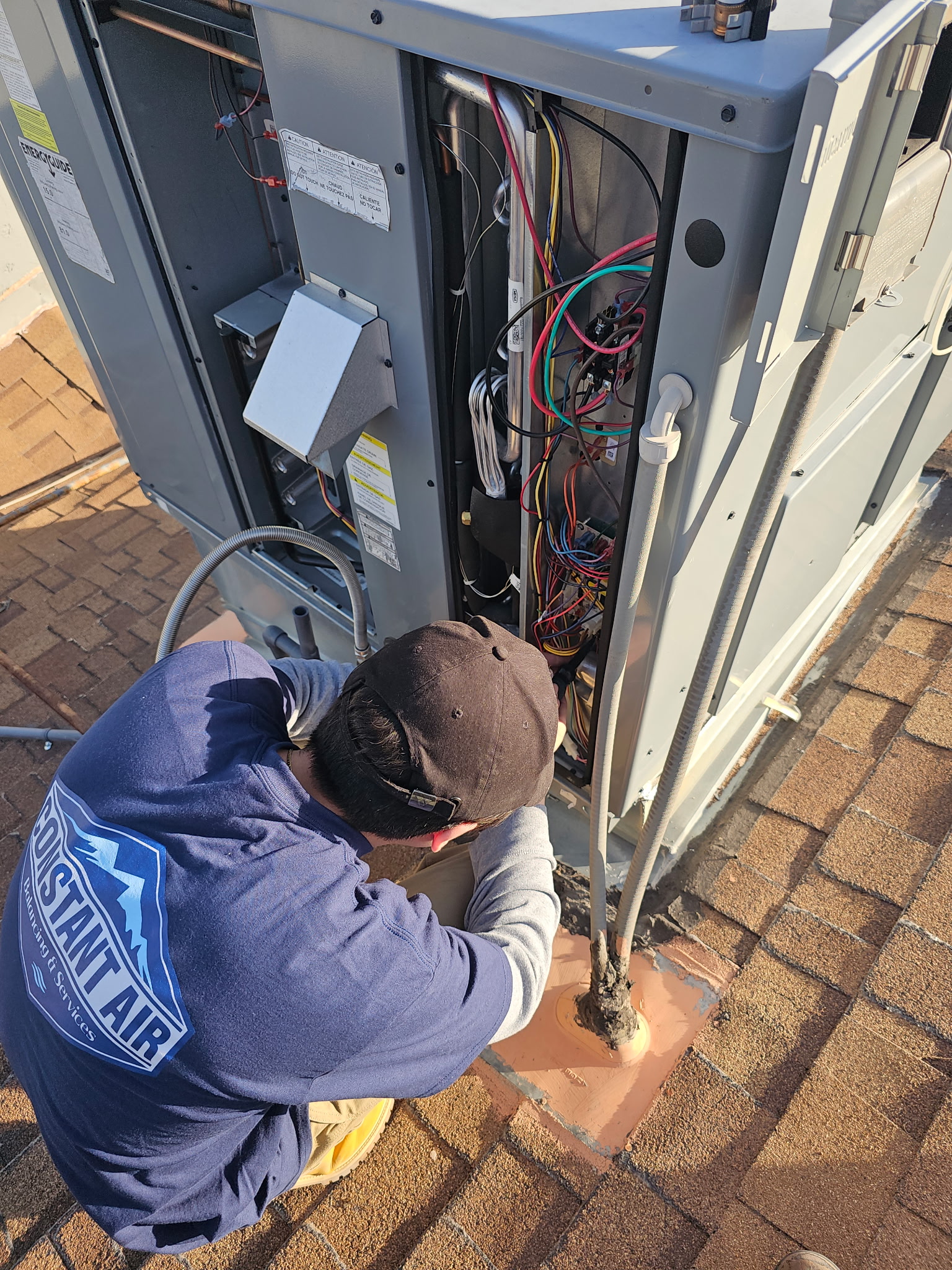
An evaporative cooler works by adding moisture to outside air. That physics stops paying off when the monsoon humidity arrives in July and August, which is exactly when you want cooling most. Refrigerated air works regardless of outdoor moisture but needs sealed ductwork, a return path, and electrical the old house may not have. We decide by looking at the roof, the duct, the panel, and how the house is actually used.
Older houses across Paradise still carry a boxy evaporative cooler on the roof, and plenty of owners are perfectly happy with it in May. By the second week of July the phone rings. The unit is running flat out, the house is humid, and nobody can get comfortable.
The question we get asked is which one is better. That is the wrong question. Both do real work under the right conditions, and the decision belongs to the specific building, not to a general preference.
Two Different Machines Doing Two Different Things
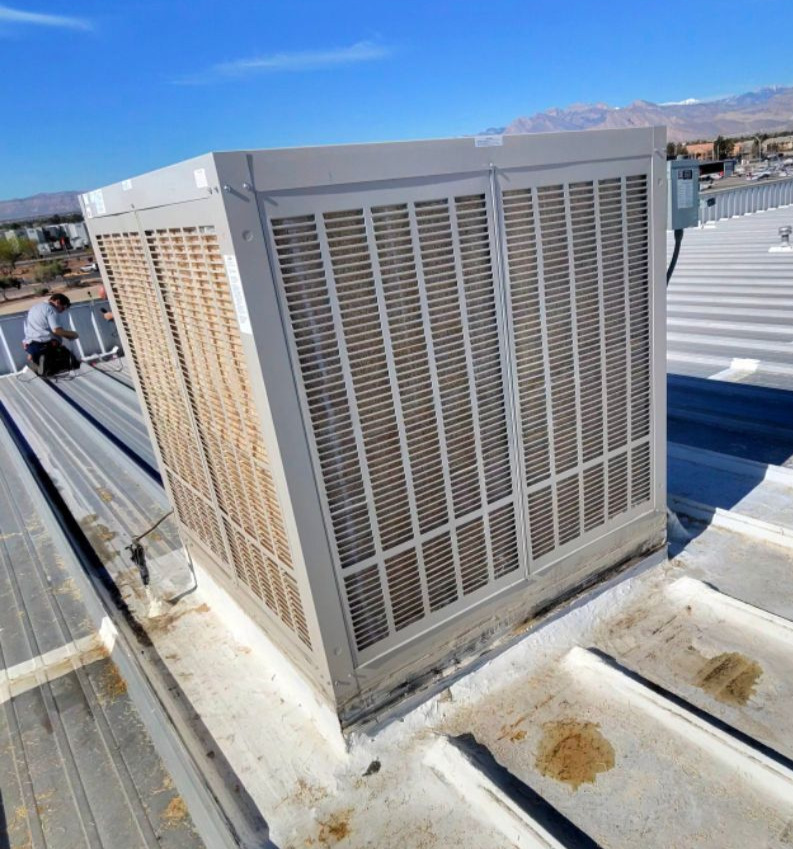
An evaporative cooler pulls outside air through wet pads. Water evaporates, that evaporation takes heat out of the air, and the now-cooler and much wetter air gets pushed into the house. The house has to leak that air back out, usually through a cracked window or a relief vent, or the whole thing stops working. It is a one-pass system: outside air in, inside air out, continuously.
Refrigerated air does something else entirely. It takes the air already inside your house, pulls it across a cold coil, removes both heat and moisture from it, and sends it back. Nothing has to be open. The heat leaves the house through the outdoor condenser instead of through a window.
That difference explains almost every complaint we hear. A house running evaporative cooling cannot be sealed up, so dust and outside air come in with it. A house running refrigerated air can be sealed, which is better for comfort and for filtration but puts every bit of the load on the ductwork and the equipment.
Where the Evaporative Cooler Still Wins
We do not rip these out on principle. In dry spring and fall weather an evaporative cooler moves a lot of air for very little electricity, and the constant supply of fresh outside air is genuinely pleasant. For a detached garage, a workshop, a covered patio, or a building that gets used seasonally, it is often still the right machine.
It also has a maintenance rhythm that people either keep up with or do not. Pads, the water distribution system, the float, the bleed line, and the pump all need attention every season, and Las Vegas water is hard enough that scale builds fast on all of it. A cooler that has been neglected for three summers performs so poorly that owners conclude evaporative cooling does not work, when what they have is a service problem. Before we recommend a conversion we check whether the existing unit is actually being asked to run in fair condition.
What Changes When the Humidity Shows Up
Evaporative cooling depends on the air being dry enough to absorb moisture. When outdoor humidity climbs, the pads cannot give up as much water, the temperature drop across them shrinks, and the unit keeps pushing air that is only slightly cooler and considerably damper than what went in. Inside the house that reads as sticky and stagnant.
For a lot of Paradise households that is the deciding week of the year. If the house is livable ten months out of twelve and miserable for the two you most need it, the machine is not matched to the use. Add the urban heat island effect that properties near the Strip, along Maryland Parkway, and in the neighborhoods surrounding UNLV contend with, and the margin gets thinner still. Evaporative cooling is measured against the outdoor air temperature, and if that temperature is elevated by pavement and buildings holding heat into the night, the ceiling on what the cooler can deliver comes down with it.
What a Conversion Actually Involves
This is where people are surprised, so we go through it in detail before anyone commits.
The duct. Evaporative duct is sized for high volume at very low pressure, and it is often oversized, unsealed, and routed without much regard for pressure drop because there was almost none. Refrigerated air runs at higher static pressure and cannot tolerate that leakage. Some of the existing duct is reusable and some is not, and a pressure test tells us which. Our duct leakage testing is usually the first thing we schedule on a conversion.
The return. A swamp-cooled house may not have a return duct at all, because the air was leaving through a window. Refrigerated air needs a real return path sized for the equipment, and finding room for it in a 1960s or 1970s floor plan is often the hardest part of the job.
The roof opening and the electrical. The curb where the cooler sat has to be closed properly or adapted, and the roofing detail matters in a climate that goes from 110 degrees to a hard monsoon downpour. On the electrical side, the old cooler may have run off a small circuit that will not carry a condenser and air handler, so the panel gets evaluated early rather than on install day.
The load. We size from the building, not from what was on the roof. Square footage, glass, orientation, insulation, and how the rooms are used all go into it. Guessing high creates a system that short cycles, never dehumidifies properly, and wears itself out. We walk the whole scope on the HVAC installation side before committing to equipment.
How We Make the Call
We come out, get on the roof, and look at the existing unit and the curb. We open the attic or the plenum and pressure test the duct. We look at the panel. We ask how the house is used, whether anyone is home during the day, and whether there is a room that has always been a problem, because that tells us something about the distribution before we test it.
Then we lay out what each path costs you in work, not in adjectives. Sometimes the answer is that the cooler needs a season of proper service and the duct needs sealing, and that solves the complaint for a fraction of the effort. Sometimes the duct is unsalvageable and a conversion means most of a new distribution system, and you deserve to know that before you start. Either way the recommendation comes with readings attached. If you want to see how we approach existing equipment first, the Paradise repair page covers the diagnostic side.
Questions About Converting
Can I keep the evaporative cooler and add refrigerated air?
Some houses run both, using the cooler in the dry months and the refrigerated system in the humid ones. It works, but the ductwork and controls have to be designed so the two systems do not fight each other, and the roof still carries two machines to maintain. We size that arrangement carefully or not at all.
Will my old ductwork work for refrigerated air?
Sometimes partly. Evaporative duct is usually larger than a refrigerated system needs and almost always leakier than it can tolerate. We pressure test it and give you the number rather than an opinion. Sealing and resizing sections is common; total replacement happens when the runs are collapsed or undersized for the new load.
Is the roof curb a problem after the cooler comes off?
It is a detail worth doing right. The opening either gets properly closed and roofed over or adapted to carry the new equipment, depending on the design. A curb left half-finished is a leak waiting for the first monsoon, so we treat it as part of the job rather than a loose end.
The Short Version
Neither machine is wrong. The evaporative cooler is a good fit for dry air and a building that can breathe; refrigerated air is the fit when the humid weeks matter and the house can be sealed. Let us test the duct and look at the roof before you decide.
Have Us Test Before You Choose
Roof, duct, panel and load, all measured. 28 years of Clark County houses and what each one actually needs.
Free Quote (702) 840-5163HVAC service in Paradise · More posts · Call us about a conversion