Paradise Indoor Air Quality
You dust the whole place on Saturday and by Sunday afternoon the film is back on the coffee table. That is not a housekeeping problem. It usually means the system is pulling unfiltered air from somewhere it should not, and no product on a shelf fixes that until somebody finds the leak. We test first: duct pressure, filter bypass, what the blower can actually handle. The equipment conversation comes after the numbers, if it comes at all.
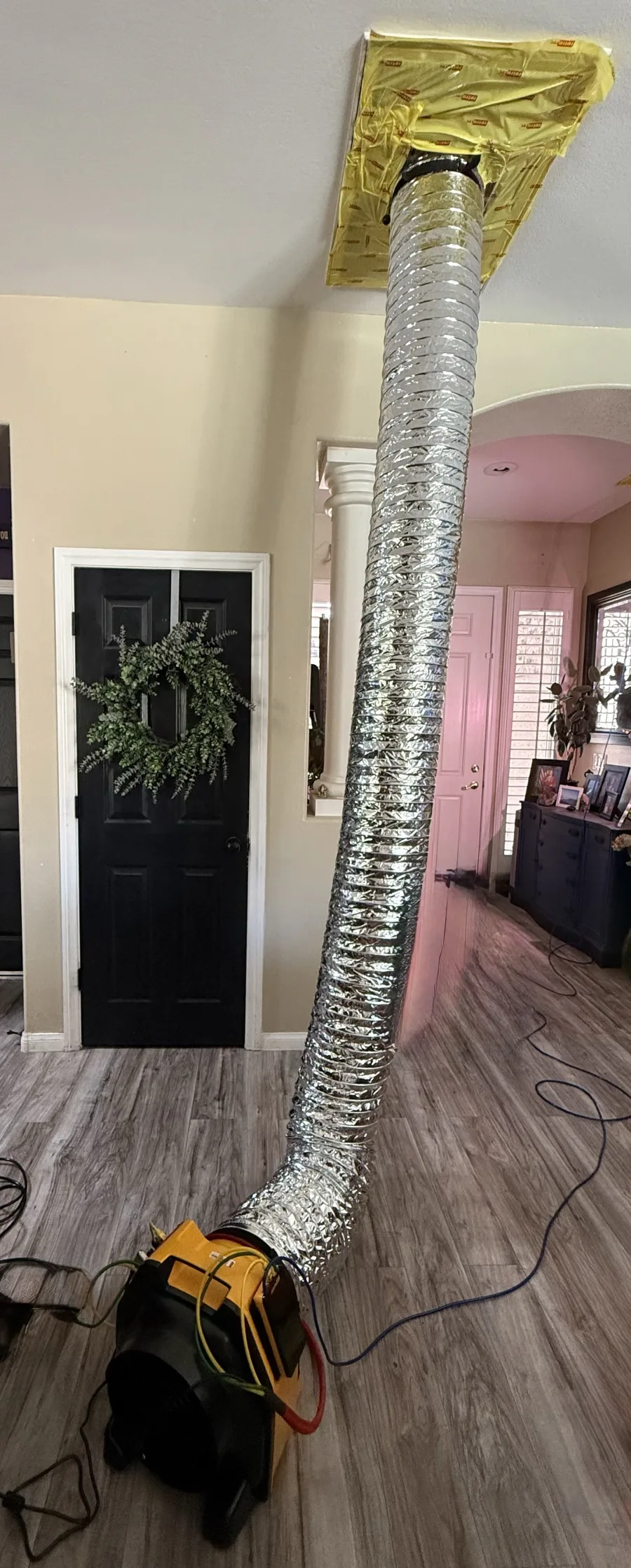
The Dust Is Telling You Where the Leak Is
Return ductwork operates under negative pressure. Every joint, seam and boot on the return side is being actively pulled on whenever the blower runs, so any opening becomes an intake. In a Paradise house with the return duct routed through the attic, that means the system spends the summer drawing 140-degree attic air, insulation fibers and fine desert dust straight past the filter and into the rooms you live in.
This is why the dust comes back so fast. Your filter is doing its job on the air that reaches it, and a meaningful share of the air never does. It enters downstream of the filter through a gap the size of a pencil, multiplied across a dozen joints. Cleaning harder does not touch the source, and neither does a purifier plugged into the hallway.
The correction is not glamorous. We locate the openings, seal them properly, and re-test to confirm the leakage number actually moved. Sealed return duct is the single change that most often ends the cycle in older Paradise construction, where the original ductwork has frequently never been tested at all.
Testing Comes Before Any Product Recommendation
An air quality visit here starts with instruments, not a catalog. We pressurize the duct system and measure how much air it loses, which turns a vague complaint into a number we can act on and compare against after the repair. We read static pressure across the filter and the coil, because that tells us how hard the blower is already working before anyone adds restriction to it.
We look at where the return actually pulls from, whether the filter seats correctly or leaves a bypass gap around its frame, and how the air is distributed once it gets moving. Then we tell you what the readings mean. Sometimes the answer is a repair and nothing else. Sometimes it is a filtration change the system can carry. Occasionally the honest answer is that your air is fine and the dust is coming through a door.
We will not sell you a purifier to cover a duct problem. Selling a product before measuring is how a homeowner ends up with expensive equipment bolted to a system that is still pulling attic air, and it is the single most common thing we get called in to unwind.

A Better Filter Can Make Your Air Worse
The intuitive upgrade path is to buy the densest filter on the shelf. It is also the one that causes the most damage, and it happens constantly in Paradise homes. A filter rated for fine particles restricts airflow by design. Put one into a system whose duct was sized for something far less restrictive and the blower cannot pull its rated air through it.
What follows is predictable. Static pressure climbs, airflow across the coil drops, the far rooms stop getting their share, the equipment runs longer for less result, and in cooling weather a starved coil can freeze. Meanwhile the negative pressure at the filter rack gets stronger, so if there is any gap around the filter frame, more air bypasses it than before. The upgrade delivers less filtration than the cheap filter it replaced.
Static pressure readings settle this in minutes. If the system has headroom, we say so and a higher-rated filter is a good move. If it does not, the options are a deeper media cabinet that filters well at low resistance, duct corrections that give the blower room to breathe, or standalone equipment that treats air without adding restriction. As an Aprilaire dealer we install whole-home products built for a desert climate, but which one, and whether you need one at all, is a decision the measurements make.
Winter Static, Cracked Wood and Humidity
The other half of the complaint list here has nothing to do with particles. Dry indoor air in a Paradise winter produces shocks off every doorknob, split cuticles, sore throats in the morning, gaps opening in hardwood, and a piano that will not hold its tuning. The heating season makes it worse, since warming already dry desert air drops the relative humidity further still.
Whole-home humidification connects to the ductwork and treats every room the system serves, which is a different proposition from a tank you refill in the bedroom. Sizing it correctly matters, and so does the control strategy, because overshooting in a tight modern condominium creates condensation on the coldest surfaces in the building. We size to the actual volume and the actual construction.
Humidity is also worth checking when someone in the house has allergies, because comfort at a given temperature changes with moisture content. What gets called a temperature problem in one room is sometimes a humidity problem, and sometimes it is genuinely airflow, which is why these visits often turn into air balancing work once the readings are in. Tell us what you are noticing and we will bring the instruments that answer it.
Questions We Hear on Paradise Air Quality Calls
Why does dust come back a day after I clean?
Almost always because unfiltered air is entering the system downstream of the filter. Return ductwork runs under negative pressure, so every gap on the return side becomes an intake, and in a Paradise home with attic-routed duct that means attic dust and insulation fibers get pulled in continuously. Cleaning more often does not touch the source. Finding and sealing the openings does.
Will the highest rated filter I can buy fix it?
Often it makes things worse. A dense filter restricts airflow by design, and if the duct was not sized for that resistance the blower cannot pull rated air through it. Static pressure rises, the far rooms lose airflow, and stronger suction at the rack pushes more air around the filter frame instead of through it. We read static pressure first and then tell you what the system can carry.
How do you test duct leakage?
We pressurize the duct system with a calibrated fan and measure how much air escapes, which converts a vague complaint into a number. That number tells us how much of your conditioned air is being lost and how much unconditioned air is being pulled in. After sealing we run the test again, so the improvement is documented rather than assumed.
Do air purifiers actually help?
They help with what they are designed for, once the underlying problem is handled. A purifier treating air that is being contaminated continuously by a leaking return is fighting a losing battle. We test the duct first. If the system is tight and you still want the extra treatment for allergies or smoke, we install Aprilaire and Reme Halo LED products and we will tell you honestly what each one addresses.
My condominium is small. Is this still worth doing?
Yes, and sometimes more so. Modern condominiums near the Strip are built tight, which means less air exchanges naturally and whatever is generated indoors stays longer. Older Paradise apartments have the opposite issue, with original ductwork that has never been tested. Both benefit from knowing what the system is actually doing, and testing a small unit takes less time than a house.
Why is my house so dry in winter and what can be done?
Desert air is dry to start with and heating it lowers the relative humidity further, which produces static shocks, dry throats and gaps in hardwood flooring. A whole-home humidifier ties into the ductwork and treats every room the system serves rather than one bedroom. Sizing it to the actual volume and construction matters, because too much moisture in a tight building condenses on cold surfaces.
Have us test your Paradise system before you buy anything
Call the office, send a message, or look through the gallery to see the diagnostic work we do across Clark County.
Related Work Across Paradise
All Paradise, NV services · Indoor air quality across the valley · See our work · Book a test
The Ground We Cover Around the Strip
Paradise takes in the Las Vegas Strip, UNLV and the neighborhoods along Maryland Parkway, and the housing runs from 1960s apartments to modern condominiums. Urban heat island effects raise the cooling load here, and older construction near downtown often has original ductwork that has never been properly balanced or tested. We have spent 28 years learning those patterns across Clark County and we bring calibrated instruments to every Paradise call.