Enterprise HVAC Repair
Enterprise HVAC repair is its own discipline. The township covers Mountain’s Edge to Southern Highlands across ZIP codes 89178 and 89183, and almost every home here was built in two distinct waves: the 2005-2014 production-builder wave and the 2015-2024 semi-custom and luxury wave. The repair approach is different for each, and we diagnose before we replace anything. No part swaps based on a guess.
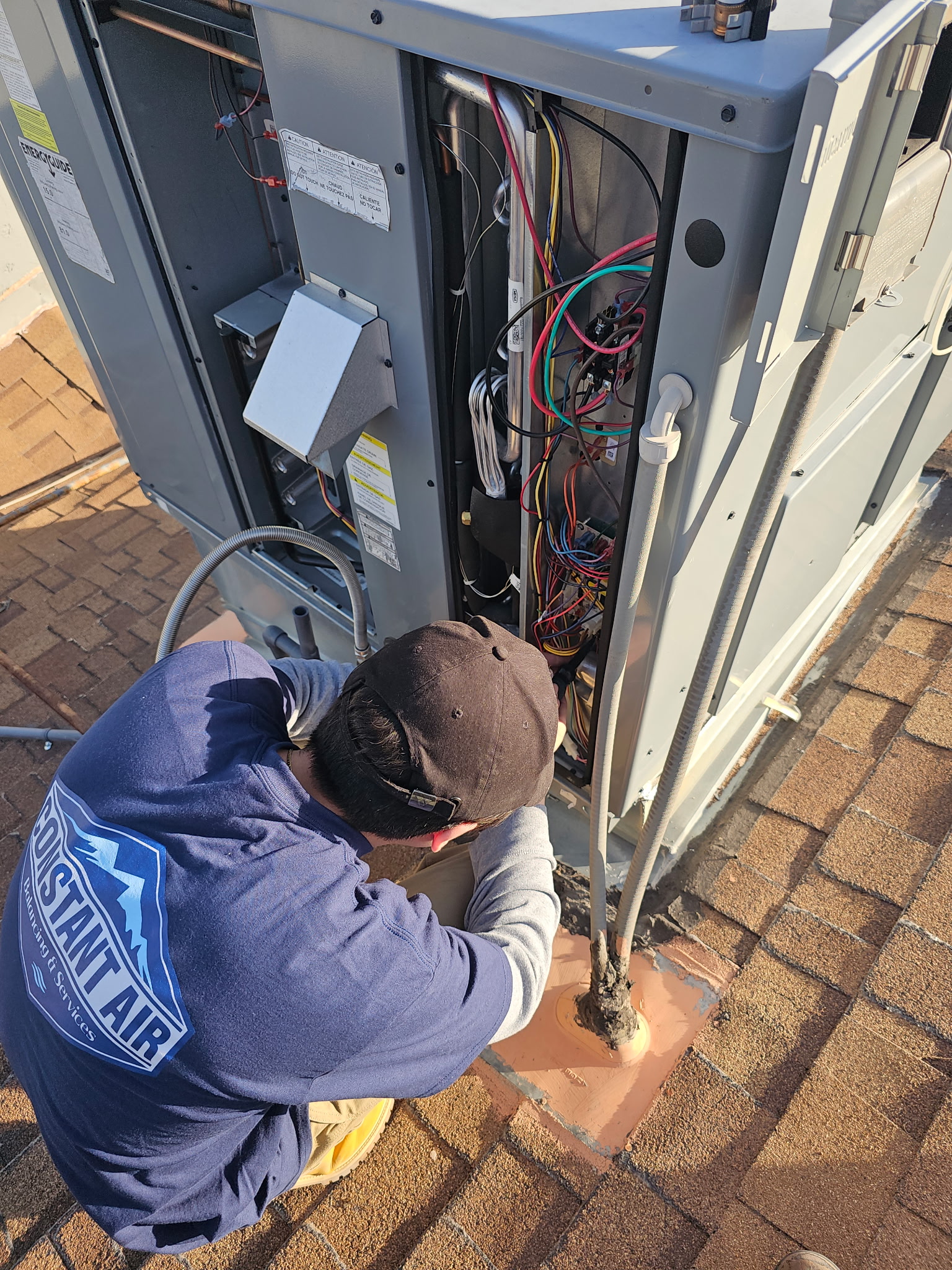
Enterprise HVAC Repair: The Brand Standard
Enterprise HVAC repair is a different conversation than the one homeowners get from most valley contractors. The township is one of the youngest in unincorporated Clark County, which means the equipment is younger on average and the conversation about repair-versus-replace is almost never as simple as “the system is old, just buy a new one.” Many Enterprise homes have systems still under warranty, or just out of it, and the right repair extends useful life by years. The wrong repair extends nothing and lines up another service call in 90 days.
Our brand standard for Enterprise repair starts with one rule: diagnose before quoting. Every Enterprise service call begins with a full system measurement: supply and return temperature split, refrigerant pressures matched against ambient temperature on the manufacturer’s chart, static pressure across the air handler, voltage and amp draw at the compressor and blower, capacitor microfarad reading against spec, and visible inspection of the evaporator coil, condenser coil, and condensate drain. No part is recommended for replacement before the readings tell us why that part is failing. We have walked off jobs where a previous contractor had recommended a compressor replacement on a system that turned out to need a capacitor, one of the cheapest parts on the truck.
The brand standard also covers what happens after the repair. NCI air balancing is not an upsell on a repair call, but if the repair touched any airflow-affecting component (blower motor, blower wheel, evaporator coil, ductwork, return air filter housing), we measure airflow before we leave and document the result. That is what 28 years of doing this in the Las Vegas Valley looks like in practice.
Property Archetypes We Repair in Enterprise
Enterprise has two dominant residential archetypes and we repair both routinely. The first is the Mountain’s Edge production home: built between 2005 and 2014 by KB, Pulte, Lennar, Beazer, Richmond American, or Toll Brothers, typically 1,800 to 2,600 square feet, two-story stucco with tile roof, builder-installed Goodman or Carrier base-tier equipment, flex-duct trunk and runs in the attic, single thermostat zone. These homes have predictable wear patterns: capacitor failures in years 6 through 10, blower motor bearing noise in years 8 through 12, evaporator coil pinhole leaks (often warranty-replaced) in years 7 through 11, compressor stiction in years 10 through 14.
The second archetype is the Southern Highlands semi-custom or luxury home: built between 2008 and 2024, often 2,800 to 5,200 square feet, single or two-story with stone-and-stucco facades, frequently with multiple HVAC zones, hard-pipe trunk ducts converting to flex at the boots, mid-tier or premium-tier equipment (Lennox XC21, Carrier Infinity, Trane XV20i), and sometimes integrated humidification or whole-house dehumidification. These systems are more sophisticated and the failure modes are more varied: zone-damper actuator failures, communication-board faults, blower ECM motor controller failures, refrigerant TXV (thermostatic expansion valve) hunting. Repairs require techs who understand communicating systems and have the manufacturer service tools, not just a multimeter.
Why the Master-Planned Builder Spec Zone Matters
Master-planned communities like Mountain’s Edge and Southern Highlands have something most older valley neighborhoods do not: a builder spec zone, meaning a documented HVAC equipment specification that every home in a given phase was built to. That spec is recorded with the Clark County building department, and we can look it up. For repair purposes, that matters because we know exactly what equipment was installed originally, what ductwork sizing was used, what the design heat load was for that home model, and whether any factory issues were documented during the build phase (some Mountain’s Edge phases had a coil-leak issue that triggered a manufacturer service bulletin and a class of warranty replacements).
This is the difference between Enterprise repair and central-valley repair. In a 1965 Paradise home, every system is a surprise: the original equipment is long gone, replacements have come and gone, ductwork has been modified by who-knows-how-many previous contractors. In a 2009 Mountain’s Edge home, the system tells a known story, the failure modes are predictable, and the right repair is the repair that addresses the actual fault rather than the symptom.
Enterprise HVAC repair, diagnosed first.
Full system measurement before any quote. Diagnostic fee credited to the repair. Written findings, no scare tactics.
Repair Approach by Home Age in Enterprise
For 2005 to 2014 Enterprise builds (the Mountain’s Edge production era), the repair approach centers on getting the most useful remaining life out of single-stage equipment that is now in its second decade. We repair capacitors, contactors, blower motor capacitor banks, condensate pumps, evaporator coils, and refrigerant leaks aggressively when the underlying compressor still measures within manufacturer spec on amp draw and pressures. We do not recommend replacing the entire system at the first component repair, because there are typically two to four years of useful life left if the compressor itself is healthy. We document the diagnostic reading each visit so we can show the operating drift over time and give the homeowner an honest replacement timeline rather than a sales pitch.
For 2015 to 2024 Enterprise builds (the Southern Highlands semi-custom and luxury era), the repair approach centers on protecting more expensive equipment from collateral damage. A failing capacitor on a variable-speed ECM blower motor can take the motor controller with it if it is not caught quickly, turning a cheap part swap into a major-component repair. We service these systems with manufacturer service tools (Carrier Infinity ICN, Lennox iComfort diagnostic, Trane ComfortLink), pull fault codes from the control board, and address communication-bus or sensor faults before they cascade into board failures. Repair quality at this tier is more about software literacy and manufacturer training than wrench time.
Permits and HOA Notes for Enterprise
Most Enterprise HVAC repairs do not require a permit. Component-level repairs (capacitor, contactor, blower motor, evaporator coil, condenser fan motor, refrigerant recharge) are maintenance-class work under Clark County code and need no permit. A permit is required when we replace a major component that changes the system’s electrical or mechanical specification: complete air handler replacement, complete condenser replacement, lineset replacement that changes pipe diameter, ductwork modification that changes the trunk size, or any work that adds or removes a refrigerant circuit. For Mountain’s Edge and Southern Highlands HOAs, condenser relocation, even on a repair, triggers an architectural review board submittal. We handle that as part of the work. If your HOA has restrictive language about repair work, we read it before quoting so we can build the requirements into the timeline rather than discovering them on installation day.
Enterprise HVAC Repair FAQ
How much does a typical Enterprise HVAC repair cost?
It follows the part, not the address. Capacitor and contactor work is the least expensive tier. Blower motor replacement is a step above that. Evaporator coil replacement is the expensive end, though it is often covered by the manufacturer warranty if the system is under 10 years old, so the serial number lookup happens before the quote. Refrigerant recharge lands in between and depends on how much the leak repair takes. We quote in writing after the diagnostic, with the diagnostic fee credited to the repair.
My Mountain’s Edge home has a 12-year-old Goodman. Worth repairing?
It depends on the diagnostic readings. If the compressor measures within spec on amp draw and refrigerant pressures, then yes, the system has useful life left and a component-level repair is worth it. If the compressor is drawing high amps or showing low superheat, the system is end-of-life and we will quote replacement rather than recommend a repair that will not last.
Is my Southern Highlands Carrier Infinity still under warranty?
Most Carrier Infinity systems carry a 10-year parts warranty when registered within 90 days of install. Many were never registered by the builder. We can look up the serial number with Carrier and tell you the warranty status before quoting any major-component repair.
Can you do same-day repair in Enterprise?
Most weeks, yes. Our service van inventory includes the common failure parts for builder-grade and mid-tier equipment, so capacitor, contactor, condensate pump, and refrigerant work can usually be completed the same visit. Communicating-system control boards and specialty TXVs are typically next-day from local supply.
Will my repair void the manufacturer warranty?
No. We are licensed Nevada HVAC contractors performing repair to manufacturer service standards, which keeps the warranty intact. Unauthorized repairs (refrigerant work by unlicensed individuals, for example) can void warranty. Our repair documentation supports any subsequent warranty claim.
Other Enterprise HVAC Services
View all Enterprise, NV HVAC services · See our work · Get a free quote
Service Area: Enterprise, NV
We repair HVAC across all of Enterprise, NV including Mountain’s Edge, Southern Highlands, the Cactus Avenue corridor, Rhodes Ranch fringe, the St. Rose Parkway corridor, the Las Vegas Boulevard South residential pockets, and the newest builds along the Blue Diamond Road southern edge. ZIP codes 89178 and 89183 are our primary coverage area for Enterprise.