Enterprise Furnace Tune-Up
Enterprise winters are short, but the furnace that sat idle since March still has to light safely on the first cold night. Constant Air Balancing & Services performs full furnace tune-ups across Enterprise: combustion analysis, heat exchanger inspection, carbon monoxide testing, and the airflow checks most tune-up coupons skip. 28 years of experience, no checkbox theater, and a written record of what we measured.
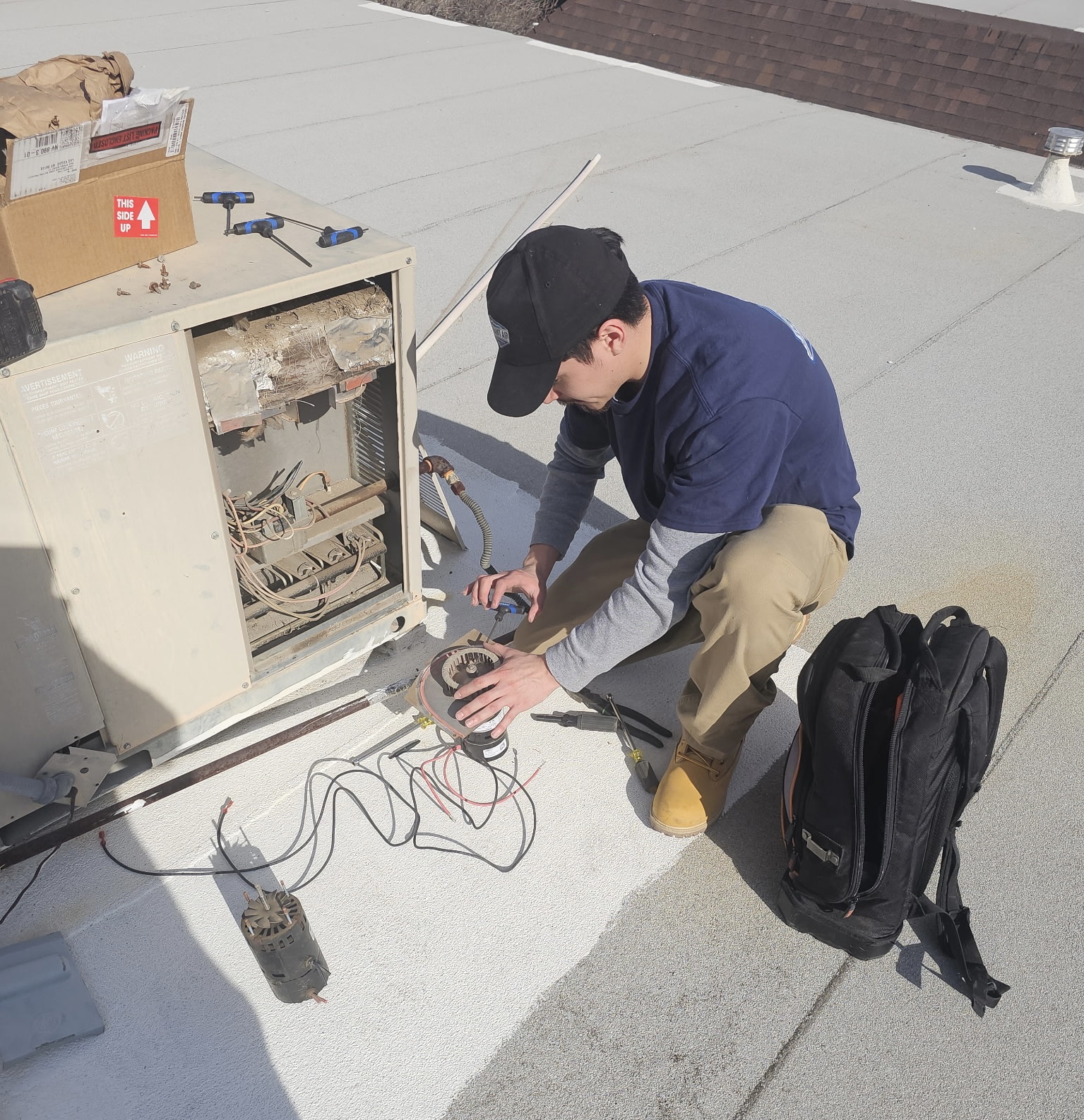
Enterprise Furnace Tune-Up Done Right
A real tune-up is a test sequence, not a glance and a sticker. Ours covers: combustion analysis with a calibrated analyzer, not a color-of-the-flame eyeball; heat exchanger inspection for cracks and corrosion; carbon monoxide readings at the supply registers; gas pressure verification against the manufacturer’s plate; flame sensor cleaning and igniter resistance testing; blower wheel inspection and amp draw; static pressure and temperature rise measurements; condensate path checks on high-efficiency units; and thermostat calibration. You get the readings, in writing.
Enterprise’s two-story homes mostly put the furnace in the attic alongside the air handler, which means it spends every summer soaking in 140 degree heat. Heat ages igniters, control boards, and wire insulation whether or not the furnace ever runs. That is why systems here fail young by furnace standards, and why an annual inspection matters even in a town that measures its winter in weeks.
The temperature rise measurement matters more than most homeowners ever hear. A furnace pushing too little air runs its heat exchanger hotter than design, and repeated overheating is what cracks exchangers. Because airflow is our specialty, every tune-up includes the duct-side readings that reveal that condition before it turns into a safety problem.
Filters get a hard look too, because the filter your furnace inherited from summer is the filter it heats through in December. A loaded filter raises static pressure, stretches temperature rise past the plate rating, and trips limit switches on the coldest mornings, the classic heat-for-ten-minutes-then-cold-air complaint. We check pressure drop across the filter with the same manometer we use on the ducts, and we will tell you the honest replacement interval for your house rather than a generic one.
Why October and November Are the Right Window
Enterprise cools off fast once it turns. Highs slide into the 60s by November and the first 40 degree night sends every neglected furnace in the valley into a hard start it may not survive. The first cold snap is our busiest week of the winter, and it is entirely made of furnaces that would have passed or failed a tune-up quietly in October. Book ahead of the rush and the whole thing is calm: a scheduled visit, a working furnace, and a written bill of health before you need the heat.
Southern Highlands sits higher than the valley floor and cools earlier, so if you are up the hill, treat early October as your deadline rather than a suggestion. Homes on the flats off Blue Diamond Road have another few weeks of grace, but the booking calendar does not know that.
There is also a practical scheduling benefit: in October we can pair the furnace tune-up with an end-of-season cooling check in a single visit, one trip charge, both systems documented before the equipment swaps duty. Households that run this rhythm almost never meet us on an emergency basis, which is the entire point.
What a Desert Winter Does to a Furnace
A Mojave furnace lives a strange life: eight or nine months of total idleness, then a burst of hard use. Idle months let dust settle through the duct system onto the burner assembly and flame sensor, and the oxide film that builds on a dormant flame sensor is the single most common cause of the light-then-die failure we see every December. Thermal cycling cracks aging igniters precisely on cold mornings, when the metal is coldest and the stress of ignition is highest. The first ten minutes of the season also burn off that summer dust, which is the smell homeowners call us about every November; a cleaned burner assembly keeps that to a brief whiff instead of an evening of it.
Short heating seasons also hide problems that would announce themselves in a colder climate. A furnace that only runs 300 hours a year can limp along with a weak inducer motor or a marginal gas valve for two or three seasons, then quit permanently on a holiday weekend. The tune-up exists to find the limp before the quit.
If your home runs a heat pump instead of a gas furnace, common in Enterprise’s newest builds, the same logic applies: reversing valves, defrost boards, and auxiliary heat strips need their own pre-season check, and we service those too.
Safety Checks We Don’t Skip
Combustion safety is the part of a tune-up you cannot see from the hallway. A cracked heat exchanger can pass combustion gases into the supply air your family breathes, and the crack is invisible without pulling panels and inspecting with proper light and mirrors. We inspect the exchanger, measure carbon monoxide at the registers, verify flue draft, and leak-test the gas connections at the furnace on every single tune-up. None of that is an upsell tier; it is the job.
Attic furnaces make do-it-yourself checks unrealistic. Nobody inspects a heat exchanger balanced on a truss in the dark, and doorway sniff tests do not find CO. Twenty minutes of instrumented testing settles the question properly once a year.
One more habit worth adopting: put fresh batteries in your carbon monoxide alarms the same week you book the tune-up, and if the house does not have a CO alarm on each sleeping floor, add them. The tune-up verifies the furnace; the alarms stand guard for the other 364 days. We are glad to point you to placements that meet code while we are on site.
Ready to schedule your Enterprise furnace tune-up?
Call us, send a message, or browse our gallery to see real Las Vegas Valley HVAC work we have done.
Enterprise Furnace Tune-Up FAQ
Enterprise Furnace Tune-Up FAQ: How Long Does It Take?
About 60 to 90 minutes for a single furnace, longer if access is tight or if we find something worth investigating. Two-system homes, common in larger Southern Highlands floor plans, run about double.
Enterprise Furnace Tune-Up FAQ: How Often Do I Need One?
Once a year, ideally in October or early November before the first cold snap. Annual service keeps most manufacturer warranties valid and catches the failures that idle summers set up.
Enterprise Furnace Tune-Up FAQ: Is It Worth It in a Mild Climate?
Yes, and partly because of the mild climate. Long idle periods breed the exact failures that strand you on the first cold night: oxidized flame sensors, dust-loaded burners, cracked igniters. The safety checks, heat exchanger and carbon monoxide, matter regardless of how short the season is.
Enterprise Furnace Tune-Up FAQ: What If You Find a Problem?
You get the finding in plain terms with the measurement behind it, plus a written quote to correct it. Safety issues are flagged immediately. Nothing is repaired without your go-ahead, and we do not invent urgent problems to convert a tune-up into a ticket.
Enterprise Furnace Tune-Up FAQ: My Home Is New. Do I Still Need One?
New furnaces benefit from a first-year check because installation shortcuts, wrong gas pressure, unset temperature rise, sloppy condensate runs, show up as early wear rather than immediate failure. It also documents the system was serviced, which protects the warranty.
Enterprise Furnace Tune-Up FAQ: Do You Service Heat Pumps?
Yes. Many newer Enterprise homes heat with heat pumps rather than gas. Pre-season heat pump checks cover the reversing valve, defrost cycle, auxiliary heat strips, refrigerant circuit, and airflow.
Enterprise Furnace Tune-Up FAQ: What Does It Cost?
A flat rate per furnace, quoted when you book, with a modest add for a second system in the same visit. The rate covers the full instrumented checklist and the written report. No coupon games and no surprise line items when the technician is standing in your hallway.
Other Enterprise HVAC Services
View all Enterprise, NV HVAC services · See our work · Get a free quote
Service Area: Enterprise, NV
We serve all of Enterprise, NV including Mountain’s Edge, Southern Highlands, Silverado Ranch, Coronado Ranch, Rhodes Ranch, and the neighborhoods off Blue Diamond Road, South Durango Drive, and South Rainbow Boulevard, plus the commercial corridors along the 215 Beltway and St. Rose Parkway.
Fall slots fill front-to-back once the first cool week hits the forecast, so October callers pick their day and December callers take what is left. Commercial heating equipment along the Blue Diamond and 215 corridors is covered under the same program, with rooftop furnace sections and unit heaters documented visit by visit.