Cleaner Air Inside a Spring Valley Home
Spring Valley sits where the built-up valley meets open desert to the west, and the wind coming off that ground carries dust fine enough to walk straight through a one inch filter. It settles on the coil, coats the inside of the duct, and lands back on your furniture a day after you wipe everything down. We look at filtration, duct leakage and airflow together, because on a Spring Valley system those three are usually the same problem wearing different clothes.
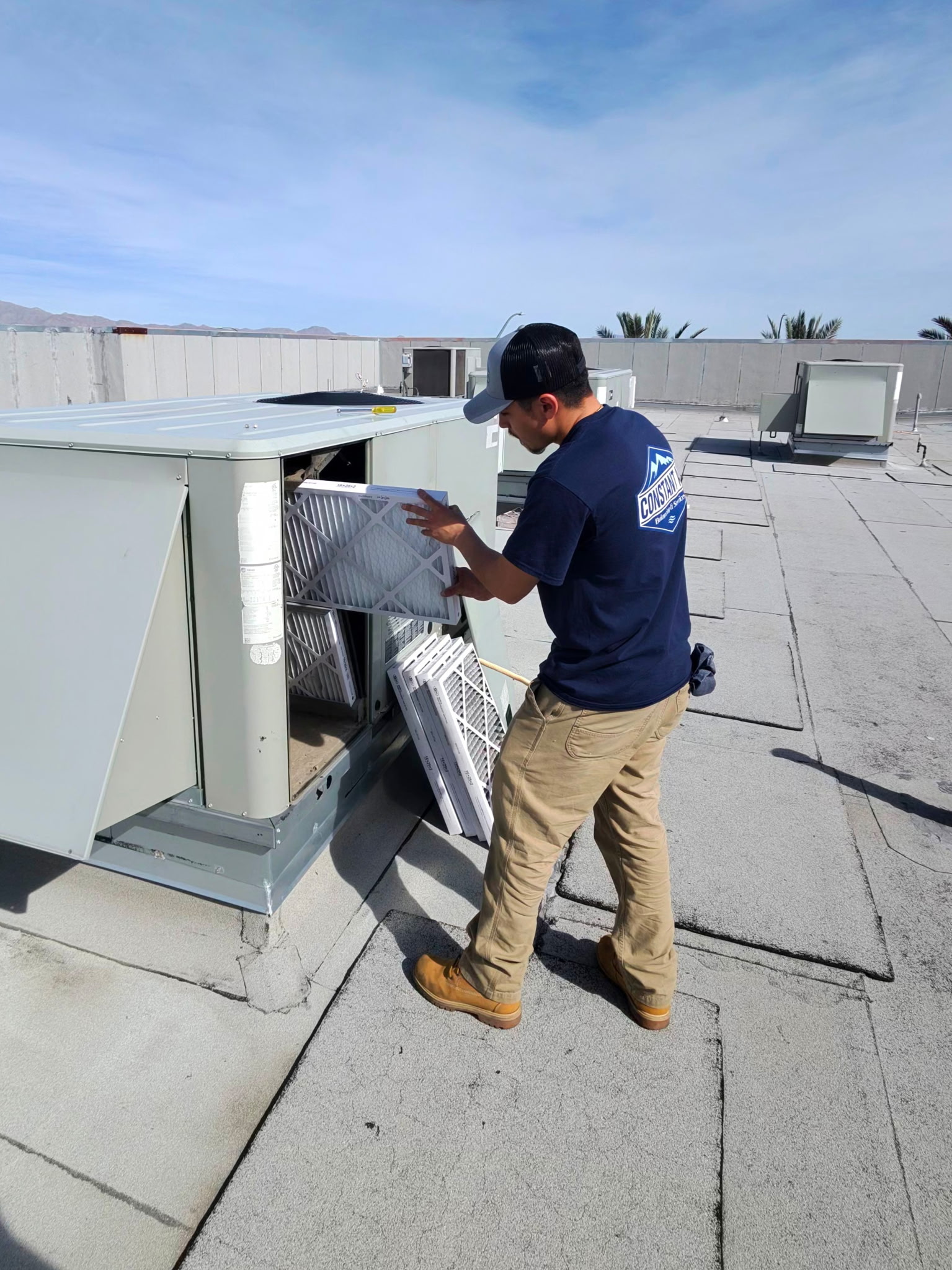
The Dust Out Here Is Finer Than Your Filter
Spring Valley holds roughly 215,000 people between Rainbow, Durango and Jones, and most of the housing went up between the mid seventies and the late nineties. Two story stucco, tile roof, air handler up in the attic, one inch filter grille in a hallway ceiling. That layout was designed around a filter that catches lint and pet hair. The dust blowing in off the desert flats to the west is a good deal finer than that, so a large share of it passes through the media, rides the return, and deposits on the evaporator coil where nobody ever sees it.
A loaded coil is a slow problem. Nothing breaks and no alarm goes off. The system just moves a little less air every season, the far bedrooms stop keeping up in July, and run times stretch out. By the time somebody calls about a hot room, the fins are packed and the blower has been fighting for two summers. Cleaning the coil helps. Keeping the dust off it in the first place is the part that lasts, and that is a filtration and duct sealing question before it is an equipment question.
Spring wind season makes all of this obvious. From late February through May the valley gets long afternoons of blowing dust, and that is when the calls come in about film on the countertops and grit along the windowsills. The house is not dirty. The house is breathing unfiltered outside air through gaps in the return and leaks in the attic duct, and no filter catches air that never reaches it.
Filter Choice Is an Airflow Decision
The instinct in a dusty house is to buy a denser filter. On a lot of Spring Valley systems that makes things worse instead of better. A one inch slot has very little face area, so a high MERV pleat sitting in it raises static pressure across the air handler, the blower moves less air, the coil runs colder than it should, and you end up with weaker cooling and the same dust. We read static pressure across the equipment before recommending anything, because that number tells us how much resistance the system actually has left to give.
When there is no room left in that budget, the answer is more filter area rather than a tighter weave. A four or five inch media cabinet carries several times the surface of a one inch pleat, so it can hold denser media and still pass air. On an attic air handler that usually means opening up the return plenum and building the cabinet in at the unit, and the honest constraint is clearance. Some Spring Valley attics have plenty of room over the platform and some have a truss web sitting six inches off the filter rack. We measure the space and the pressure before we promise anything, and we install Aprilaire media cabinets and humidifiers when the equipment fits the house.
Whatever filter goes in only works on air that goes through it. A return pulling from a leaky platform or an unsealed chase is filtering a fraction of what the blower moves. Sealing the return side first, then sizing the filter, is the order that gets a house clean. Reverse it and you have paid for media that half the airflow skips.
Attic Leaks, Smoke Season, Condo Pressure
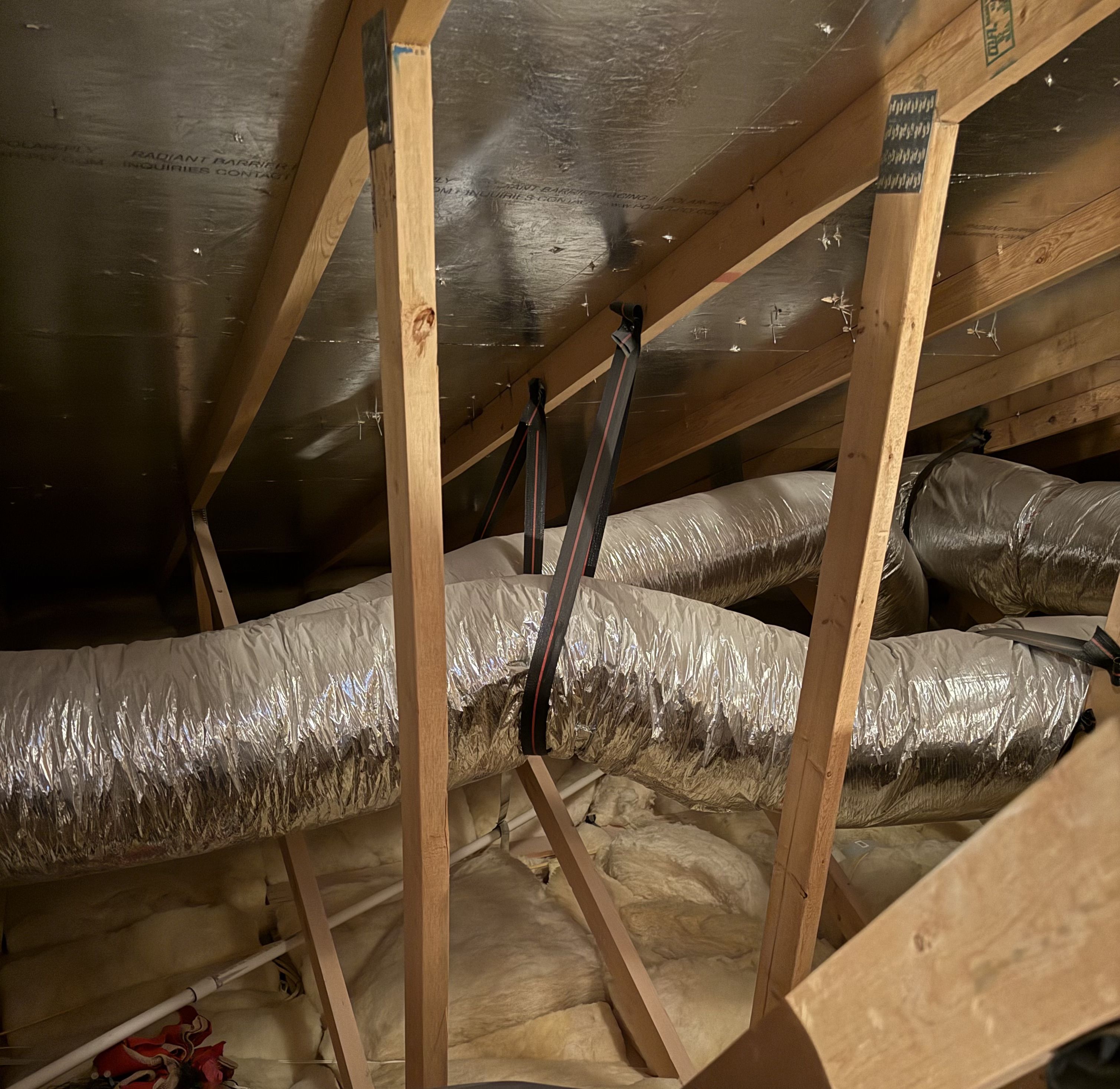
A Spring Valley attic runs well past 130 degrees in August and it is full of loose insulation. Flex duct that has pulled back off a boot, a plenum with dried out mastic, a supply run with a torn inner liner: all of it feeds attic air straight into the rooms. People describe it as a fiberglass itch, or a hot dry smell the moment the system kicks on. Pressure testing the duct tells us how much is leaking and roughly where, and sealing it removes a dust source that no filter upgrade would have touched.
Late summer the smoke arrives from California and the whole valley notices at once. During a bad week the useful moves are simple. Run the blower continuously so the air in the house keeps passing the filter instead of sitting still between cooling cycles. Put fresh media in before the week starts rather than after. Keep windows shut and leave the evaporative cooler off, since a swamp cooler pulls outside air in by design. If the house already has a media cabinet, that is the week it earns its keep.
Attached housing behaves differently, and Spring Valley has a lot of it off Jones, Twain and Flamingo. When a condo or apartment runs more exhaust than makeup air, the missing air comes from wherever it can find a path: a corridor, a shared chase, a neighbor’s kitchen. That is a pressure problem rather than a filter problem. Measuring what the exhaust fans and the air handler are really moving tells us whether the unit sits negative, and correcting the airflow usually costs less than the equipment somebody will try to sell for the smell.
Questions Spring Valley Homeowners Ask
Why is the house dusty again two days after I clean?
Usually because the dust is arriving faster than the filter can remove it. Fine desert dust rides in through return leaks and duct joints that bypass the filter entirely, so it never gets caught on the way past. We look at where the air is entering the system before we talk about media, since sealing those paths changes the number more than a filter swap does.
Can I just drop a MERV 13 into the slot I already have?
Sometimes, and sometimes it costs you cooling. A one inch slot has limited face area, so a dense pleat can push static pressure past what the blower was built to handle. We read the pressure across the air handler first. If the system has room, a better one inch filter is fine. If it does not, the honest answer is more filter area, not a tighter filter.
Will a media cabinet fit on an attic air handler?
Often yes, and clearance decides it. A four or five inch cabinet goes in at the return plenum, so it needs room in front of the unit and a way to reach the filter door later. Older Spring Valley attics vary a lot: some platforms have plenty of space, others have a truss web right where the cabinet wants to sit. We measure before quoting the work.
What actually helps during a smoky week?
Run the blower continuously so indoor air keeps cycling through the filter, install fresh media before the smoke arrives, keep windows closed and the evaporative cooler shut down, and let a media cabinet do the heavy lifting if the house has one. A portable unit in the bedroom is a reasonable addition for sleeping. None of that seals the house, but it keeps particulate moving toward the filter.
Do I need my ducts cleaned?
Usually not as the first move. Cleaning removes what has already settled, and if the leaks and the filtration have not changed, the duct reloads. The sequence that holds is sealing the leaks, getting the filtration right for the airflow, then cleaning if there is visible buildup or something got into the system. Renovation debris, rodents, or water damage are the cases where cleaning goes first.
We still run an evaporative cooler. How does that change things?
A swamp cooler works by pulling outside air through a wet pad and pushing it through the house, so it brings in whatever the air outside is carrying that day and adds moisture with it. That is fine on a clear spring afternoon and rough during a dust event or smoke season. Plenty of older valley homes reach the point where switching to refrigerated air makes more sense, and that decision changes the duct and airflow design too.
My condo smells like the neighbor’s cooking. Is that a filter issue?
Almost never. It means the unit is running negative, pulling replacement air from a corridor or a shared chase because the exhaust is moving more than the supply. Filters cannot catch air that arrives through a door gap. We measure the exhaust and supply airflow, find where the shortfall is, and adjust the balance so the unit stops drawing from next door.
Where We Work in Spring Valley
We cover the whole township, from the Spring Mountain Road restaurant corridor and the older tracts near Rainbow out to the newer infill along Durango and Buffalo, plus the condo and apartment communities off Jones, Twain and Flamingo. Restaurant and retail work along Spring Mountain runs on the same crew and the same instruments as the houses do.
Want the dust problem measured instead of guessed at?
Call, send a message, or look through our gallery to see real Spring Valley area HVAC work.
Other Spring Valley HVAC Work
Related work: Spring Valley HVAC installation · duct sealing · air duct cleaning · evaporative coolers
View all Spring Valley, NV HVAC services · See our work · Get a free quote · (702) 840-5163