Moapa Valley HVAC Repair
Moapa Valley HVAC repair is a different job from suburban Las Vegas HVAC repair. The valley runs from Logandale to Overton to Glendale along the Muddy River, with most homes on irrigated parcels or on the bench above the flood plain. Every Moapa Valley repair we run starts with a real diagnostic: we measure pressures, electrical, airflow, and combustion before we touch a part, then we fix what is actually broken instead of guessing.
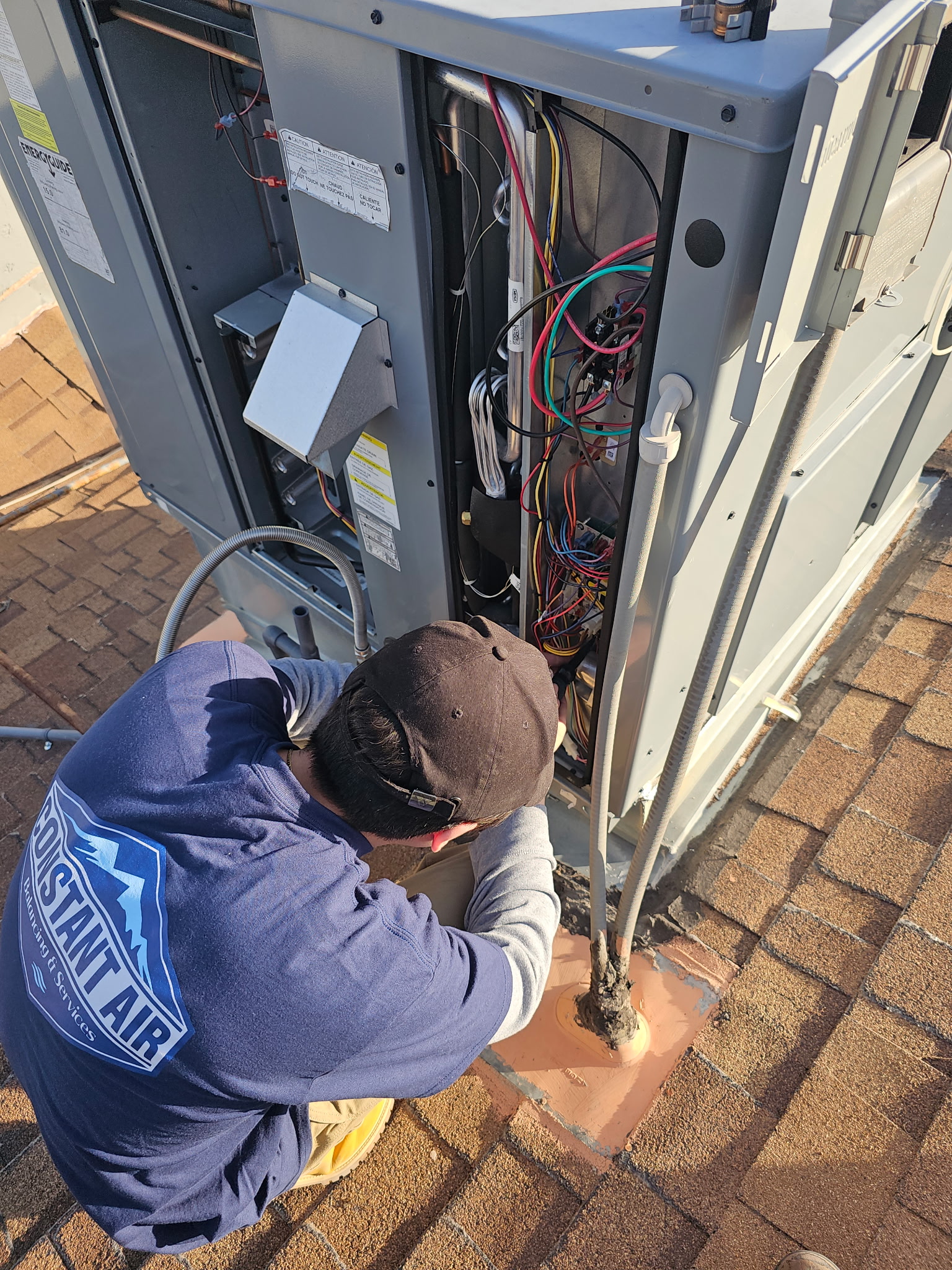
Moapa Valley HVAC Repair: The Brand Standard
Moapa Valley HVAC repair calls come into our shop from three kinds of properties: older farmhouses in Logandale and Overton where the original AC was retrofitted into a swamp-cooler duct system, mid-2000s ranch homes on the bench above the flood plain where the equipment is reaching end of useful life, and the occasional commercial property along Moapa Valley Boulevard where a rooftop unit is the lifeblood of the business. The brand standard we hold on every Moapa Valley repair is simple: we diagnose first, we quote in writing, and we fix what is actually broken rather than throwing parts at a symptom. That standard is the reason we can drive 75 miles each way and still come in at a price the homeowner respects.
What that looks like in practice on a Moapa Valley service call: when we arrive, the tech takes pressures (suction, head, subcooling, superheat), measures electrical (capacitor microfarads, compressor amps, contactor pull-in, condenser fan motor amps), reads airflow and static pressure on the indoor blower, and on heating calls runs a combustion analysis on the furnace. Those measurements get written down, and if a part needs replacement, the failed measurement is the receipt for why we are replacing it. No guesswork, no theatrical “I think it’s the compressor,” no upsell to a full system change-out when a capacitor and a contactor would have brought the unit back online.
Moapa Valley homeowners notice when a service company shows up with that approach because the alternative around here is usually a same-day handyman who guesses at refrigerant and tops off the system without measuring. That works for a week. Our repairs are designed to last the rest of the equipment’s useful life.
Property Archetypes We Repair in Moapa Valley
The three property archetypes drive the repair playbook. The pre-1985 Logandale and Overton farmhouses we repair most often have original ductwork that was sized for an evaporative cooler, with central AC retrofitted in the 1990s or early 2000s. The ductwork is undersized for the modern compressor’s airflow demand, so we see chronically high static pressure, blower motors that burn out early, and coil freeze events that look like “low refrigerant” but are actually airflow starvation. Our repair on those systems usually involves more than parts: we measure the duct system and tell the homeowner whether the next replacement should include duct work.
The mid-2000s ranch homes on the bench (Lower Logandale Road, Anderson Avenue, the streets above the flood plain) typically have 14 to 18 SEER systems hitting end of life. The repair calls there are usually compressor electrical failures, condenser fan motor seizures from dust loading, and TXV stuck-open or stuck-closed events. We carry inventory for those failure modes. The 2010-and-newer homes in the small newer subdivisions around Overton are still under warranty for the major components, so our repair work there is electrical, sensor, and control board, plus the occasional warranty claim that we document and submit on the homeowner’s behalf.
Commercial properties along Moapa Valley Boulevard and the agricultural support businesses near the I-15 interchange are usually package rooftop units running 5 to 10 tons. The repair playbook there is electrical first (contactors, capacitors, motor starters), then mechanical (bearings, belts, condenser fans), then refrigerant circuit. We carry parts on the truck for the brands and tonnages we see most often in the valley.
Why the Muddy River Valley Zone Matters
The Muddy River corridor changes how HVAC equipment ages, and that drives the repair calls we get. Higher humidity from irrigated cropland during the growing season means evaporator coils run wetter for longer, which accelerates corrosion in low-grade coils and means condensate drains foul faster than in the dry Las Vegas valley. We clear condensate lines as a standard part of every service call here, not as an upsell. Blowing dust off the desert and farm fields loads outdoor condenser coils with a fine grit that conventional fin-comb tools miss, so we use a coil cleaner and rinse on every service call where the outdoor unit is more than three years old.
Cold-air drainage off the Mormon Mesa drops overnight lows below what Las Vegas sees, which stresses heat pumps in defrost mode and pushes gas furnaces into higher-stage operation more often than the equipment was rated for. Repair calls in winter often include checking the defrost board, the reversing valve, and the auxiliary heat strips for heat pumps, plus combustion analysis and flame sensor cleaning for gas furnaces. The microclimate is genuinely different from Las Vegas, and the repair work reflects that.
Moapa Valley HVAC repair, done right the first time.
Diagnostic-first repair. Real measurements, written quote, fix what is actually broken. Scheduled service runs from Las Vegas.
Equipment Recommendations by Home Age
Repair versus replace is the first call we make on every service visit. For Moapa Valley homes built before 1985 with original retrofitted central AC, we recommend repair on systems under 12 years old when the failure is a single component (capacitor, contactor, motor, control board), and we recommend replacement planning when two or more components have failed in the last 18 months or when the system is over 15 years old. For mid-2000s homes, the repair-versus-replace line moves to 14 to 16 years depending on equipment quality. For homes built after 2010, we lean toward repair through year 18 because the equipment design is meaningfully better.
The other variable is refrigerant. Systems using R-22 (sold through 2010) are increasingly expensive to recharge because the refrigerant is phased out. If a Moapa Valley repair call involves an R-22 system with a leak, we walk the homeowner through the cost of a chase-and-repair versus a refrigerant top-off versus a planned replacement to current-generation R-410A or R-454B equipment. The honest answer changes based on remaining equipment life. We give you the math, not a sales pitch.
Permits and Service Notes for Moapa Valley
Most HVAC repairs in Moapa Valley do not require a Clark County mechanical permit. Component replacements (capacitors, contactors, motors, control boards, blower assemblies, even compressor swaps inside the same equipment cabinet) are repair work and do not need permitting. Permits kick in when the equipment cabinet is replaced (a new condenser or new air handler), when refrigerant lines are re-routed, when ductwork is modified, or when a fuel-gas line is altered. We tell you up front whether the work needs a permit and we pull it when required.
Service notes specific to Moapa Valley: we maintain real parts inventory for the brands and equipment generations most common in the valley, and we stage extra inventory for service runs out here so the tech rarely has to come back twice. Travel time is built into the dispatch fee, which is a flat number you see before we are dispatched. Emergency dispatch to Moapa Valley does take longer than an in-valley call (typical 90 minutes to two hours depending on traffic on I-15), and we are honest about that on the phone rather than promising a 30-minute response we cannot deliver.
Moapa Valley HVAC Repair FAQ
How fast can you get to Moapa Valley for an emergency repair?
Typical emergency dispatch to Moapa Valley is 90 minutes to two hours from the time of the call, depending on I-15 traffic. We are honest about that on the phone rather than promising a 30-minute response we cannot deliver. Scheduled service is booked the next business day for non-emergency calls.
Do you charge a separate trip fee for Moapa Valley?
Travel time is built into the flat dispatch fee, which you see before we send a truck. We do not bill mileage as a separate line item on the invoice. The dispatch fee is credited against the repair cost if you approve the work.
What brands of HVAC do you repair in Moapa Valley?
Carrier, Lennox, Trane, Goodman, Rheem, American Standard, York, Day & Night, Bryant, Amana, ICP, and Mitsubishi mini-splits. We carry inventory for the brands we see most often in the valley so the tech does not have to make two trips for a common repair.
My R-22 system has a leak. Should I repair or replace?
R-22 is phased out, so refrigerant cost on a chase-and-repair is high and climbing. The honest answer depends on equipment age and condition: under 12 years old with a small leak, repair often makes sense; over 14 years old or with a major leak, planned replacement to a current-generation R-454B system is usually the better math. We give you the cost both ways before you decide.
Do you handle warranty claims for Moapa Valley systems still under warranty?
Yes. We register the failure with the manufacturer, document the diagnostic readings, submit the claim, and coordinate the warranty-part delivery. Most major brands cover parts for 10 years on the original purchaser. We bill the homeowner only for diagnostic labor and installation labor not covered by warranty.
Service Area: Moapa Valley, NV
We repair HVAC across all of Moapa Valley, NV including Logandale, Overton, Glendale, the Muddy River corridor, neighborhoods along Moapa Valley Boulevard, properties near the Valley of Fire State Park boundary, agricultural parcels along Whipple Avenue and Lyman Avenue, the bench above the flood plain, and homes along the Lake Mead National Recreation Area edge near Overton Beach Road. Scheduled service runs from Las Vegas with same-week booking for non-emergency repairs.