Commercial Duct Sealing
We close the leaks in your building’s ductwork without shutting it down, with sealant rated for the desert and a re-test that proves the loss dropped.
Commercial duct sealing is the repair that turns a leakage report into recovered air. Once a test has told you which sections are losing how much, sealing is the work that closes those leaks at the joints, seams, take-offs, and equipment connections so the conditioned air you are paying for actually reaches the occupied space. The constraint that makes commercial sealing different from residential is access and operations, the ducts live above hard-lid and T-bar ceilings, the building has tenants, and the work has to happen without taking the system offline for days.
In Las Vegas, commercial duct connections fail faster than the climate-neutral textbooks predict. The temperature swing between conditioned and unconditioned space above a ceiling accelerates joint movement, so mastic dries and cracks, tape adhesive lets go, and mechanical connections loosen as the metal cycles every day. Buildings put up during the early-2000s construction boom are now at the age where original connections are opening up across the system at once. Our sealing uses materials specified for that thermal reality so the repair lasts, not consumer-grade tape that returns the leak in a season.
We seal with two methods chosen by where the leak is. Accessible joints and equipment connections get UL-181 listed duct mastic, troweled into the seam and reinforced where the gap is wide. For runs that are sealed inside chases or buried above an inaccessible ceiling, the Aeroseal process pressurizes the duct system and carries a sealant fog to the leaks from the inside, closing them with no demolition and no ceiling teardown. Where a connection has physically separated, we re-fasten the ductwork mechanically first, then seal, so the joint is sound before it is sealed.
The work runs on a schedule built around your operations, after hours, in zones, or floor by floor, so tenants keep working. When we finish a section, we re-pressurize and re-measure it, and the after number proves the leakage dropped. If you do not have a test yet, our commercial duct leakage testing establishes the baseline first; sealing is a natural companion to commercial air balancing when the goal is a system that delivers its design airflow to every space.
Work From the Report
We seal to the leakage report, hitting the sections that actually failed in priority order rather than caulking the obvious joints and missing the trunk that is doing the real damage. The test tells us where; the sealing follows it.
Mastic on Accessible Runs
Reachable joints, take-offs, and equipment connections get UL-181 listed duct mastic, troweled and mesh-reinforced where the gap is wide. It cures into a flexible seal that moves with the ductwork through daily thermal cycling instead of cracking off it.
Aeroseal Above Hard Ceilings
For runs buried in chases or above inaccessible ceilings, the Aeroseal process pressurizes the system and suspends a sealant fog that seals the leaks from inside the duct. It closes what no trowel can reach, with no ceiling demolition.
Scheduled Around Operations
We phase the work after hours, by zone, or floor by floor so tenants keep operating. The system stays in service except for the section being worked, and we coordinate access with building management ahead of time.
Re-Test and Final Report
Each sealed section gets re-pressurized and re-measured. The before-and-after data goes into a final report, which doubles as the compliance documentation a commissioning agent or energy program needs to confirm the system now meets its leakage target.
Verified By Re-Test
Every sealed section is re-measured, and the before-and-after data lands in a report. You confirm the leakage actually dropped instead of taking it on faith, and the document supports commissioning and rebate review.
Built For This Climate
Mastic and Aeroseal rated for the thermal cycling above a Las Vegas ceiling. Standard tape fails here in a season or two; our sealants are chosen to hold past the warranty conversation.
Minimal Disruption
Work phased around your occupancy, mostly through access panels and the ceiling grid with no teardown. The building keeps running while we seal it section by section.
Sealing commercial ductwork is only worth doing if you can prove it worked. We seal seams, joints, and connections with mastic and proper materials, then test the system again to confirm the leakage rate actually dropped. The before and after numbers are the whole point.
Most leaks hide at the takeoffs, the boot connections, and any spot a previous crew relied on cloth tape that dried out and let go. On a recent job we cut a system from 28 percent leakage down to under 6, and that air goes to the rooms now instead of the plenum. Sealed ducts mean the equipment is no longer working overtime to make up for what it was losing.
For property managers, the sealed-and-retested report is documentation you can hand to ownership or an energy program. See sealing work in the gallery.
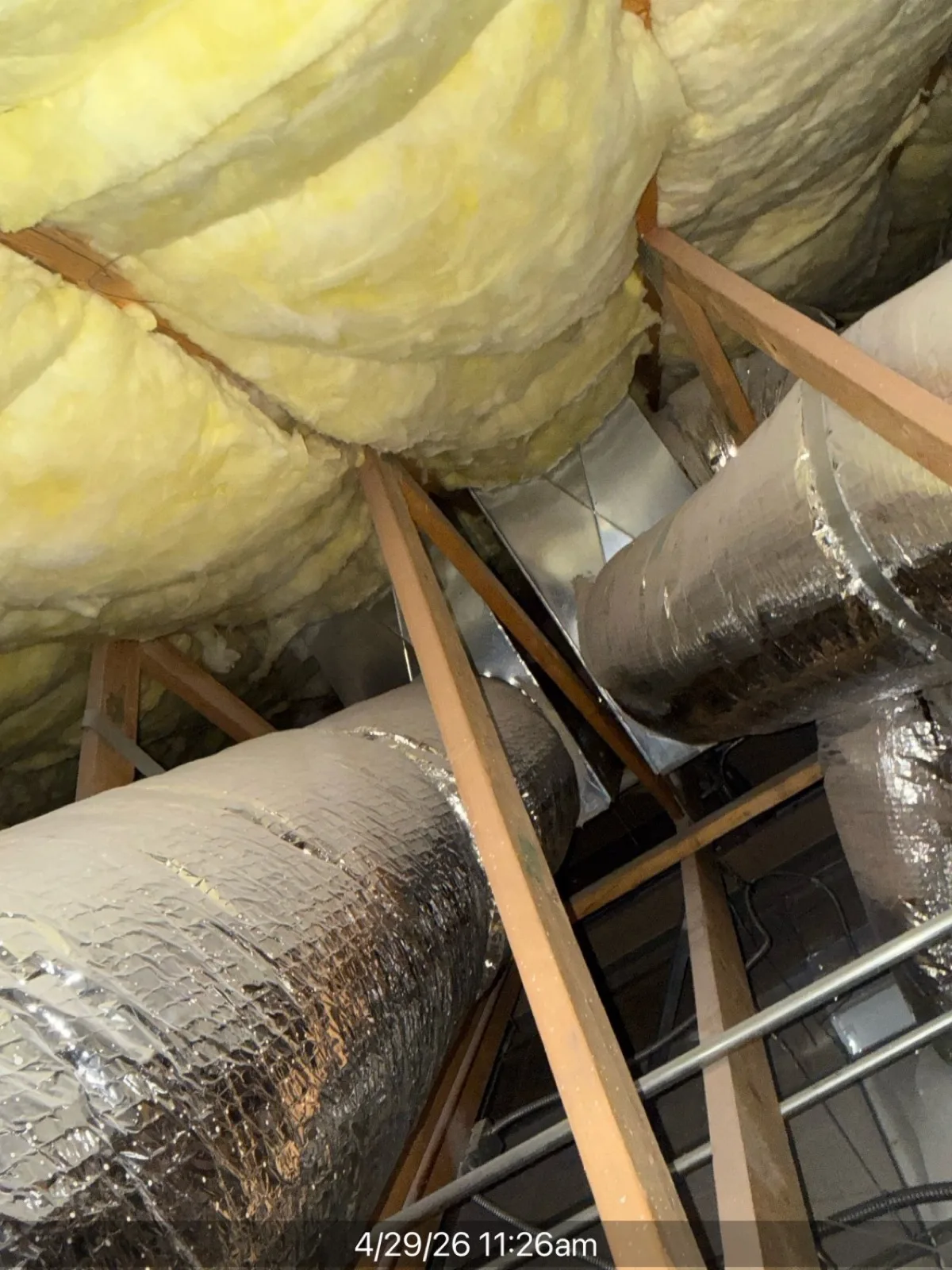
They tested the ducts, sealed them, then tested again so I could see the leakage drop on paper. That second test is what sold me. The building holds temperature better and the rooftop units are not running constantly anymore.
Still have questions? Contact us directly or call (702) 840-5163, we are happy to help.
Ready to Get Started?
Contact Constant Air Balancing & Services today for a free, no-obligation quote. We look forward to working with you.