Summerlin South Furnace Tune-Up
Summerlin South winters are mild, and that is exactly why furnaces here get neglected. A unit that only runs a few weeks a year sits idle for ten months, then gets asked to fire on the one January night that drops near freezing on the west shelf of the valley. Constant Air Balancing & Services runs Summerlin South furnace tune-ups in October and November so a long-idle furnace is verified safe before it is needed. Our tune-up is data-driven: combustion analysis, electrical testing, safety checks, and airflow verification, not a filter swap and a sticker.
Why a Mild-Winter Furnace Still Needs a Real Tune-Up
It is easy to assume a Summerlin South furnace does not need attention because it barely runs. The opposite is true. Long idle stretches let dust settle on the flame sensor, let the hot-surface ignitor age without anyone noticing the slow-start warning signs, and let rodents and debris find their way into a vent that sat unused all summer. When the first real cold snap arrives on the west slope, that furnace is asked to go from zero to full fire on its hardest night of the year, and a part that would have been a cheap October repair becomes a no-heat call at 10 PM in January. A real tune-up catches all of that while the schedule is open.
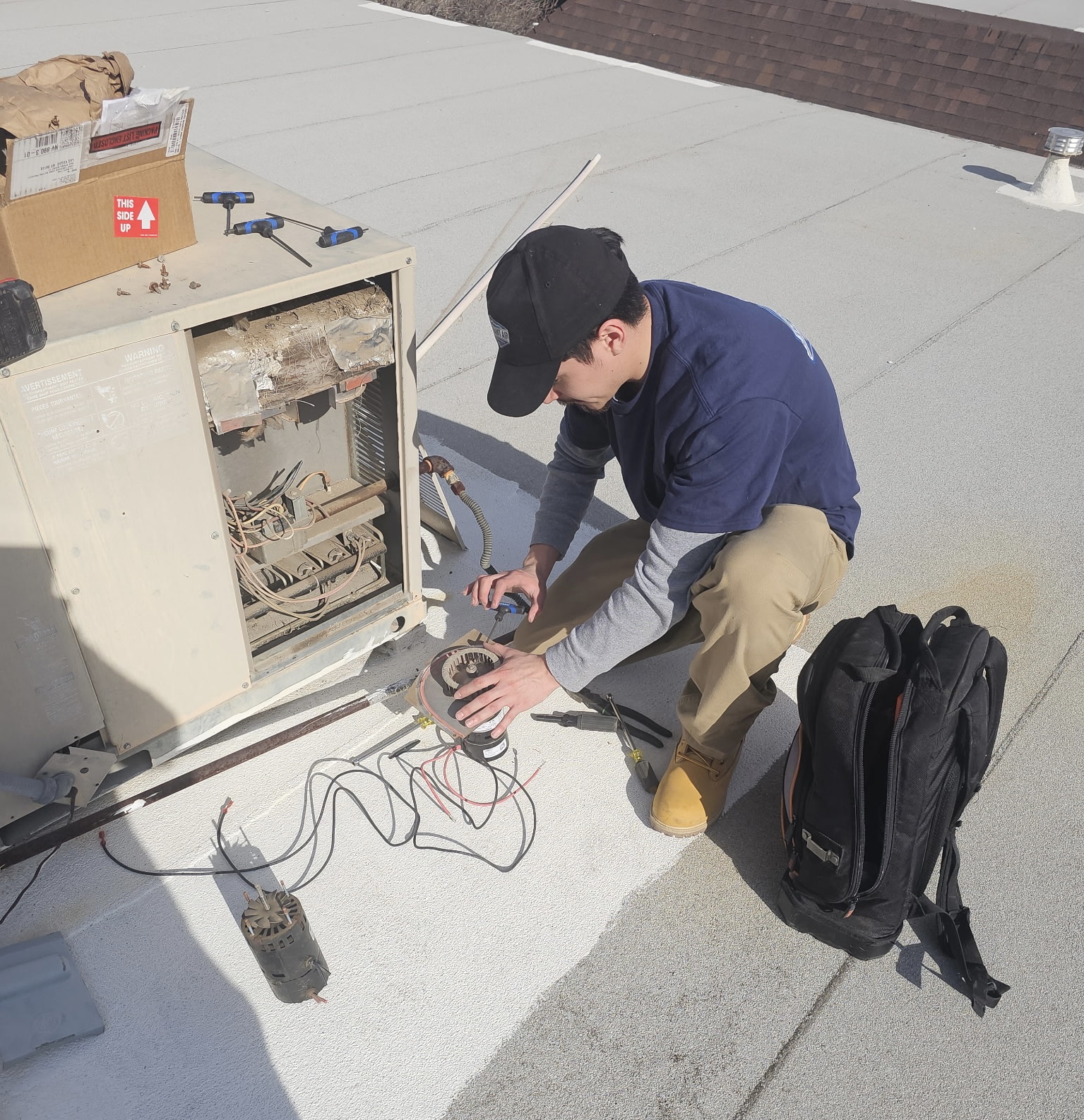
Our Summerlin South furnace tune-up includes combustion analysis with a Bacharach analyzer (CO output, oxygen, stack temperature, draft), heat exchanger inspection for cracks or scale, ignitor and flame sensor cleaning, gas valve and manifold pressure verification, blower motor amp draw and capacitor measurement, thermostat calibration, condensate trap cleaning on high-efficiency furnaces, and airflow measurement at the supply registers. You receive a written report with the actual readings, not a checklist with green dots. On the multi-zone systems common in these two-story homes, we also confirm the heat call sequences correctly through each zone.
The flame sensor deserves a word of its own, because it is behind more Summerlin no-heat calls than any other single part. It is a thin metal rod that sits in the burner flame and confirms to the control board that the burner actually lit. Ten months of dust settling on that rod builds a fine insulating film, and when the furnace finally fires on a cold January night the board reads a weak flame signal and shuts the burner down as a safety measure, sometimes within thirty seconds. The homeowner hears the furnace try, catch, and die over and over. It is not a broken furnace; it is a dirty sensor that a two-minute cleaning at an October tune-up would have prevented. Gas pressure is the other thing a real tune-up verifies with instruments rather than assumptions. We put a manometer on the manifold and confirm the burner is getting the gas pressure the manufacturer specifies, because a furnace running under-fired wastes fuel and runs cold, while one running over-fired stresses the heat exchanger and pushes combustion out of its safe range. Neither condition is visible without measuring it.
October and November Is the Right Window in Summerlin South
The common Summerlin South furnace findings are mostly cheap maintenance items, not equipment failures: a dirty flame sensor that causes a 5-to-30-second lockout, an aging ignitor in the 3-to-7-year replacement window, a blower wheel loaded with dust from a year of summer cooling on a neglected 1-inch filter, a weak run capacitor fading on the blower motor, a manifold pressure that has drifted out of spec, and a condensate drain clogged on a 90-plus AFUE unit. Catch them in October and the furnace is reliable when the cold arrives. Wait, and the same parts cost emergency-rate dispatch on the worst night, often 25 to 40 percent more than a planned visit.
Safety Checks We Do Not Skip
Carbon monoxide safety is non-negotiable, and it matters even more on a furnace that has sat unused all year. We test combustion at every tune-up. CO output above 100 ppm in the flue points to incomplete combustion that can become a leak risk if vent integrity has degraded over a long idle summer. We check heat exchanger integrity visually and with electronic flame-rectification testing on serviceable models. We verify draft pressure to confirm the venting system is carrying combustion gases out of the home rather than back-drafting into a sealed, energy-tight Summerlin home. If anything fails a safety test, we shut the unit down and walk you through next steps before we leave.
Ready to schedule your Summerlin South furnace tune-up?
Call us, send a message, or browse our gallery to see real Summerlin South HVAC work we have done.
The Dust Problem After a Ten-Month Idle
A Summerlin South furnace spends most of the year sitting inside an air handler that runs constantly for cooling, which means the same cabinet, blower, and duct that carry cool air all summer are packed with a season of desert dust by the time heating season arrives. When the burner fires for the first time in the fall, that dust bakes off the hot heat exchanger surface, and the burnt-dust smell that homeowners often mistake for something wrong is usually just that: accumulated dust cooking off on first fire. A tune-up gets ahead of it by cleaning the blower wheel and the burner compartment before the first cold night, so the system does not push a plume of scorched dust and its smell through every register in the house. A blower wheel caked with dust also moves noticeably less air than its design rating, which starves the far upstairs rooms of heat and makes the furnace run longer to satisfy the thermostat.
The same idle period is what lets small problems hide. A run capacitor slowly fading on the blower motor gives no symptom while the motor only runs for cooling, then fails on the coldest night when the furnace needs it most. A condensate trap on a high-efficiency furnace that has been dry all summer can be clogged with sediment the first time it has to drain. A rodent or debris that found its way into an unused flue over the summer can block the venting. None of these announce themselves, and all of them are cheap to catch in October and expensive to fix as an emergency call in January. That is the entire logic of tuning a furnace that barely runs: the light use is exactly what lets the failures build up unseen.
Summerlin South Furnace Tune-Up FAQ
Summerlin South Furnace Tune-Up FAQ: My Furnace Barely Runs, Do I Still Need This?
Yes, and arguably more than a hard-running furnace. A unit that idles ten months a year is the one most likely to fail on its first cold night, because dust on the flame sensor, an aged ignitor, and a vent that sat open all summer go unnoticed until you actually need heat. The tune-up verifies it fires safely before that night arrives.
Summerlin South Furnace Tune-Up FAQ: What Does It Cost?
Summerlin South furnace tune-ups are a flat per-unit rate, set by furnace type (80 percent versus 90+ percent AFUE) and accessibility. The fee includes the full diagnostic and a written report with combustion data. If we find a repair and you authorize it on the same visit, the tune-up fee is credited toward it.
Summerlin South Furnace Tune-Up FAQ: How Long Does It Take?
Most Summerlin South residential tune-ups run 60 to 90 minutes per furnace. The larger two and three-story homes here often have two furnaces, so plan on roughly double for a dual-system home. Combustion analysis and the report-out add about 15 minutes per unit.
Summerlin South Furnace Tune-Up FAQ: What If You Find a Safety Issue?
We document it with photos and combustion data, walk you through the finding, and recommend repair or shutdown. CO above 100 ppm is shutdown territory. A cracked heat exchanger is shutdown territory. We do not work around a safety issue just to keep heat running.
Summerlin South Furnace Tune-Up FAQ: Do You Service Heat Pumps?
Yes. Many Summerlin South homes use heat pumps rather than gas furnaces. Those get a parallel maintenance: refrigerant pressure check, defrost cycle test, electric backup heat verification, plus the standard airflow and electrical checks. Heat pumps work year-round here, so semi-annual maintenance pays back fast.
Summerlin South Furnace Tune-Up FAQ: Why Does My Furnace Smell Like Burning the First Time It Runs?
That first-fire smell is almost always harmless. The furnace shares its cabinet, blower, and ductwork with the cooling system that ran all summer, so a season of desert dust settles on the heat exchanger while it sits idle. When the burner finally lights in the fall, that dust bakes off the hot metal and you get a burnt smell for a cycle or two. A tune-up cleans the blower and burner compartment ahead of the first cold night so it does not push scorched dust and its smell through the house. If the smell is strong, keeps returning after several cycles, or is accompanied by any soot or a hot electrical odor, shut the furnace off and call us, because those point to something beyond ordinary dust.
Other Summerlin South HVAC Services
View all Summerlin South, NV HVAC services · See our work · Get a free quote
Service Area: Summerlin South, NV
We tune up furnaces across all of Summerlin South, NV including The Vistas, The Paseos, Redpoint, Redpoint Square, The Ridges, Red Rock Country Club, Reverence, Mesa, and the Bishop Gorman High School corridor. Service ZIP codes include 89135, 89138, and 89178. Crews stage out of the central Las Vegas yard and reach every Summerlin South street inside the standard 30 minute response window.