North Las Vegas Furnace Tune-Up
Nevada winters are mild compared to most of the country but North Las Vegas temperatures drop into the 30s overnight from December through February, and a furnace that has sat idle through 8 months of AC season may not come on reliably the first cold night. Constant Air Balancing & Services performs pre-winter furnace tune-ups across North Las Vegas, covering combustion analysis, heat exchanger inspection, gas valve and ignitor testing, and full airflow measurement. We bring the same instruments we use on commercial systems to every residential tune-up.
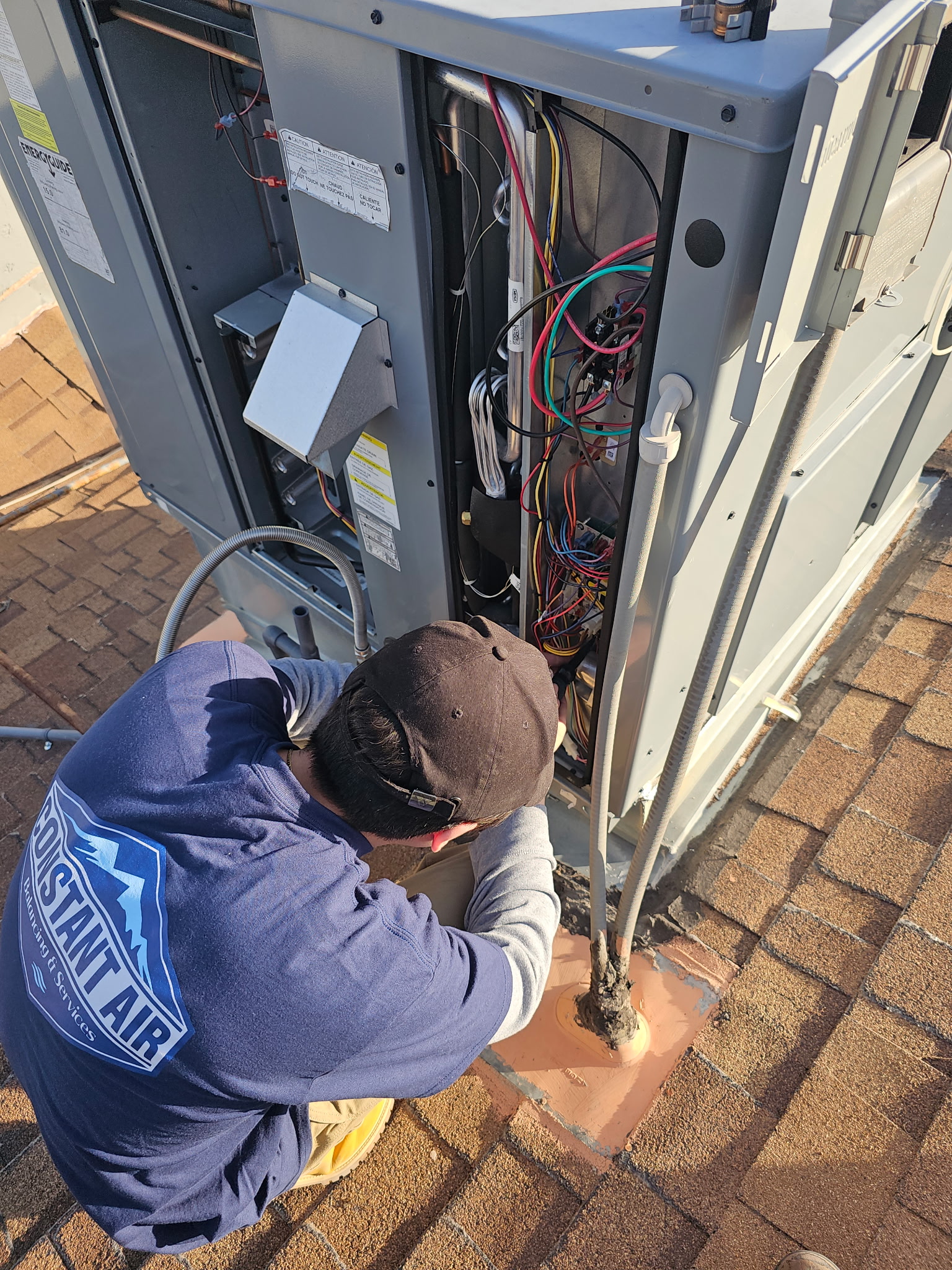
What a Real Furnace Tune-Up Covers
A furnace tune-up that is just a filter swap and a visual glance is not a tune-up. Our North Las Vegas furnace inspections include combustion analysis with an analyzer that measures flue gas CO, CO2, O2, and stack temperature to confirm the burners are firing at correct air-fuel ratio. We inspect the heat exchanger for cracks, test the gas valve operation and manifold pressure, check the ignitor and flame sensor, verify limit switch and pressure switch function, measure static pressure and airflow through the system, and test the blower motor current draw. Call (702) 840-5163 for scheduling.
North Las Vegas furnaces have it easy and that is the trap. The heating season here is short, so the furnace sits idle most of the year while the same blower runs cooling all summer. When the first cold morning arrives in December, the flame sensor is coated in oxide, the ignitor has one too many cycles on it, and the blower wheel is packed with a summer of dust. Those are exactly the parts that cause a no-heat call, and every one of them is a routine tune-up item we clean or replace in the fall for a fraction of a December emergency rate.
The dust angle matters more here than most places. Desert silt gets pulled into the return, settles on the blower wheel, and packs the coil. A loaded blower wheel moves less air across the heat exchanger, which raises stack temperature, wastes gas, and leaves the far bedrooms cold because the warm air runs out of push. Cleaning the wheel and reading the actual airflow is part of every North Las Vegas tune-up, because a furnace that cannot move its air will never heat the house evenly.
Why Combustion Analysis Matters
The most safety-critical part of a furnace tune-up is heat exchanger inspection and combustion analysis. A cracked heat exchanger allows combustion gases, including carbon monoxide, to enter the supply air stream. CO at low concentrations causes symptoms that mimic a cold or flu. At higher concentrations it is dangerous. Visual inspection alone misses small cracks. We use CO detector and combustion analyzer readings as a secondary confirmation. This is the same protocol we use on commercial systems, applied to residential furnaces in North Las Vegas.
The reason we lean on the analyzer instead of an eyeball check is that a furnace can look and sound perfectly fine while burning dirty. You cannot see carbon monoxide and you cannot smell it. The probe in the flue reads the real CO, oxygen, and stack temperature, so we know whether the burn is clean or drifting toward trouble. That is the difference between telling a North Las Vegas family their furnace is safe because it lit and warmed up, and telling them it is safe because the numbers proved it. We do the second one, every time.
Schedule Before the First Cold Night
The best time for a furnace tune-up in North Las Vegas is October or early November, before overnight temperatures drop consistently below 45 degrees. The worst time is a cold night in December when the furnace will not start. We schedule tune-ups throughout fall and can usually get to North Las Vegas within a few days of your call. See our gallery and contact us to schedule.
Schedule your North Las Vegas furnace tune-up
Call before the cold season. We cover combustion analysis, not just a filter swap.
North Las Vegas Furnace Tune-Up FAQ
How often does a furnace need a tune-up in North Las Vegas?
Once per year, ideally in the fall before you need heat. Las Vegas Valley furnaces run far fewer hours per year than in colder climates, but annual inspection still makes sense for heat exchanger integrity, gas valve operation, and combustion safety. Skipping tune-ups voids many manufacturer warranties.
What is a cracked heat exchanger and why does it matter?
The heat exchanger is the metal chamber where combustion happens inside the furnace. Supply air passes around the outside of it, picking up heat. A crack allows combustion gases, including carbon monoxide, to pass into the supply air. CO is colorless and odorless. Symptoms of low-level exposure include headache, fatigue, and nausea. Annual inspection catches cracks before they become dangerous. Call (702) 840-5163.
My furnace started but is not heating my North Las Vegas home evenly. Is that a tune-up issue?
Possibly. Uneven heating after a furnace starts is more commonly an airflow distribution issue than a combustion issue. We measure airflow at each register during a tune-up and can identify whether the heating problem is a system imbalance, a blocked register, or an issue with the furnace itself.
Do you service gas and electric furnaces in North Las Vegas?
Yes. We service gas furnaces (natural gas and propane), electric furnaces and air handlers with electric heat strips, and heat pump systems. Combustion analysis applies to gas systems. Electric systems get a different inspection protocol covering heat strip amperage, contactor condition, and sequencer function.
Can a furnace tune-up reduce my heating bills in North Las Vegas?
A dirty flame sensor, clogged burners, or a restricted filter cause the furnace to cycle inefficiently. Cleaning and adjusting these components during a tune-up can measurably reduce run time. In North Las Vegas where heating seasons are short, the savings are modest but the safety benefits are the main value of annual service.
My furnace hardly ran this winter. Do I still need a tune-up?
Yes, and the light use is the reason. A North Las Vegas furnace sits idle most of the year while the flame sensor oxidizes and the ignitor ages, then it will not start on the first cold morning. A fall tune-up cleans those parts and catches a worn ignitor before you need heat. Low run hours do not protect the furnace, they just hide the small problems until the coldest night.
Why does my furnace fail to light on the first cold morning?
That is one of the most common no-heat calls we get in North Las Vegas, and it is almost always a dirty flame sensor or a tired ignitor. After a whole year sitting idle, the flame sensor gets a film of oxide on it and the furnace lights, then shuts right back down because it cannot confirm the flame. Cleaning the sensor and testing the ignitor in the fall prevents the December surprise for a small fraction of an emergency call.
Will you balance the airflow if my heat is uneven?
We can. Uneven heat in a North Las Vegas home is usually a distribution problem, not a burner problem. If a tune-up shows the furnace is firing clean but the far rooms stay cold, that is airflow, and we can put a flow hood on the registers and balance the dampers so the heat reaches every room. Air balancing is our specialty, so we can handle both the tune-up and the distribution fix in one relationship.
Other North Las Vegas HVAC Services
View all North Las Vegas HVAC services · See our work · Get a free quote
Service Area: North Las Vegas, NV
We serve all of North Las Vegas including Aliante, Craig Ranch, Eldorado, Centennial Hills, and surrounding areas across Clark County.