Spring Valley Furnace Tune-Up
A furnace in Spring Valley works a fraction of the hours a furnace works almost anywhere else in the country. It runs on a handful of cold mornings between December and February, then sits still for the other nine months. That idle time is the whole problem, and it is why so many households out here find out the heat is dead on the first genuinely cold night. Constant Air Balancing & Services checks the burn, the safety devices and the airflow before that night arrives, on the tract homes, condos and two-story stucco houses that fill this side of the valley.
What a Real Tune-Up Checks That a Filter Swap Does Not
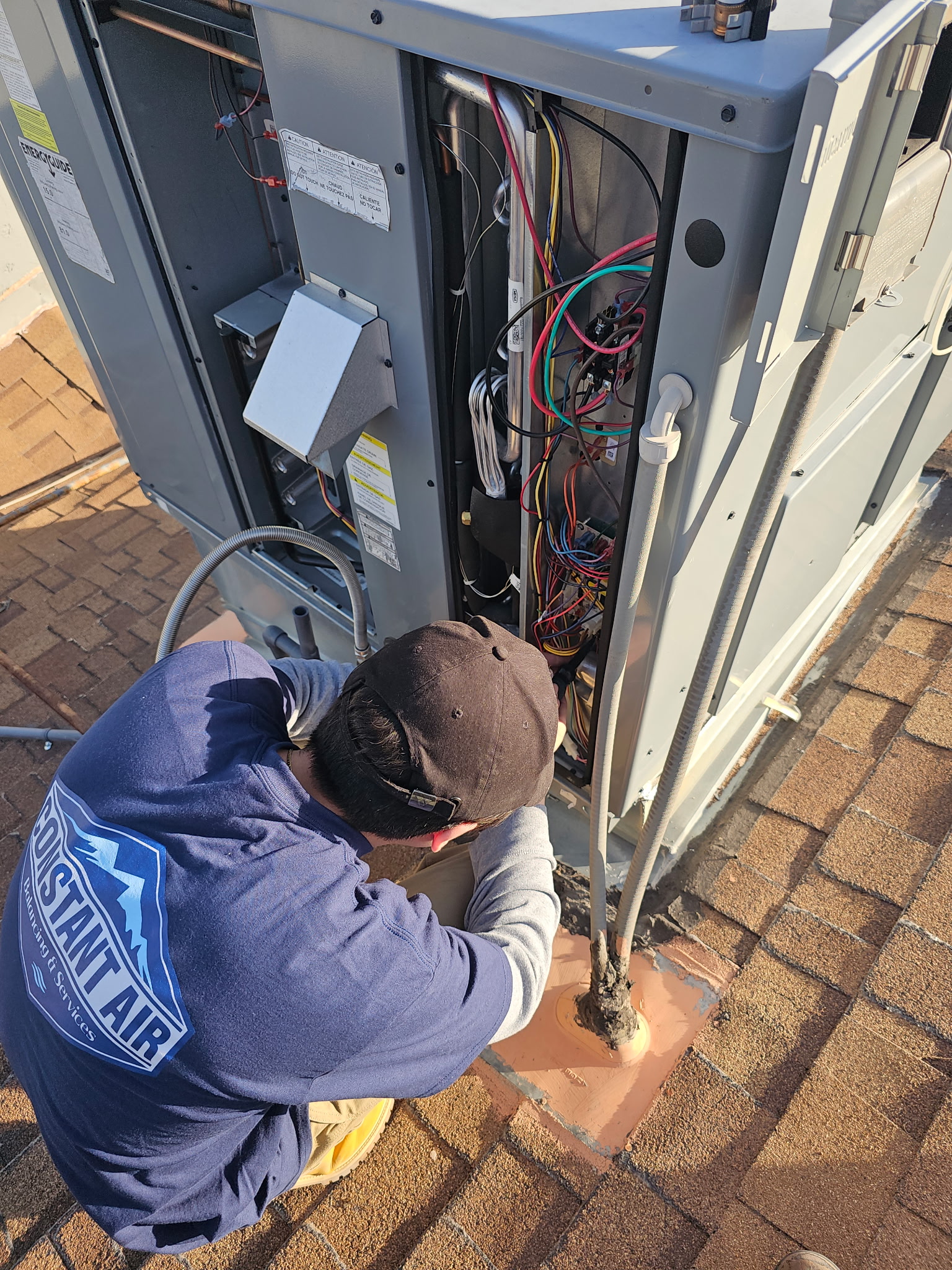
Plenty of people think they have handled heating maintenance because they slid a new filter in before Thanksgiving. A clean filter is worth doing and it is roughly two percent of the job. When we service a furnace we pull the burner compartment apart and look at the heat exchanger, because that is the metal wall standing between combustion gases and the air your family breathes. We clean the flame sensor, which is the single most common reason a Las Vegas valley furnace lights for three seconds and then quits. We check the ignitor for the hairline cracking that shows up right before it stops glowing altogether.
From there it moves to the numbers. We verify manifold gas pressure against what the data plate calls for, because a furnace running rich or lean will not last and will not burn clean. We read blower amp draw against the motor rating, which tells us whether the motor is straining under a dirty wheel or a restricted duct. Then we measure temperature rise across the coil and compare it to the design range printed on the unit. Rise that runs high means the furnace is making heat the ductwork cannot carry away. You cannot see any of that by changing a filter.
Why Idle Months Break Valley Furnaces
Spring Valley housing skews older than the newer master plans west of here. A lot of the neighborhoods off Rainbow, Durango and Jones went up between the late seventies and the nineties, which means a fair number of homes are still on original-era equipment or on a first replacement that is now well into middle age. Older equipment plus long idle stretches is a rough combination. Dust settles on the flame sensor and the ignitor all summer while the same blower cabinet runs cooling every day, and by November the heating side has not moved in months.
The burning smell people notice on that first cold night is usually just dust cooking off the heat exchanger, and it should fade within an hour or so of running. What is not normal is a smell that keeps coming back every cycle, a sharp acrid odor, a hot plastic or electrical smell, or any smell that arrives with soot marks around the cabinet or a burner flame that rolls out toward you instead of pulling back into the chamber. Those are reasons to shut the unit off and call us at (702) 840-5163 rather than wait it out.
The One Finding That Stops the Visit
A cracked heat exchanger ends the appointment. Carbon monoxide has no color and no odor, and the whole reason the heat exchanger exists is to keep combustion gases inside the metal and out of the supply air. Once that metal splits, the blower can push exhaust straight into the bedrooms. If we find a crack, we shut the furnace down, tag it, and walk you through what we saw before we leave. We do not patch around it, and we do not leave it running through the weekend so the house stays warm.
The rest of the safety work is quieter but it matters just as much. We read combustion in the flue instead of eyeballing flame color, we confirm the draft is actually pulling exhaust up and out of the vent, and we test the limit and rollout switches that are supposed to kill the burner when something goes wrong. Older furnaces in older Spring Valley homes often have safety devices nobody has verified in a decade. Knowing they still work is a large part of what you are paying for.
Attic Furnaces and Two-Story Houses
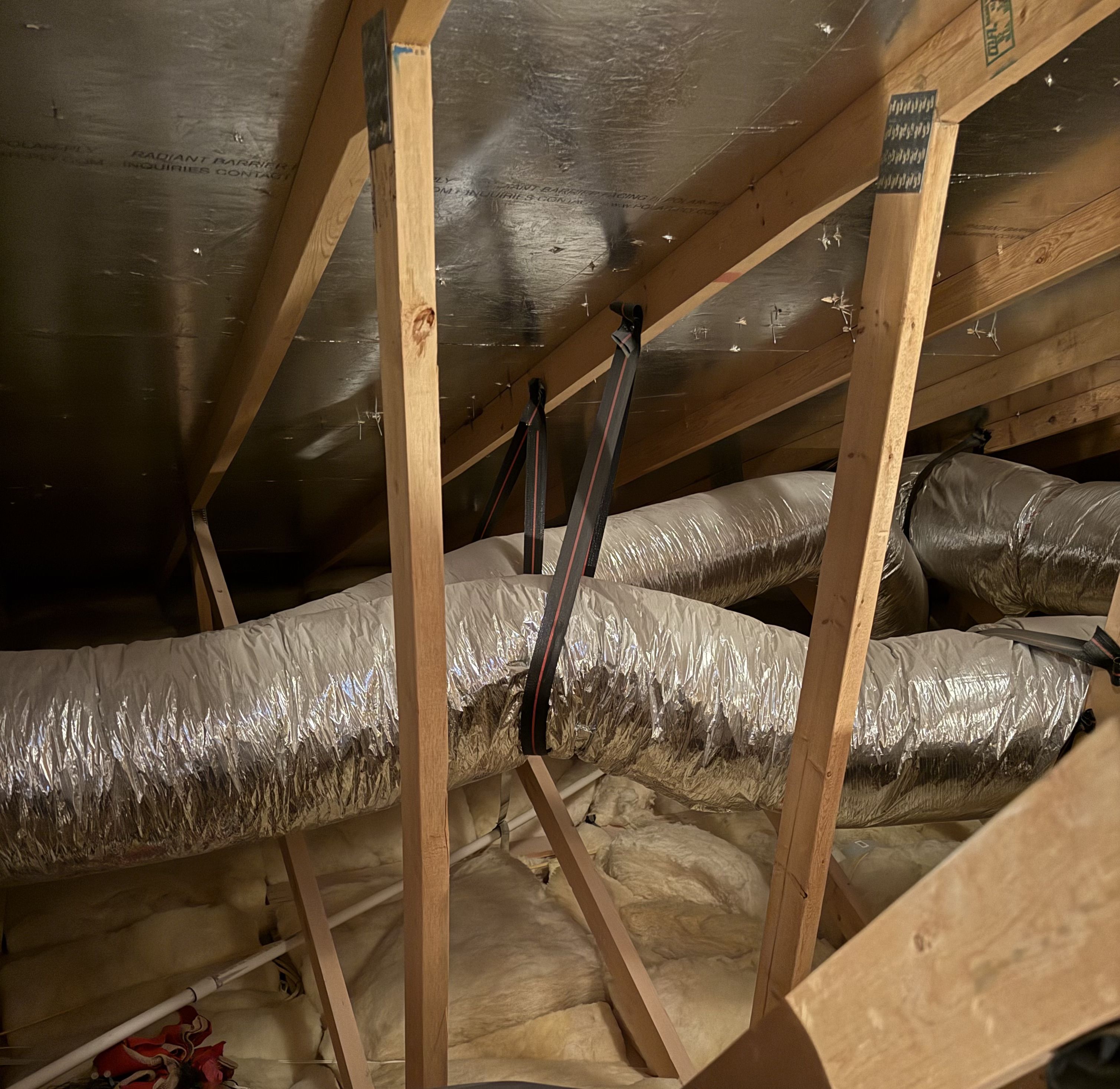
A large share of Spring Valley furnaces live in the attic, and a valley attic is a hostile place for equipment. Summer heat up there punishes flex duct and tape joints, insulation gets crushed by anyone who has been up to run cable, and access is often a pull-down ladder with barely enough platform to work from. When we service an attic furnace we look at the condensate path and the drain pan on high-efficiency units, and we check the duct connections at the plenum, because a joint that has pulled loose up there dumps expensive heat into a space nobody occupies.
Then there is the two-story problem. If your upstairs bakes and your downstairs stays cold in winter, or the reverse, that is the same airflow story that makes those houses cool unevenly in July. Heat rises, the return is usually undersized for the upper floor, and the branch runs to the far bedrooms are the longest in the system. A furnace tune-up alone will not fix a distribution problem, which is why it helps to have the crew that does Spring Valley air balancing looking at the heating side too. We can measure what each register is actually delivering and adjust the dampers so the rooms even out instead of guessing at the thermostat.
Get on the schedule before the first cold snap
October and early November are open. December is when everyone calls at once, and that is the worst week to be waiting on a part.
Where We Work in Spring Valley
We cover the whole township, from the Spring Mountain Road corridor and the neighborhoods around Spring Valley Hospital out to the Rainbow, Durango and Jones arterials, including the condo and apartment communities that make up so much of the housing stock here. Single-family, townhome or a mid-rise unit with a closet furnace, the checklist is the same.
Questions We Get About Heating Maintenance
My furnace barely runs. Does it really need annual service?
Yes, and the light use is the reason rather than an argument against it. Dust collects on the flame sensor and ignitor during the nine months the furnace sits still, and gas valves and safety switches do not like sitting idle either. Low run hours hide small problems until the coldest morning of the year exposes all of them at once.
Is the burning smell on the first cold night normal?
Usually. Dust that settled on the heat exchanger all summer burns off when the furnace fires for the first time, and the smell should clear within an hour of running. If it returns on every cycle, smells sharp or electrical, or comes with soot around the cabinet, shut the unit off and call us before running it again.
How long does the visit take?
Plan on an hour to ninety minutes for a single residential furnace. Attic installations in Spring Valley sometimes run longer simply because getting tools and a service light up there takes time. If you have two systems, add roughly the same again for the second.
What happens if you find a cracked heat exchanger?
We shut the furnace down and tag it, then show you what we found and explain the options, which are typically a heat exchanger replacement or a new furnace depending on the age of the equipment. We will not leave a cracked exchanger running. Carbon monoxide is the one risk in this trade that does not give you a warning.
Why does my upstairs heat so unevenly?
Almost always airflow rather than the burner. Long branch runs to the far bedrooms, an undersized return on the upper floor and dampers nobody has touched since the house was built all add up. We measure delivery at the registers and adjust from there, which is the same work that fixes the summer version of the complaint.
When should I schedule?
October through early November. Parts are easy to source, our schedule has room, and anything we find can be repaired calmly instead of at nine on a Sunday night in December. Waiting until the house is already cold is how a routine ignitor replacement turns into a stressful week.
Do you service condo and apartment closet units?
Yes. Spring Valley has a lot of them and they get the same checks, with extra attention to venting and clearances since closet installations leave much less room around the cabinet. If the unit serves a whole building, our Spring Valley commercial HVAC service side handles it.
More Spring Valley Work
All Spring Valley, NV services · See our work · Send us a message