Duct Leakage Testing
We pressurize your duct system and put a measured number on the air it is losing. NCI-certified testing for Las Vegas homes, before anybody talks about a repair.

Every duct system leaks. That is not the finding. The finding is the number, how much of the air your furnace and air conditioner pay to condition never reaches a room. Most Las Vegas homes are losing somewhere between 20 and 40 percent of it, and the only way to know where yours falls is to measure. Duct leakage testing is how we get that number, and it is a separate job from fixing anything. We test first, we report what we found, and then you decide what to do about it.
The reason testing matters in this valley is the attic. Your ducts run through a space that hits 150 to 160 degrees in July, so any air that slips out of a joint is gone to the worst possible place. You cannot see that loss, you cannot hear it, and you almost never feel it as a single dramatic problem. It shows up as a back bedroom that never cools, an air conditioner that runs without a break, and an NV Energy bill that does not match the size of your house. Our duct leakage testing turns those symptoms into a measured rate.
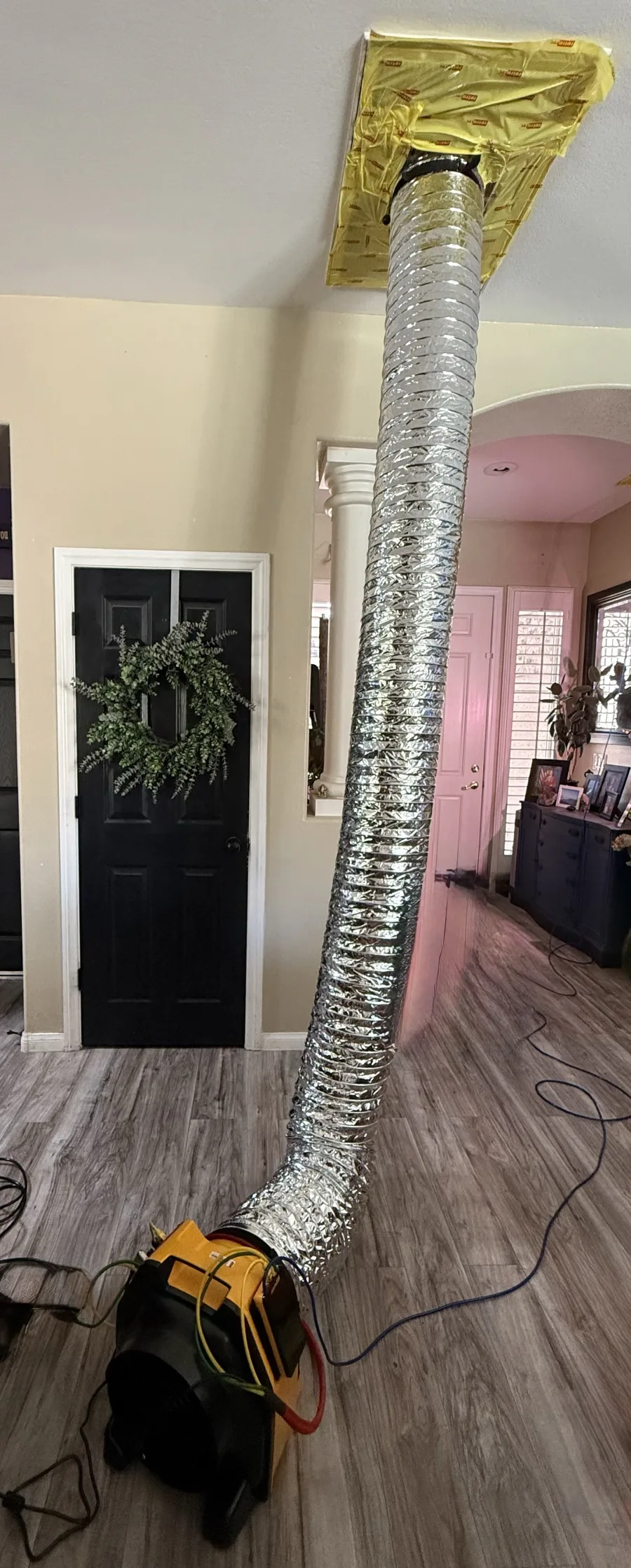
Here is how the measurement works. We seal off the registers and connect calibrated test equipment to the duct system, then pressurize the ductwork to a standard reference pressure. The amount of airflow it takes to hold that pressure is the leakage. More airflow means more holes. We read it directly off the instrument as a CFM figure and as a percentage of your system’s total airflow, so you are looking at data, not an opinion. Chris has been doing this work for 28 years and is certified by the National Comfort Institute, which means the test follows a documented protocol rather than a hunch.
We also walk the accessible ductwork while we are testing and note exactly where the air is going, separated take-offs at the plenum, crushed flex runs, dried-out mastic, tape that gave up years ago. You get a report with the measured leakage rate and the locations, and that report stands on its own. If you want us to seal the leaks, our duct sealing work picks up from there. If you want to take the report to another contractor, it works just as well there. The test is the deliverable, and we are happy to leave it at that.
System Assessment
We walk the accessible ductwork and the equipment first, noting visible damage, disconnected joints, deteriorated mastic, and failed tape. We pull your airflow data where it exists so the test has context, which registers are already coming up short before we pressurize anything.
Pressure Testing
We seal the registers and connect a calibrated duct pressurization fan to the system. The fan holds the ductwork at a standard reference pressure, and the airflow it takes to maintain that pressure is read directly as the leakage rate. This is a blower-door-class measurement applied to the duct system specifically.
Leak Location
With the system under pressure, we find where the air is actually escaping. Smoke at the registers and joints, pressure mapping across the runs, and thermal imaging where the leak is behind a surface all point to the specific spots, so the report names locations rather than a single total.
Measured Results
You receive the leakage rate in CFM and as a percentage of total system airflow, with the locations mapped. That number is the baseline. If you later seal the ducts, the same test re-run against it proves the improvement, no guessing, just a before figure you can hold a contractor to.
An Actual Number
You leave with a measured leakage rate, not a salesperson’s impression. The percentage tells you whether your ducts are a minor issue or the main reason your bills are high.
A Standalone Report
The test results are yours to use. They prove the problem to you, support a rebate or audit, and work just as well if you take them to a different contractor for the repair.
A Proof Baseline
Because the test gives you a before number, any sealing work done later can be re-tested against it. You can verify the air loss actually dropped instead of taking it on faith.
If your power bill is high and certain rooms never get comfortable, leaky ducts are often the hidden reason. In a Las Vegas attic that hits 140 degrees, every gap in the ductwork is dumping the air you paid to cool straight into that oven. Duct leakage testing measures exactly how much.
We pressurize the duct system and read the leakage rate, then map where the worst of it is coming from. It is common to find a home losing 20 to 30 percent of its conditioned air before it reaches a single register. The test turns a vague suspicion into a hard number, so you know whether the ducts are worth sealing or whether the problem is somewhere else.
This is the kind of measured proof Chris built the company on, no hand-waving, just the reading. See duct work in the gallery.
My bedroom never cooled no matter how low I set the thermostat. The leakage test showed a quarter of my air was leaking into the attic. Once I saw the number it made total sense. They sealed it and that room is finally comfortable.
Still have questions? Contact us directly or call (702) 840-5163, we are happy to help.
Ready to Get Started?
Contact Constant Air Balancing & Services today for a free, no-obligation quote. We look forward to working with you.