Short versionIn shared housing, about half the fixes a resident wants are not theirs to make, so a lot of calls go to the wrong party. What sits inside your walls is usually yours. What sits on the roof or runs between units is usually the building’s. Your CC&Rs, declaration, or lease settles it. Here is where the line normally falls in Spring Valley.
Why so many condo calls go to the wrong party
Spring Valley holds one of the densest stacks of condo and apartment housing in the valley. A lot of it went up in the 1980s and 1990s along Rainbow, Jones, and the Spring Mountain corridor, and much of that stock shares equipment in ways a single family house never does. So when the air in a unit is wrong, the resident calls somebody. Half the time they call the wrong somebody, wait two weeks for a response, and land back where they started with the same warm bedroom. Knowing the line ahead of time is worth more than anything you could buy at the hardware store.
The usual split
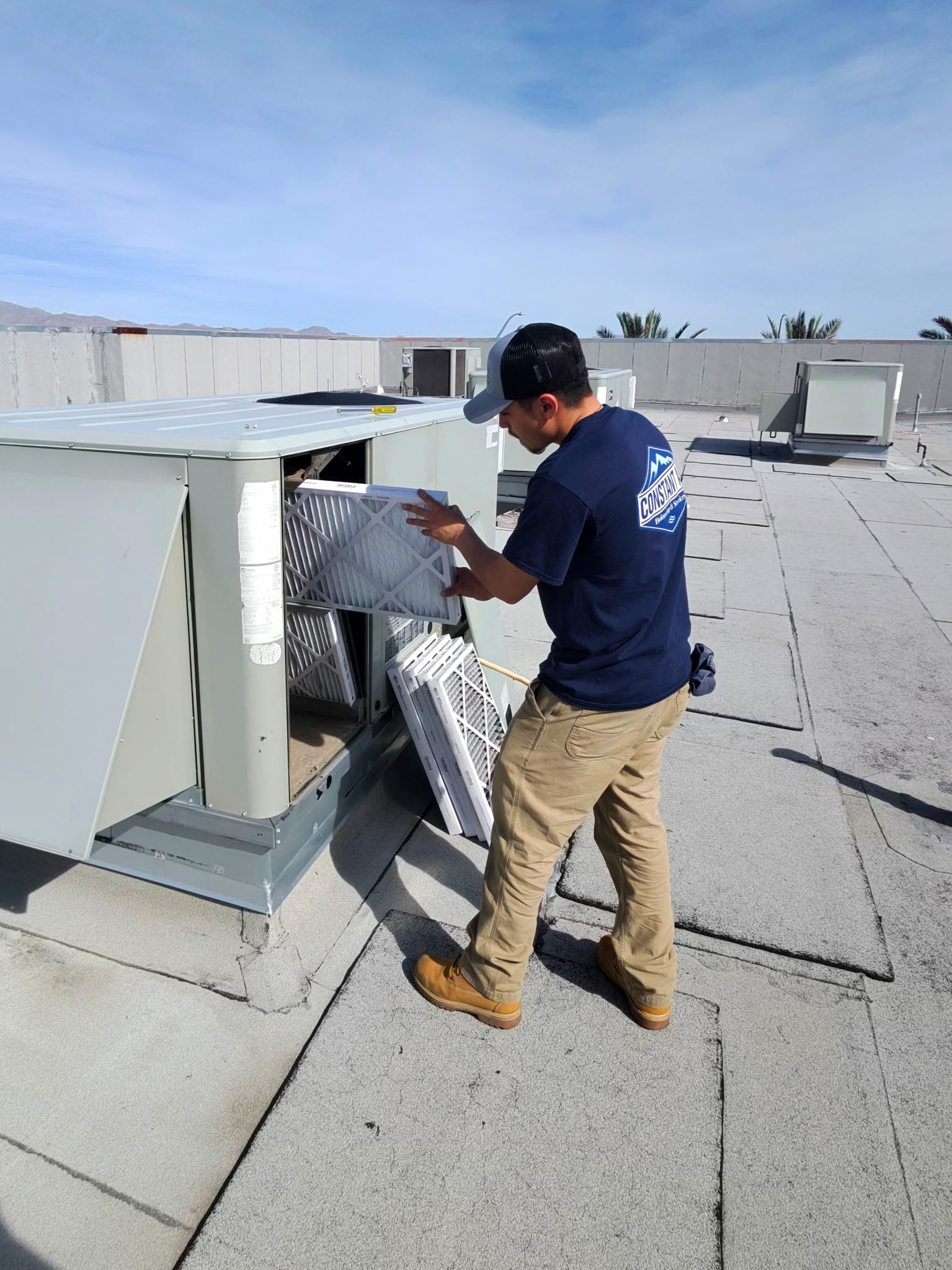
The arrangement we run into most often looks like this. Equipment inside the unit belongs to the owner: the air handler in the closet, the coil, the thermostat, the flex duct above your ceiling and inside your walls, the supply registers, the return grille, and the condensate line up to the point it leaves your space. Anything shared belongs to the association: rooftop condensers or package units, refrigerant risers running between floors, shared return plenums, exhaust shafts, makeup air units, and whatever fan pressurizes the corridor. Treat that as the usual arrangement rather than a rule, because buildings really do differ.
The document that actually decides it
Your CC&Rs, your declaration, or your lease is the authority, and the management company is the party that reads it for you. We have worked in Spring Valley buildings where the owner is responsible for the rooftop condenser serving their unit, and others where the association owns everything past the closet door. Two properties across the street from each other can be written completely differently. Before you spend a Saturday arguing about it, ask management for the maintenance responsibility chart. Most well run associations keep one on a single page, and it settles more disputes than any technician standing in your living room can.
What you can change on your own
Your filter is yours. In a condo the filter often sits behind a return grille in a hallway ceiling instead of at the air handler, so people go years without finding it. Pull the grille, read the size off the frame, and put back the same size. Do not jump straight to the thickest, densest filter on the shelf, because a small closet air handler pushing through a short duct run does not have the static pressure budget for it. If the blower gets louder and the far bedroom gets warmer right after a filter change, the filter is the reason.
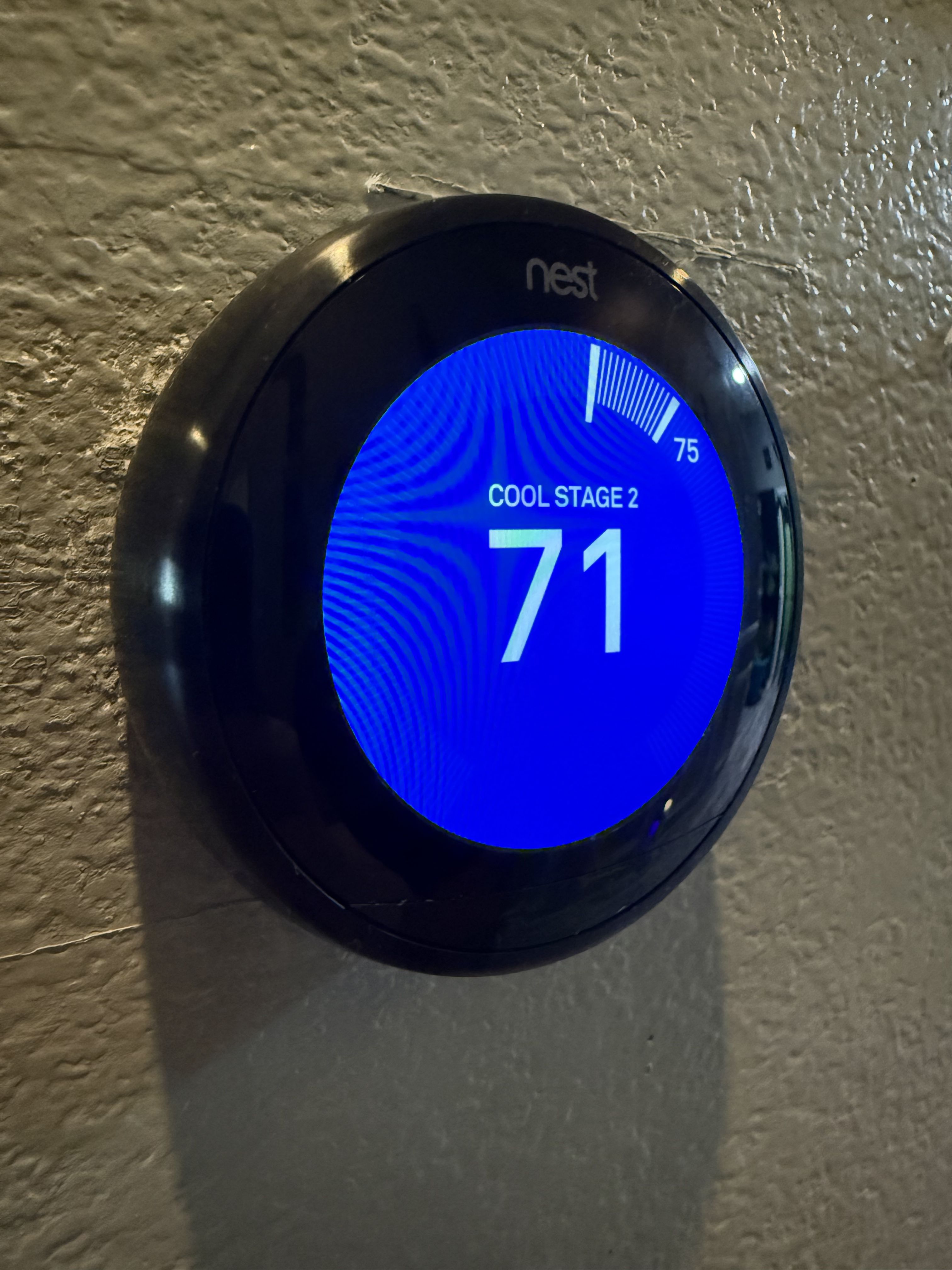
Registers and return grilles are yours as well. Vacuum them, and check that a rug, the back of a couch, or a closed closet door is not sitting on the only return in the unit. The thermostat is yours, including how it is programmed, though a shared system may limit what it can actually do. If there is a manual damper on a branch duct inside your walls, that is yours to adjust, and it is the single most useful thing most condo residents never touch. Your condensate line is yours to the point it leaves your space, and a slow drain that trips a float switch and shuts the whole system down is a short job, not an emergency.
What needs approval before anyone touches it
Anything on the roof needs approval. Anything that penetrates a demising wall, meaning the wall you share with a neighbor, needs approval, and in most buildings so does anything that opens into the plenum above your ceiling. Changing equipment size needs approval too, and that is where owners get into real trouble. Setting a larger condenser on a curb sized for the original unit, or oversizing an air handler because somebody said bigger is better, can affect the electrical service, the roof loading, the refrigerant line set, and the air balance of every unit sharing that shaft. Plenty of associations also want a licensed contractor on file and a certificate of insurance before anyone gets roof access at all. Ask before you schedule, not after.
When a neighbor’s cooking shows up in your living room
This is the complaint we hear most in shared housing, and the instinct is always filtration. Somebody buys a purifier, changes the filter, and the smell keeps arriving anyway. A filter can only clean the air that passes through it. It cannot stop air from moving from one place to another, and movement is what is actually happening. Smoke, cooking, cat boxes, and laundry sheets travel between units because a pressure difference is pushing them, through a shared return, a plumbing chase, an unsealed recessed light, an outlet box in a demising wall, or the gap under your entry door.
So the fix follows the pressure, not the odor. On your side that means closing the paths you own: gasket the outlet and switch boxes on shared walls, seal the chase behind the bathroom vanity, cover recessed cans properly, and close the opening where the tub plumbing enters the wall. If all of that is already tight and the smell still shows up on schedule every evening, the driver is on the building side and it belongs in a written complaint. We go deeper on the testing side under indoor air quality in Spring Valley and cover what we measure and why it points at pressure.
The unit that stays negative
A unit goes negative when more air leaves it than comes in. Run a bathroom fan and a range hood at the same time in a tight condo with no makeup air, and you will pull a real volume of air from wherever it is easiest to get: the corridor, the neighbor, the shaft. You can usually feel it before anyone measures it. The entry door is hard to pull open, or it slams on its own, you hear a whistle at the threshold, and the corridor carpet smell arrives in the entry hall.
Buildings are supposed to handle this by keeping the corridor slightly pressurized so air moves from the hallway into units instead of the other way around. Those corridor fans fail quietly, get switched off to save energy, or never get rebalanced after a renovation. That is association territory. On your side, stop running two exhaust fans at once, crack a window on the sheltered side of the building when you need heavy exhaust, and make sure your return path is not so restricted that the blower is fighting to breathe. Those help. They do not replace a working building fan.
Balancing what is inside your walls
When the building side is off limits, there is still real work available inside the unit, and this is where a balance earns its keep. We measure what each register is actually delivering, compare it against what the room needs, and move air from the rooms that have too much into the rooms starving for it using the dampers and takeoffs inside your space. In a two bedroom condo the pattern is almost always identical: the living room next to the air handler is cold and loud, the far bedroom on the west exposure runs warm all afternoon, and the thermostat sits in the one hallway that stays comfortable no matter what. None of that requires roof access. The full process lives on our air balancing in Spring Valley page.
Older stock, wall units and closet units
A good share of Spring Valley condo and apartment stock still runs an original wall unit or a closet air handler from the decade it was built. Wall units are simple, they are loud, and they are usually the only supply and return the room has, which means a closed bedroom door turns that room into its own little climate. Closet units from that era often have short, badly turned duct runs because the closet was placed for the floor plan rather than for the airflow. Neither one is a lost cause. Sealing the closet return, straightening a single bad elbow, and correcting how the registers throw air often buys back more comfort than swapping equipment would.
How to write a complaint management will act on
Management companies act on documentation and tune out frustration, so write it as a record. Give the date and time of each occurrence, the outdoor temperature, which rooms were affected, what was running in your unit at the time, and what changed when you tried something. Note whether the entry door was hard to open. If a neighbor has the same problem, put their account in the same message, because two units reads as a building issue while one unit reads as a resident issue. Attach a photo of the return grille and the thermostat display. Then ask for one specific thing, such as a check of the corridor pressurization fan or a look at the shared return, instead of asking them to fix the air. If you want a technician’s written findings to attach, we can put that together, and you can see the rest of what we cover in Spring Valley on our area page.
Not sure which side of the line your problem is on?
We will read the unit, tell you plainly what is yours and what belongs in a letter to management, and balance whatever we are allowed to touch.
Call (702) 840-5163 Book a walkthroughWho is responsible for the air conditioner in a condo?
Most commonly the owner covers the equipment inside the unit and the association covers the rooftop equipment, risers, and shared plenums. That is the usual arrangement, not a legal rule. Your CC&Rs, declaration, or lease decides it for your specific building, and the management company can hand you the responsibility chart that spells it out.
Why do I smell my neighbor’s cooking or smoke inside my unit?
Because air is moving from their space into yours, usually through a shared return, a plumbing chase, an outlet box in the shared wall, or the gap under your door. Filtration cleans only the air that passes through it, so it cannot stop that movement. Seal the paths you own, then take the rest to management in writing.
Can I put a thicker, denser filter in my condo air handler?
Be careful. Small closet air handlers have a limited static pressure budget, and a very restrictive filter can cut airflow to the rooms farthest from the unit and make the blower work harder. Match the size on the existing frame, and have someone measure static pressure before moving up several steps in filtration.
Is air balancing worth it if I cannot touch the rooftop unit?
Usually yes. Most comfort complaints in a condo come from how air is divided among the rooms rather than from the capacity of the equipment. Dampers, takeoffs, register throw, and return path all sit inside your unit, and correcting them is normally enough to even out a warm back bedroom.
What should I send my management company?
Dates, times, outdoor temperature, affected rooms, what was running, and whether the entry door was hard to open. Add a neighbor’s account if they have the same issue, attach photos, and request one specific check rather than a general fix. Written findings from a technician give them something concrete to route to a vendor.