Lab HVAC
Fume-hood face velocity, lab pressure relationships, and air change rates measured and balanced to spec. Laboratory ventilation for Las Vegas research and medical labs.
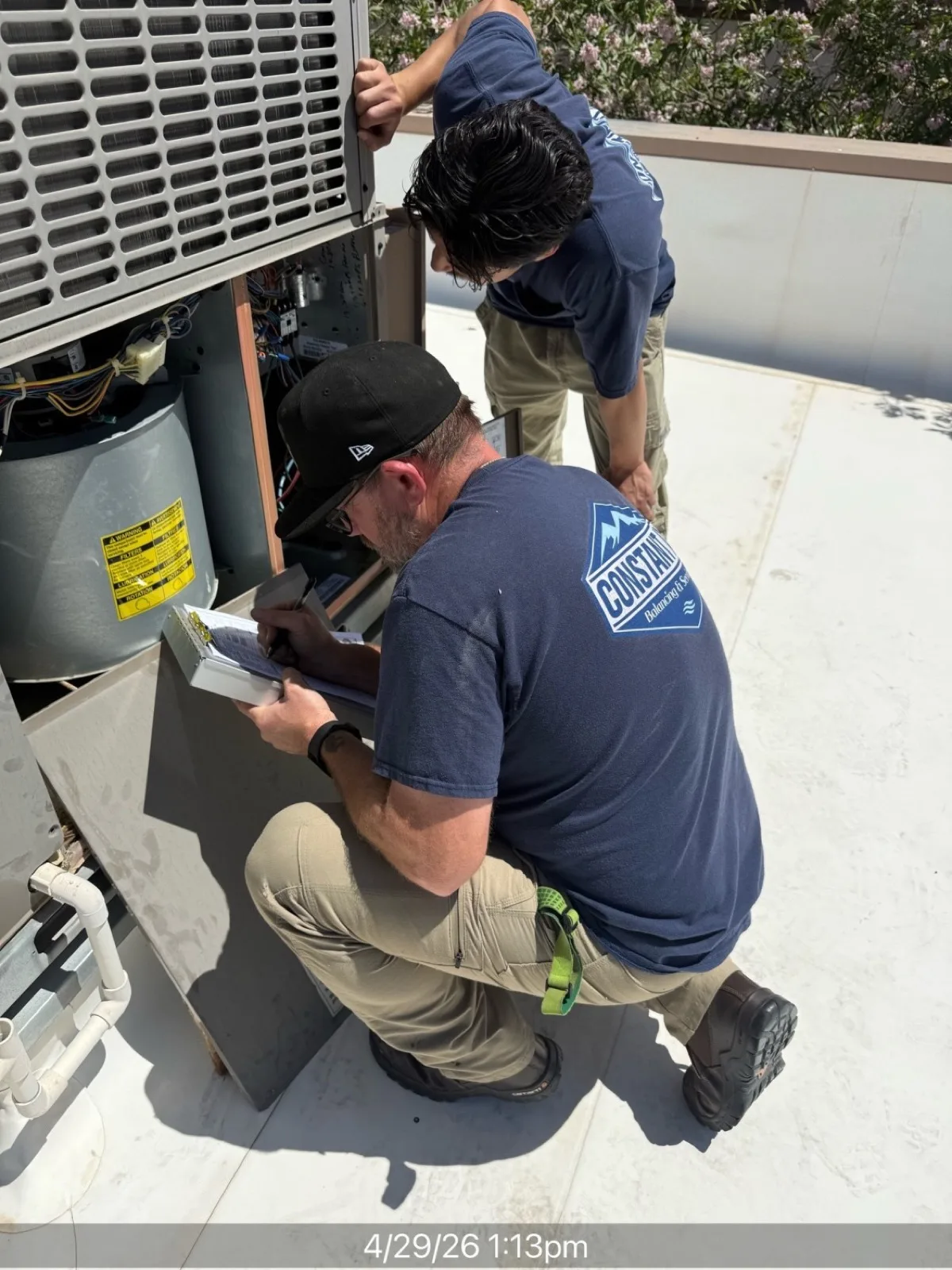
In a laboratory, the ventilation is not a comfort system, it is a containment system. The fume hood that keeps a chemist out of the vapor, the negative pressure that keeps a hazardous process from drifting into the corridor, the air change rate that flushes the room often enough to keep concentrations safe, all of it is specified for a reason and all of it has to be verified by measurement. Lab HVAC is the discipline of getting those airflows right and proving they are right, and it is balance work first.
Constant Air Balancing and Services commissions and maintains laboratory ventilation across Las Vegas for research and development labs, university and college teaching labs, medical and clinical labs, dental and veterinary facilities, and light-industrial process labs. Chris is NCI certified with 28 years of air-balancing experience, and that background is exactly the credential lab work demands, because in a lab the measurement is the deliverable. A general HVAC contractor can replace a unit; balancing a fume hood to a verified face velocity is a different skill set.
Our lab scope centers on three things. Fume hood face velocity: we measure the air pulled across the hood sash on a grid and adjust the exhaust so it sits inside the safe band, fast enough to capture vapors, not so fast it creates turbulence that spills them. Room pressure relationships: we set and verify the differential that keeps a lab negative to the corridor, or a clean prep room positive to its surroundings, so contaminants move in the intended direction and only that direction. And air change rate: we confirm the room is flushing at the ACH its hazard class requires, measured, not assumed.
We commission new labs, re-certify existing ones on the schedule the safety program requires, and diagnose labs that are failing, a hood that will not hold velocity, a room that lost its pressure relationship, an exhaust fan that is not moving its design CFM. We work with facility engineers, lab safety officers, and EHS managers, and the deliverable is always documentation: face-velocity traverses, pressure-cascade readings, and a certified report. Lab work and cleanroom HVAC are related disciplines, and both build on our commercial air balancing foundation.
Spec and Hazard Review
We start with the lab’s design intent, the fume-hood face-velocity target, the required room pressure relationships, and the air change rate the hazard class calls for. Every measurement that follows traces back to one of those written requirements.
Fume Hood Face Velocity
We traverse the hood sash on a measured grid with a calibrated anemometer and adjust the exhaust so the average face velocity sits inside the safe band, typically around 100 feet per minute, with the local readings even enough to capture vapors without turbulent spillage.
Pressure Relationships
Room-to-corridor and room-to-room differentials are measured with calibrated manometers, then set so a hazardous lab stays negative and a clean prep space stays positive. We verify the relationship holds with doors closed and during normal use.
Air Change Rate
Supply and exhaust airflow are measured at every terminal and totaled against the room volume to confirm the air change rate meets the spec for the lab’s hazard class. If it falls short, we correct it at the dampers, the fan, or the terminal, then re-measure.
Certified Report
Every reading, every adjustment, and every reference standard goes into a TAB report formatted for the safety program and any regulatory or accreditation review. It is the document that proves the lab is operating inside its containment spec.
Balance Is The Credential
Lab ventilation is air-balancing work before it is equipment work. Our 28 years of commercial balancing is the exact background that translates into verified fume-hood velocity and pressure relationships.
Calibrated Instruments
Anemometers for face velocity, manometers for pressure, flow hoods for terminal airflow, every instrument carrying current calibration documentation so the readings stand up to a safety auditor.
Report Built For EHS
The deliverable is formatted for your environmental health and safety program and any accreditation review, face-velocity traverses, pressure readings, and ACH all documented in one report.
Lab HVAC is unforgiving by design. Temperature and humidity have to hold tight tolerances, pressure relationships between rooms have to stay exact, and fume hood face velocities have to meet safety spec. None of that is optional, and none of it can be eyeballed.
We balance and verify lab systems against every one of those targets, reading air changes per hour, room pressure differentials, and hood face velocities directly at the equipment. When a fume hood spec calls for 100 feet per minute at the face, we measure it and document it, because the safety of the people in that room depends on the actual number. The validation paperwork reflects what the instruments read, nothing projected.
Chris brings nearly three decades of precision commercial and industrial work to lab environments. See critical-environment projects in the gallery.
Our fume hoods were not pulling to spec and the room pressures were off. Constant Air measured everything, balanced the system, and documented the face velocities for our validation file. They clearly understood lab requirements, which is rare to find.
Still have questions? Contact us directly or call (702) 840-5163, we are happy to help.
Ready to Get Started?
Contact Constant Air Balancing & Services today for a free, no-obligation quote. We look forward to working with you.