
New equipment inherits the old ductwork. If the ducts in an older Boulder City house leak into the attic or crawlspace, a new air conditioner or furnace pushes its air into the same holes. A duct leakage test seals a pressurization fan to a register and measures how much air the system loses. Running it before the equipment decision tells you whether the ducts need work first.
Most people shop for a new system by comparing equipment. Brand, efficiency, size. The ductwork rarely comes up, because nobody can see it and it feels like part of the house rather than part of the system. In Boulder City that assumption gets expensive in comfort. Much of the housing here dates from the 1930s through the 1980s, and a lot of the attic and crawl ductwork in those homes has never been tested once in its life.
The Ducts Are Older Than the Equipment
A typical replacement swaps the condenser, the coil, and the furnace or air handler, then reconnects all of it to the ductwork already in the house. The equipment is new. The duct system it feeds may have gone in when the house was built, been patched during a remodel, been extended for a room addition, and been stepped on by everyone who has climbed into that attic since.
In the older ranch homes and the dam-era cottages downtown, it is common to find joints held together by tape that dried out years ago, collars never sealed to their boots, and flex runs that pulled partway off a fitting and now dump some of their air into the attic. None of it shows from inside the house. The registers still blow and the system still runs. It just runs longer than it should, and the rooms at the end of the leakiest runs never quite catch up. Put new equipment on top of that and you have paid for efficiency the ducts give away.
How a Leakage Test Works
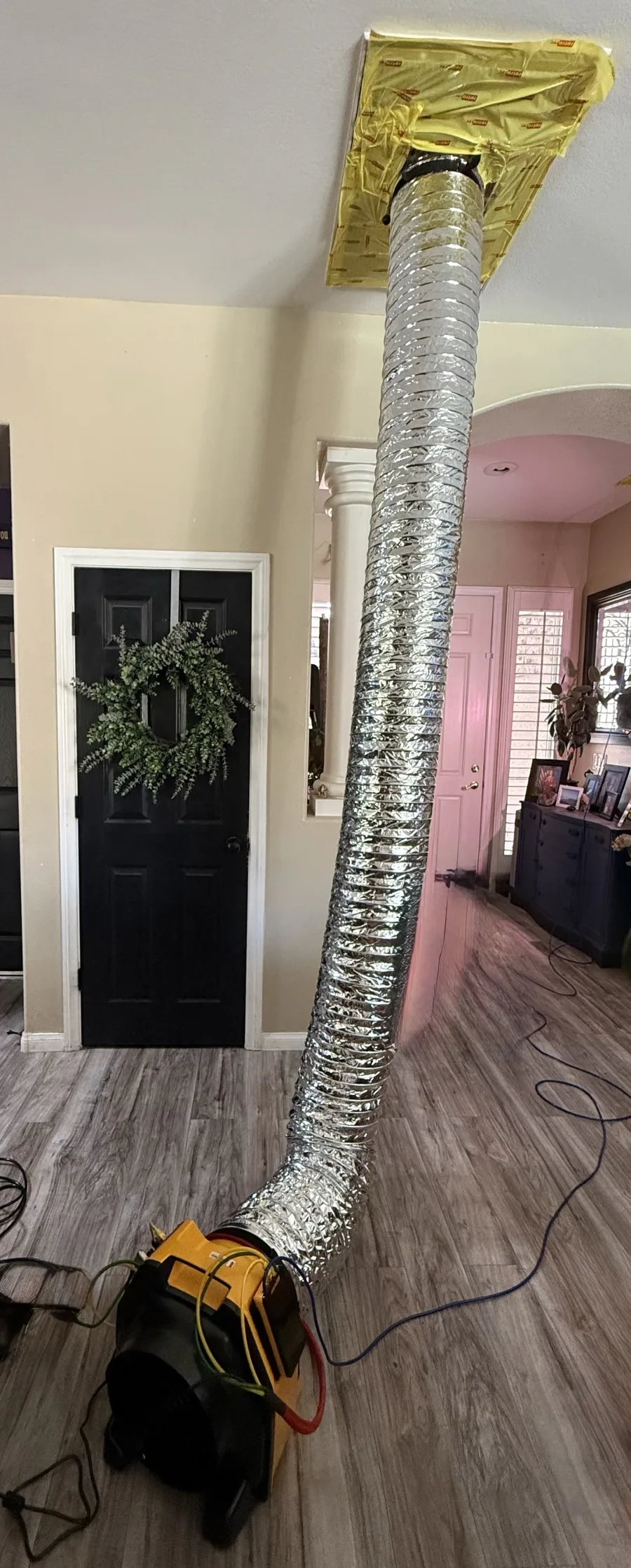
Duct leakage testing puts a number on what the eye cannot see. We seal off the supply and return registers around the house, then connect a calibrated pressurization fan to one register with a sealed flex connection. The fan pressurizes the duct system to a test pressure, and the instrument reads how much air the fan has to keep pushing to hold it there. Air that has to keep flowing in to hold pressure is air escaping somewhere. That flow is the leakage.
The test covers the whole system at once, including joints buried under insulation and connections tucked behind the air handler, which is why it beats crawling around with a flashlight. Once we have the total, we can hunt for the worst spots with the fan still running, since air rushing out of a bad joint is easy to feel and hear. The Boulder City duct leakage testing page lays out the visit step by step.
Why the Order Matters
Sizing new equipment depends on how much conditioned air actually reaches the rooms. When the ducts lose a large share of it into the attic, the house feels undersized for the old system, and an installer may reach for bigger equipment to make up the difference. Bigger equipment on leaky ducts short cycles, cools unevenly, and still leaks. Seal the ducts first and the right size may turn out to be the size you already have.
Order matters for the work itself too. Sealing often means working around the air handler, the plenum, and the first few feet of trunk, which are exactly the connections a replacement disturbs. Testing first lets us find the problems. Sealing them during the install avoids doing the same section twice. A second test at the end confirms the new system is connected to ducts that hold their air, so you finish with two numbers, before and after, instead of a promise.
What Older Houses Here Tend to Show
The housing in Boulder City leans older because a growth-control ordinance caps how many new homes can be permitted each year. More of the systems we see are feeding ducts that have been in service a long time, often in hot attics or tight crawlspaces.
The patterns repeat. A return pulling from the attic through an unsealed platform, so the system breathes attic air instead of house air. Supply runs extended for a room added on later, with the newer joints done faster than the originals. Crawlspace ducts that were never sealed because nobody expected anyone to go down there. Old dampers rusted in one position.
None of this means the ducts have to come out. Many systems test poorly and come back well after sealing. Some runs are too far gone or too badly routed, and those are worth replacing while the attic is already open. The test tells us which kind of system you have.
Permits, Equipment, and the Next Step
Boulder City runs its own building department, so permits for new equipment come from the City of Boulder City rather than Clark County. That is worth knowing if your last install was handled by someone who assumed otherwise.
Once the test results are in, the equipment conversation gets simpler. If the ducts hold, we size and select equipment knowing the air will reach the rooms. If they leak, we can quote the sealing and the equipment together so you see the whole job before deciding. Either way, the choice rests on measurements from your own house. After an install, air balancing sets each room’s share of the airflow, which is why it so often follows a duct seal. The main duct leakage testing page covers the method in more detail.
Questions Before a Replacement
Does a duct leakage test make a mess?
No. We cover registers with temporary film and connect the fan to one opening, then remove all of it when we finish. Nothing gets cut for the test itself. If sealing is needed afterward, that work happens in the attic or crawlspace at the joints and collars, away from the living space and the furniture.
Can leaky ducts be sealed without replacing them?
In many older homes, yes. Joints, collars, and plenum connections can be sealed in place, and a retest shows how much the leakage dropped. Runs that are crushed, torn, or badly routed are usually better replaced, especially when the attic is already open for new equipment. The test results guide that choice for each run.
Is the test worth doing if the system is not being replaced?
It is worth doing if some rooms never keep up, the house gets dusty fast, or the system runs much longer than it used to. Leakage costs comfort and energy whether the equipment is new or old. The test is the same either way, and so is the sealing that follows it when the number comes back high.
Before the New Unit Arrives
New equipment is only as good as the ducts it pushes into. In an older Boulder City house, test them first, seal what leaks, and then pick the system. Doing it in that order keeps you from paying twice for the same comfort problem.
Find Out What Your Ducts Are Losing
A pressurization test, the leakage number in writing, and a plain answer about what to seal before new equipment goes in.
Free Quote (702) 840-5163HVAC service in Boulder City · More posts · Ask about a duct test