
When an air conditioner stops cooling, the cause is usually on a short list, and the order we work through it saves time. Controls and power first, then airflow, then the electrical parts at the condenser, then the refrigerant side. We take static pressure and temperature split readings along the way so the diagnosis rests on measurements, and we explain what we found before any part gets replaced.
A call about a dead air conditioner on a hot afternoon usually arrives with a guess attached. The owner figures it needs refrigerant, or that the whole unit is gone. Sometimes that turns out to be true. More often the trouble is smaller than it looks and sits earlier in the chain. Here is how we work through a system in Boulder City, in the order we actually do it on the roof, in the yard, and at the air handler.
Controls, Power, and the Drain Come First
It sounds too simple to mention, but a fair share of no-cooling calls end at the thermostat or the breaker. Weak batteries, a mode switched to heat, or a schedule somebody forgot about will keep the system off while everything else is healthy. We confirm the thermostat is calling for cooling and that the call actually reaches the equipment.
Then power. Boulder City runs its own city-owned electric utility, and once that power reaches the house, the breakers, the outdoor disconnect, and the wiring are part of the system we check. A tripped breaker is a symptom, not an answer. If it tripped, something drew more current than it should have, and resetting it without knowing why only sets up the next trip.
We also check the safety switches. Many indoor units carry a float switch in the condensate pan or drain line that shuts the system down when water backs up. A clogged drain stops cooling as completely as a failed compressor, and it is a far easier fix.
Airflow Before Refrigerant, Every Time
If the system runs and the air at the registers is not cold, the next question is how much air is crossing the indoor coil. A filter packed with dust, a blower turning slowly, or a coil caked with dirt all starve the coil. A starved coil can get cold enough to ice over, and the ice blocks airflow further until the system barely cools at all.
This is where static pressure readings earn their place. Measuring pressure across the filter, the coil, and the blower tells us whether the system is fighting resistance it should not have. A temperature split, the difference between air entering the return and air leaving a supply, tells us how much heat the coil is pulling out.
Together those readings point at the cause. A low split with high static pressure says airflow. A low split with normal static pressure sends us to the outdoor unit or the refrigerant circuit. Adding refrigerant to a system that is really starved for air covers up the problem for a few days and changes nothing.
At the Condenser: Capacitor, Contactor, Fan Motor
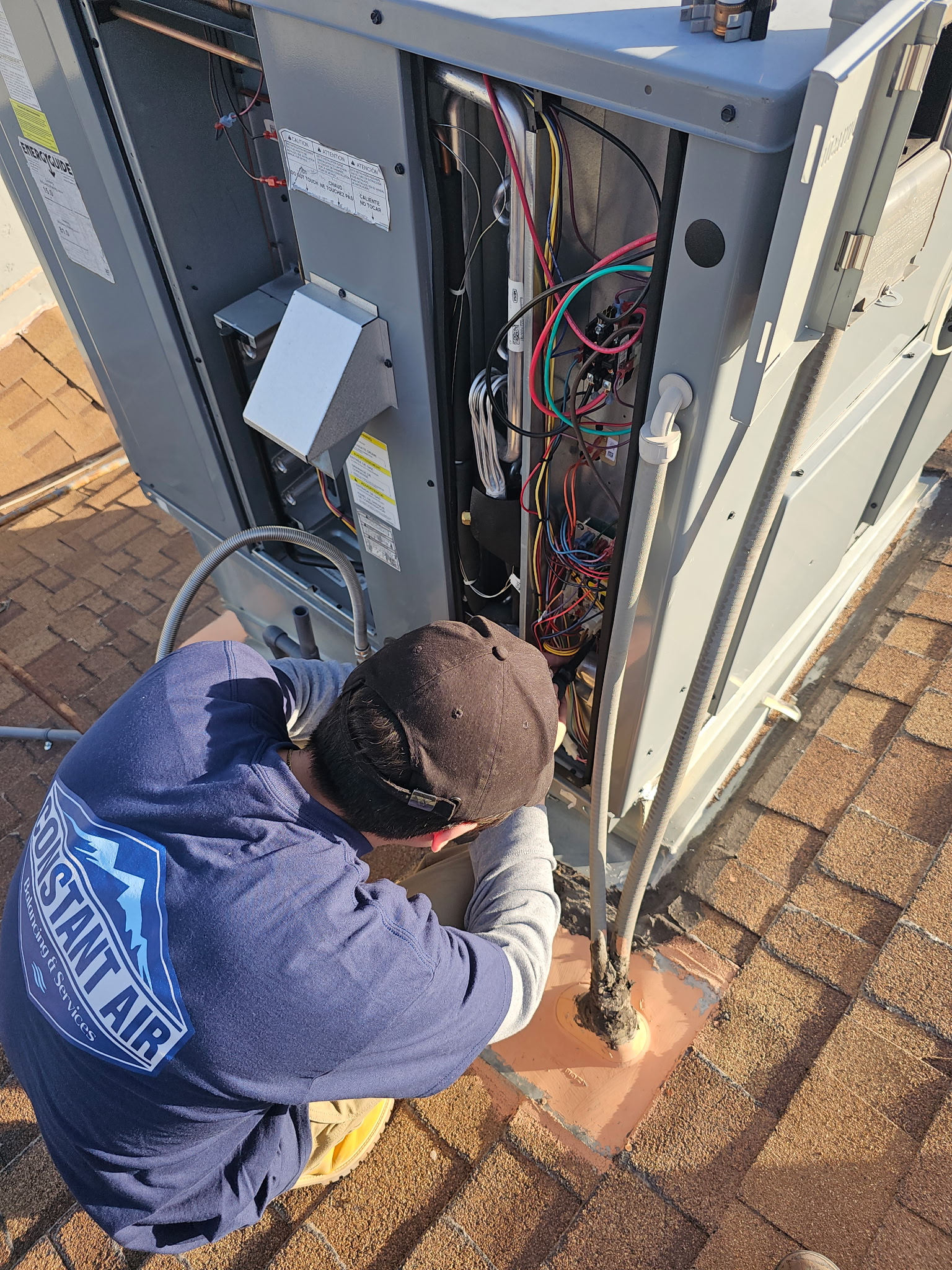
The outdoor unit holds the parts that fail most often when a system quits on a hot day. The capacitor gives the compressor and the condenser fan motor the push they need to start, and when it weakens the unit hums, struggles, or starts and stops. The contactor is the switch that sends power outside when the thermostat calls, and its contacts pit and burn after years of cycling. The fan motor carries heat away from the outdoor coil, and when it stops the compressor overheats and shuts itself down.
We test these with meters rather than swapping parts until something works. A clamp meter on the wiring shows what the motors are drawing, a capacitor reading shows whether it is within its rating, and a look at the contactor shows whether it closes cleanly. A good number of repairs end right here, with one part replaced and the readings back where they belong.
When the Problem Is the Refrigerant Circuit
If controls, airflow, and the outdoor electrical parts all check out and the system still is not cooling, we move to the refrigerant side. Gauges and line temperatures tell us whether the charge suits the conditions. A system that is low on refrigerant did not use it up, because refrigerant does not wear out. Low charge means a leak, and the honest repair is finding that leak rather than topping the system off and driving away.
Leaks tend to turn up at brazed joints, at the service valves, in the coil itself, and anywhere a line rubs against something. Finding one can take some patience. Once we know where it is, the conversation turns to whether it can be repaired, whether a coil needs replacing, and how old the rest of the system is.
That is where a repair or replace question comes up, and it should come up with numbers attached. We give you the readings and the options. You make the call.
Older Systems in Older Houses
A lot of Boulder City homes are older, since a growth-control ordinance limits how many new homes get permitted each year. Older houses often carry older systems, or newer equipment tied to ducts and wiring from an earlier era, and that shapes what we find. A failed part on an older unit may still be available, or it may be discontinued and need a substitute.
Ducts leaking into a hot attic can make a healthy system look weak, and nothing done at the condenser changes that. A duct leakage test sorts it out when the equipment readings look fine and the house still will not cool. Homes that run a swamp cooler alongside refrigerated air need the cooler duct closed while the AC runs, or cooled air escapes through the roof, and our evaporative cooler service covers that changeover. The Boulder City AC repair page explains the repair visit in more detail, and the main AC repair page covers the service across the valley.
Repair Questions From Boulder City Homeowners
Is it safe to keep resetting a tripped breaker?
Once is reasonable. If it trips again, leave it off and call. Repeated trips mean something is drawing too much current, often a failing motor or compressor, a weak capacitor, or a wiring fault. Resetting it over and over can damage parts that were still fine and turn a small repair into a much bigger one.
Why is there ice on the indoor coil or refrigerant line?
Ice usually means the coil is not getting enough air or the system is low on refrigerant. Turn the cooling off and let the ice melt, with the fan running if you can, before we arrive. Running a frozen system can damage the compressor, and the readings we take only mean something once the coil has fully thawed.
Do you explain the problem before replacing parts?
Yes. We show you the readings, tell you what failed and why we think so, and lay out the repair options before any part goes in. If the system is near the end of its life, we say that too, with the numbers behind it, so the decision stays with you and not with whoever happens to be holding the gauges.
Start at the Beginning of the Chain
Most air conditioners that quit in a Boulder City summer fail somewhere early: the thermostat, the drain, the filter, a capacitor. Checking in order finds those quickly and keeps the big guesses off the table until the readings actually point there.
Get the Cooling Back On
NCI-certified techs who check in order, take the readings, and walk you through them before anything gets replaced.
Free Quote (702) 840-5163HVAC service in Boulder City · More posts · Tell us what the system is doing