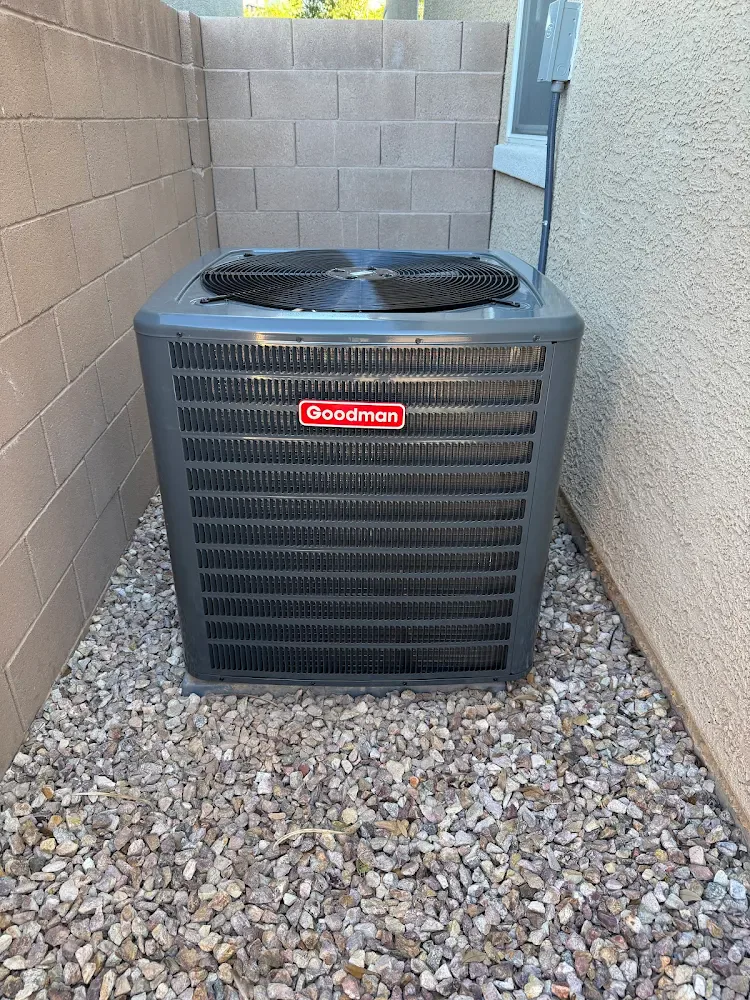
Two identical systems installed in two identical houses can perform completely differently, because installation quality decides more than the brand on the box. A proper install starts with load calculations and a hard look at the ductwork, and it ends with commissioning: measuring the airflow at every register and balancing the system to the house. That last step is our specialty, and it is the one most companies skip.
Here is something 28 years in this trade has taught us: the equipment almost never disappoints. The installation does. We get called into homes across the Las Vegas Valley where a system barely two years old cannot hold the back bedrooms within five degrees of the thermostat, and the homeowner assumes they bought a lemon. Then we put instruments on it and find the real story. Undersized returns. A duct trunk crushed at a framing member. A system a half-ton too big for the house, short-cycling itself to an early death. The equipment was fine. The install failed it.
Sizing by Measurement, Not by Rule of Thumb
The old habit in this town is to size a replacement by whatever was there before, or by square footage alone. Both miss what matters. Your home’s real load depends on orientation, window area and glazing, insulation levels, ceiling height, duct location, and how the desert sun hits it through the afternoon. A proper load calculation accounts for all of it.
Oversizing is the classic Vegas mistake, and it feels safe. Bigger must cool better in a place with 110-degree summers, right? In practice an oversized system slams the house to temperature and shuts off before the air has mixed or dehumidified, then does it again twenty minutes later. Short cycles mean uneven rooms, more wear on the compressor, and higher bills. Right-sized equipment runs longer, steadier cycles and simply feels better to live in.
The Ductwork Conversation Nobody Wants to Have
Bolting new equipment to bad ductwork is like putting a new engine in a car with clogged fuel lines. If the duct system leaks into the attic, chokes at undersized returns, or was never laid out for the home’s actual room loads, the shiny new unit inherits every one of those problems. Before we quote an HVAC installation, we inspect the duct system and test for leakage where the numbers look suspicious. Sometimes the honest recommendation is sealing or reworking ducts alongside the equipment, and sometimes it is leaving good ducts alone. Either way you get the real picture before money changes hands, with duct leakage testing to back it up.
Install Day: What a Clean Job Looks Like
A typical residential changeout takes one to two days. The old equipment comes out, the refrigerant is recovered properly, and the new system goes in with new line sets or a certified flush, a correctly sized filter drier, new pad or platform where needed, and electrical brought up to spec. Condensate drains get run and trapped correctly, which matters more than people think in a climate where the drain sits dry for months and then has to work perfectly all summer. Gas lines and venting on furnace changeouts are pressure-tested and combustion-checked. The thermostat, whether basic or a full smart thermostat, gets configured to the equipment’s actual staging rather than left on defaults.
None of that is exotic. It is just craftsmanship, done by technicians we treat like family working for customers we treat the same way.
Commissioning: The Step That Separates Us
Here is where most installations in this valley end: the system turns on, cold air comes out, everyone shakes hands. Cold air at the closest register proves almost nothing about how the system will live in the house.
Ours end differently, because air balancing is the core of what this company does. After the equipment runs, we measure. Total system airflow. Delivery at every register, room by room. Static pressure against the equipment’s rated range. Temperature split across the coil. If the master bedroom is getting starved while the hallway gets a gale, we adjust dampers and correct the distribution until the delivery matches the design. This is the National Comfort Institute methodology we follow on every balancing job, applied to your brand-new system on day one. You get the readings, not a thumbs-up.
That is the difference between installing equipment and delivering comfort. The system you paid for is the one performing at the registers, and the only way to know is to measure.
While the System Is Open: The Add-Ons Worth Considering
Install day is the cheapest moment to address the rest of your air. A whole-home humidifier mounts on the new equipment in the same visit and solves the desert dryness that makes winter skin itch and hardwood gap; we wrote a full guide to whole-home humidifier installation. A deep media filter cabinet beats the builder 1-inch slot for a fraction of what it costs to retrofit later. If indoor air quality is on your list at all, fold it into the install and let one crew commission the whole package together.
HVAC Installation FAQ
How much does a new HVAC unit cost?
It depends on the size of the home, the equipment tier, and what the ductwork needs. We quote a firm number after we measure the house and inspect the system, so there are no surprises mid-project. Financing through Synchrony is available.
How long does an HVAC installation take?
Most residential changeouts take one to two days. Duct repairs or a full duct replacement add time, and we tell you the schedule up front once we have seen the house.
Do I need to replace my ductwork with the new system?
Often no. We inspect and test the ducts before quoting. If they are tight and sized right, they stay. If they leak or choke the system, we show you the measurements and price the fix as its own line so you decide with real information.
What does it mean to balance a new system?
Balancing means measuring the airflow delivered to each room and adjusting the distribution until it matches the home’s needs. It is how a new system actually delivers even comfort instead of one cold hallway and two warm bedrooms. We include verification readings with every install.
Should I replace the furnace and AC at the same time?
If both are past the midpoint of their lives, usually yes. The blower in the furnace or air handler is the engine behind the cooling too, matched systems perform and warranty better, and one mobilization costs less than two. If one is genuinely young, we will tell you to keep it.
Get an Installation That Proves Itself
Load-calculated sizing, honest duct assessment, and airflow verification at every register. That is what installation means here.
Free Quote (702) 840-5163Read our full HVAC Installation page · More posts · Get a free quote