
Hiring a commercial air balancing contractor in Las Vegas, NV is one of those decisions where the wrong pick costs you four or five figures in wasted energy and tenant complaints before you find out. This post lays out the exact credentials, instrumentation, and deliverables you should confirm before signing a proposal, plus the red flags that tell you a contractor is more HVAC generalist than certified balance specialist.
At Constant Air Balancing & Services, 28 years of field work across Las Vegas, Henderson, Paradise, and Spring Valley has given us a short, unsentimental list of what separates a real balance contractor from someone with a flow hood in the van.
Why Does Contractor Selection Matter So Much for Commercial Air Balancing?
Commercial air balancing is a chain-of-evidence job. Every static pressure reading, every CFM measurement at every register, every damper adjustment, every pressure relationship test — all of it becomes a written report your mechanical engineer, ASHRAE TAB verifier, or facilities team reads line by line. A contractor who skips the documentation or fakes the numbers leaves you with a balance you can’t defend, and problems you thought were fixed come back next season.
What Certifications Should a Commercial Air Balancing Contractor Hold?
Three certifications matter. A contractor should hold at least one:
- NCI (National Comfort Institute) — field-measurement focused. NCI-certified technicians are trained in live-building CFM, static pressure, and combustion analysis. Constant Air Balancing & Services is NCI-certified.
- NEBB (National Environmental Balancing Bureau) — the legacy body for testing, adjusting, and balancing. NEBB-certified firms are common on large institutional projects.
- TABB (Testing, Adjusting and Balancing Bureau) — union-affiliated, sheet metal trades. Strong on very large commercial and industrial.
A contractor who holds none of these is not a balance specialist. They are an HVAC contractor who owns a flow hood.
What Instrumentation Should the Contractor Bring to Site?
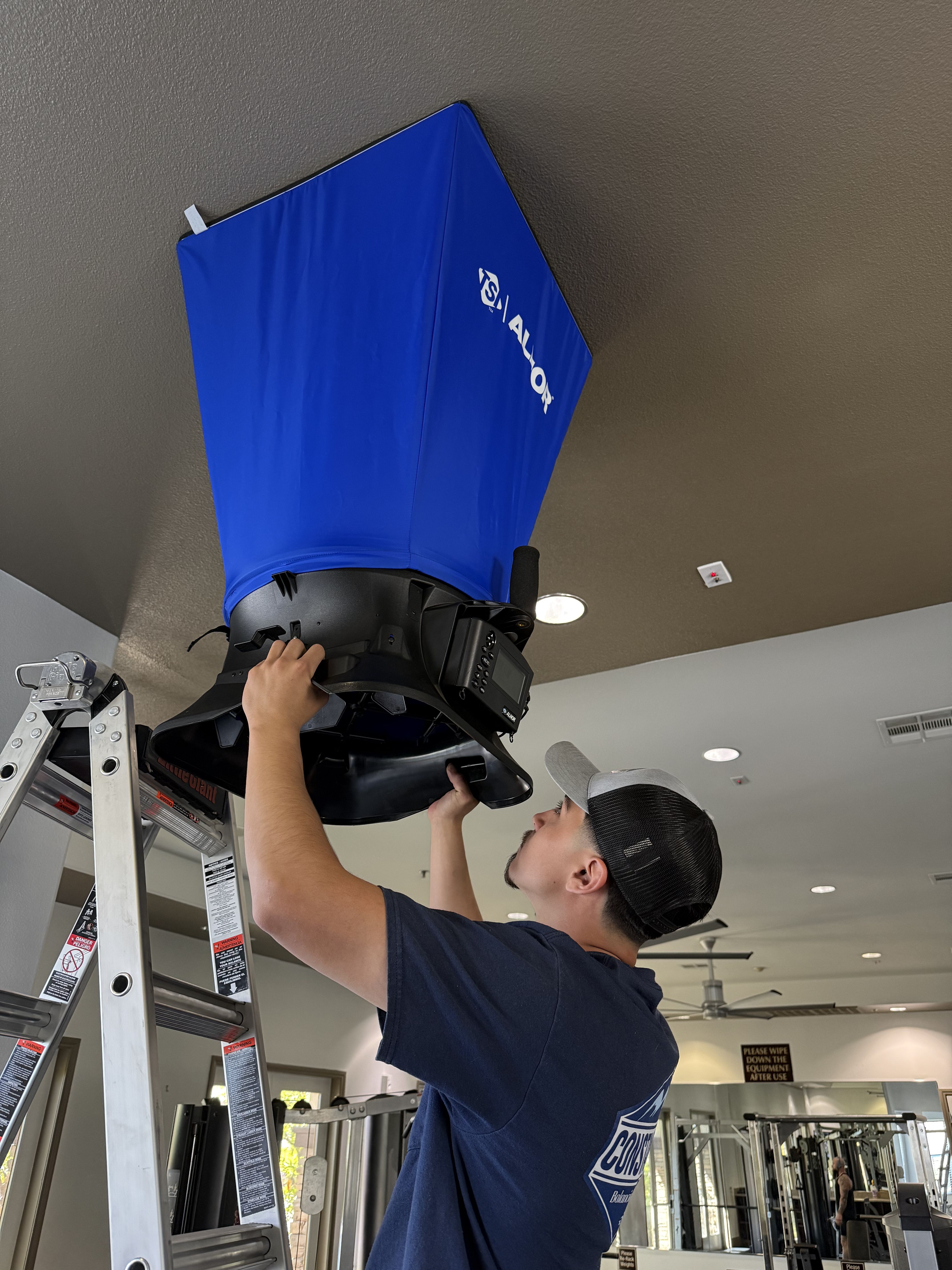
Ask for a photo of their instrument set before they show up. At minimum, a commercial air balance in Las Vegas, NV needs:
- Calibrated flow hood (ALNOR, TSI, or equivalent) with current calibration certificate
- Digital manometer capable of differential pressure down to 0.001 in w.c. for pressure-relationship testing
- Combustion analyzer for any gas-fired equipment — O2, CO, CO2, stack temp
- Hot-wire anemometer for duct velocity traverses on trunk lines
- Tachometer for fan RPM verification
- Infrared thermometer for coil delta-T and surface temperature
If the contractor says they’ll “rent what they need” — pass. Rented instruments with unknown calibration history are how balance reports become fiction.
What Deliverables Should Be Written Into the Contract?
- Before/after CFM readings at every supply diffuser and return grille, in table form
- Static pressure readings across filters, coils, and supply/return trunks
- Pressure relationship data between every zone pair that has a design relationship
- Outside air and exhaust CFM verification against ASHRAE 62.1 minimums
- Combustion analysis on every gas-fired unit
- Photos of every major adjustment (dampers, fan speed changes, belt tension)
- Recommendations ranked by estimated impact, with labor and material estimates for each
- Certification signature from the on-site lead technician, not a generic company stamp
What Are the Red Flags That Should Kill a Bid Immediately?
- “We balance by feel.” No balance professional says this. Every adjustment is a number.
- No static pressure in the scope. If they don’t read static before balancing, they are guessing at the rest.
- Same-day balance on a 10,000 sq ft building. Not possible to do correctly. Two days minimum on anything medium or larger.
- No written report included in base price. The report is the deliverable. If it’s an upcharge, the base scope is incomplete.
- Vague certifications. “We’re certified” is not a certification. Ask for the card number and the issuing body.
- Pressure to replace equipment before balancing. A balance-first contractor measures your existing system before recommending new. A replacement-first contractor gets paid more on new equipment.
How Much Should a Commercial Air Balance Cost in Las Vegas, NV?
Pricing varies with building complexity, but the realistic ranges for Las Vegas, NV commercial work are consistent enough to use as a sanity check against any bid.
| Building Size | Typical Price Range | Red Flag If |
|---|---|---|
| Under 5,000 sq ft | $900 to $1,800 | Quote under $600 or over $3,500 |
| 5,000 to 15,000 sq ft | $1,800 to $3,500 | Under $1,200 or over $6,000 |
| 15,000 to 40,000 sq ft | $3,500 to $7,500 | Under $2,500 or over $12,000 |
| 40,000+ sq ft | $7,500+ | Under $5,000 (underscoped) or over 2x highest competing bid |
Bids far below range usually skip steps. Bids far above usually include replacement equipment you don’t need.
Should the Contractor Subcontract Any Part of the Work?
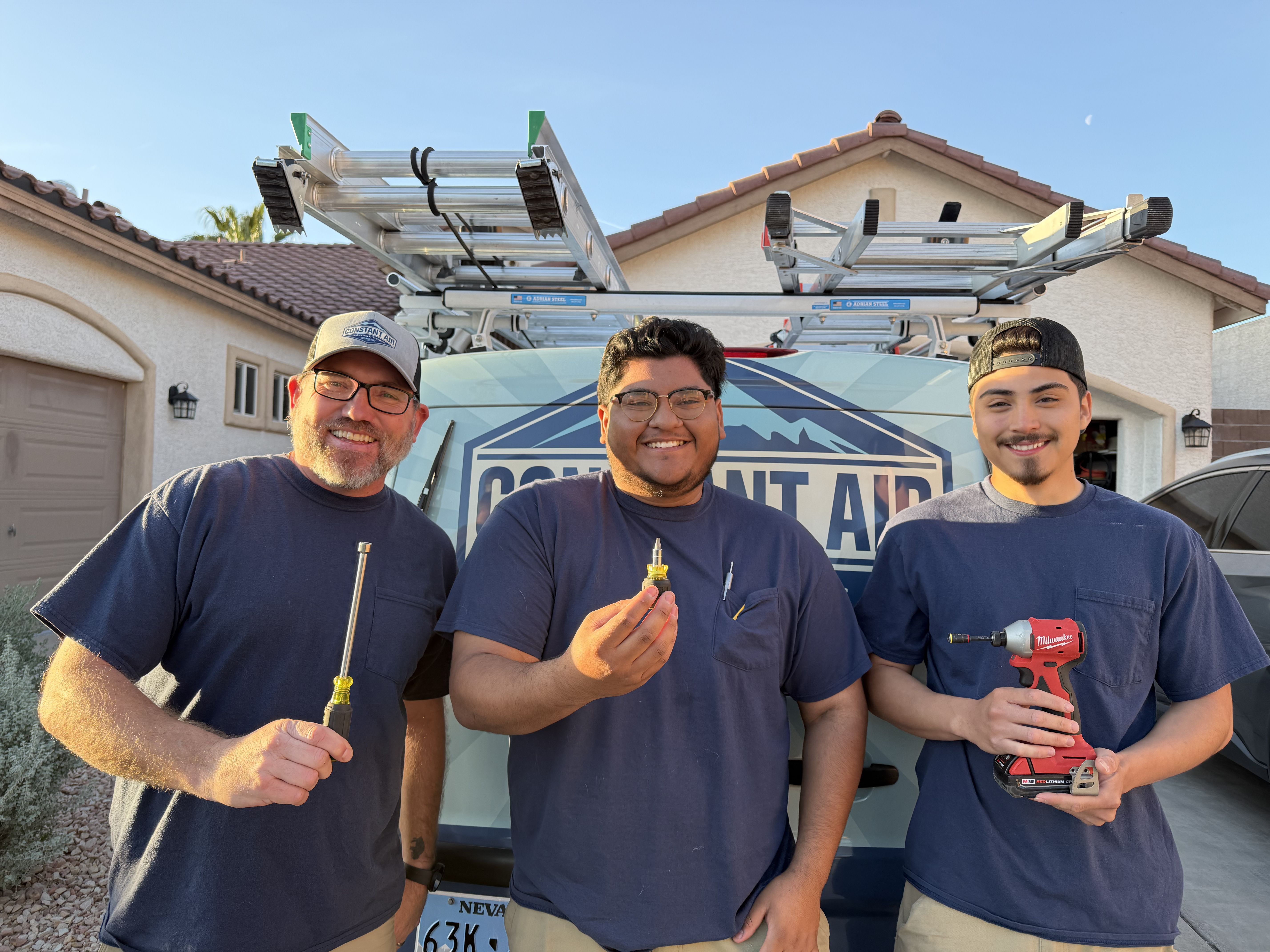
No. Commercial air balancing is not a scope that subdivides cleanly. The lead technician who reads static pressure needs to be the same person who reads CFM, adjusts the dampers, and writes the report. At Constant Air Balancing & Services, every project is staffed with in-house NCI-certified technicians. We do not subcontract balance work, ever.
What Should the Site Walk Look Like?
A qualified contractor spends 30 to 60 minutes on the initial site walk, asks to see mechanical drawings, listens to your tenant complaint log, and asks about recent renovations. A contractor who walks through in 10 minutes and hands you a flat-rate bid is pricing from a template, not from your building.
What Should a Post-Balance Follow-Up Look Like?
A 30-day follow-up is standard for any commercial balance in Las Vegas, NV. The contractor should return, re-read a sample of diffusers, confirm no drift, and adjust if needed. If the contract does not include a follow-up, add it before signing.
Schedule Commercial Air Balancing in Las Vegas, NV
If you are evaluating commercial air balancing contractors in Las Vegas, NV, call Constant Air Balancing & Services at (702) 840-5163 or request a written proposal online. We’ll walk your building, review your drawings and energy bills, and give you a line-item scope before you sign. Every item on this checklist is in our base scope. No upcharges for the written report, no subs, no guessing.