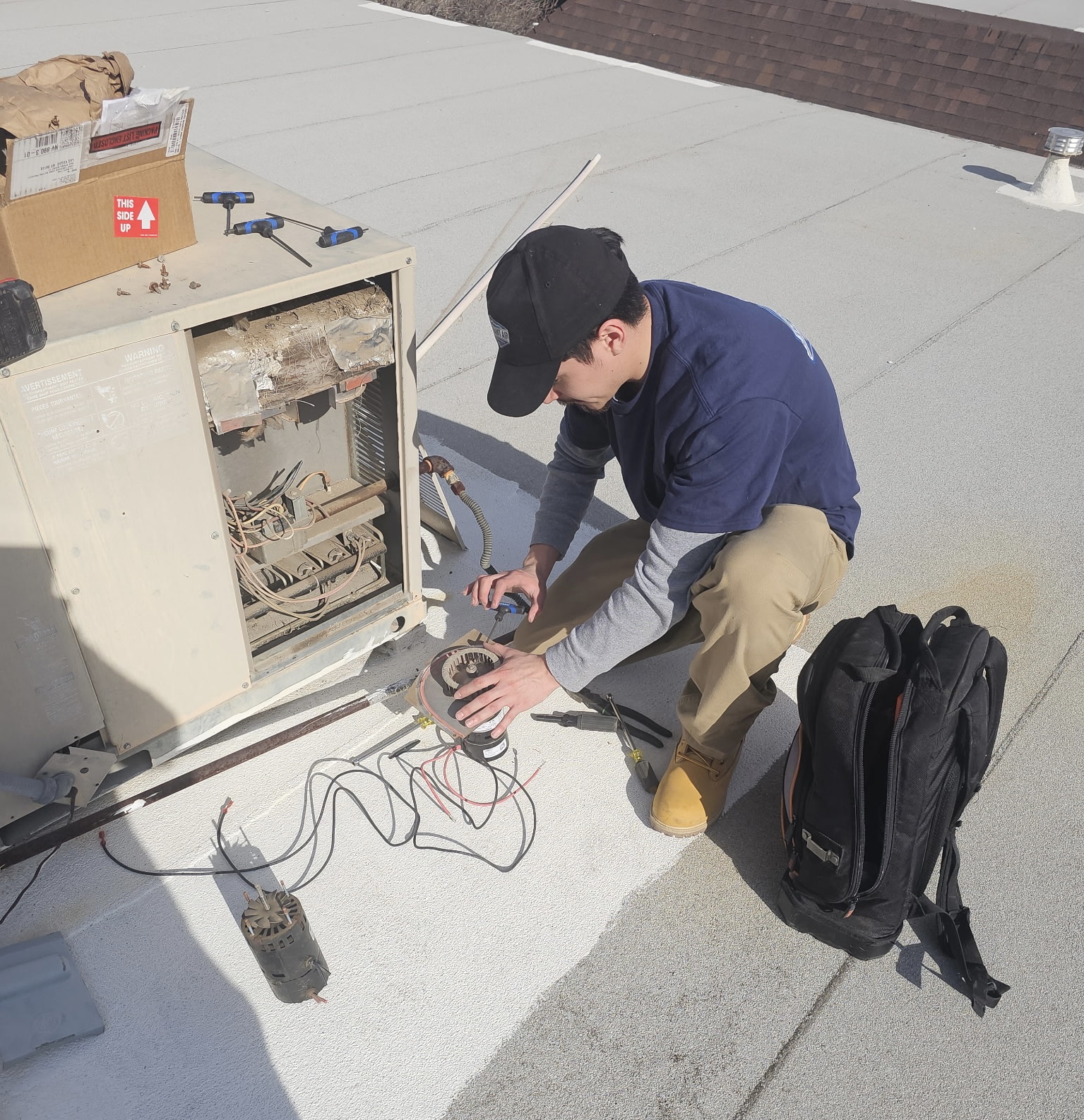
Schedule your Summerlin South furnace tune-up in October or early November. The mild desert winter is exactly why it gets skipped, and that is the trap: a furnace that idles ten months a year is the one most likely to fail on the first cold night. A real tune-up is combustion analysis plus electrical and safety checks, not a filter swap and a sticker.
Summerlin South winters are gentle. The furnace might run a handful of weeks across December, January, and February, and many evenings the heat barely kicks on at all. So homeowners reasonably figure a unit that does so little does not need service. That logic is backwards, and it is the most expensive assumption in desert HVAC.
Why a Lightly-Used Furnace Is the Risky One
A furnace that idles for ten months gives problems a long, quiet runway to develop. Dust settles on the flame sensor. The hot-surface ignitor ages past its three-to-seven-year window without anyone seeing the slow-start warning signs, because nobody is asking it to start. A vent that sat unused all summer can collect debris or a nesting critter. Then the first real cold snap rolls onto the western shelf of the valley, the furnace is asked to go from completely cold to full fire on its single hardest night, and a part that would have been a cheap October repair becomes a 10 PM January no-heat call at emergency rates. The light usage is not protection. It is the setup.
What a Real Tune-Up Should Actually Mean
A real Summerlin South furnace tune-up is a 60-to-90-minute diagnostic and service procedure. It is not a walk-in, change-the-filter, slap-a-sticker, leave visit. That is a visit, not a tune-up, and the visit-only approach misses most of what matters. The real checklist:
Combustion analysis. A Bacharach analyzer measures CO output, oxygen, stack temperature, and draft pressure. This is the safety core of the whole job and the part a filter-swap visit always skips.
Heat exchanger inspection. Visual where accessible, plus electronic flame-rectification testing on serviceable models, to catch a crack that would send combustion byproducts into the breathing air.
Ignitor and flame sensor service. Cleaning the flame sensor and checking the ignitor for the soft-failure signs that precede a hard no-light.
Gas valve and manifold pressure verification. Confirming the burner is getting the right gas pressure.
Blower motor and capacitor measurement. Amp draw and capacitor microfarads, to catch a fade six to eighteen months before a hard failure.
Thermostat, condensate, and airflow. Thermostat calibration, condensate trap cleaning on high-efficiency units, and airflow measurement at the supply registers. The full service detail lives on our Summerlin South furnace tune-up page.
Common Findings, Most of Them Cheap
On a Summerlin furnace the findings are usually maintenance items, not equipment failures. A dirty flame sensor causes a five-to-thirty-second lockout and cleans in minutes. A fading ignitor in its replacement window is a preventive swap. A blower wheel loaded with a year’s worth of summer cooling dust gets cleaned to restore design airflow. A weak run capacitor on the blower motor is an inexpensive part if caught at a tune-up instead of an emergency call. A manifold pressure that has drifted out of spec gets reset. A condensate drain clogged on a 90-plus AFUE unit gets cleared. Catch them in October and the furnace is reliable when the cold arrives. Wait, and the same parts cost emergency dispatch on the worst night, often 25 to 40 percent more.
The Tight-Home Safety Angle
Newer Summerlin South homes are built tight for energy efficiency, which is good for the power bill and adds one safety wrinkle for combustion. In a well-sealed home, a back-drafting flue or a weak induced-draft motor has less margin to vent combustion gases safely. That is why we verify draft pressure at every tune-up, to confirm the venting system is moving combustion gases out of the home rather than back into a sealed envelope. Carbon monoxide is the reason this whole job exists. CO output above 100 ppm in the flue is shutdown territory, and so is a cracked heat exchanger. We do not work around a safety issue to keep heat running. If we find one, we shut the unit down and walk you through the next step.
The First-Fire Dust Smell, Explained
Every fall we get calls from Summerlin homeowners worried that something is burning the first time the heat comes on. Almost always it is harmless, and understanding why is worth a paragraph. A desert furnace shares its cabinet, blower, and ductwork with the cooling system that ran nonstop all summer, so by heating season the heat exchanger and the surrounding compartment are coated in a season of fine desert dust. When the burner lights for the first time in months, that dust bakes off the hot metal surface and you get a scorched smell for a cycle or two. It is the same reason a space heater smells the first time you switch it on in winter. A tune-up gets ahead of it by cleaning the blower wheel and the burner compartment before the first cold night, so the system does not push a plume of burnt dust and its odor through every register in the house on the evening you finally need heat.
There is a line, though, between ordinary dust and a real problem, and it is worth knowing where it sits. If the smell fades after a couple of cycles, it was dust. If it is strong, keeps returning after the furnace has run for a day, or comes with visible soot or a hot electrical odor, shut the furnace off and call for service, because those symptoms point to something beyond accumulated dust: a fouled burner, an overheating motor, or a wiring problem. This is also exactly why combustion analysis belongs in every tune-up. A furnace can smell fine and still be producing carbon monoxide at the flue if combustion has drifted or the venting has degraded over a long idle summer, and the only way to know is to measure it. The nose catches dust; the analyzer catches the dangerous stuff the nose cannot.
Why October and November Is the Window
Las Vegas HVAC crews get slammed with no-heat emergency calls the moment the first cold snap hits in late November, and from December through February the schedule is mostly reactive. Book in October or early November and the schedule is open, parts are easy to source if anything needs replacing, any repair found can be done at planned rates instead of emergency rates, and the heat is working when you need it. You can see the range of work we do across the area on our Summerlin South service page.
Summerlin South Furnace FAQ
My furnace barely runs, do I really need a tune-up?
Yes, and arguably more than a hard-running one. A unit that idles ten months a year is the one most likely to fail on its first cold night, because the warning signs go unnoticed. The tune-up verifies it fires safely before that night arrives.
How often should I tune up a Summerlin South furnace?
Annually for furnaces over 8 years old or with prior reliability issues. Every 2 years for newer units with religious filter changes. Combustion analysis and safety checks should be annual on any gas-fired equipment.
What if I have a heat pump instead of a gas furnace?
Many Summerlin South homes do. Heat pumps get a parallel maintenance: refrigerant pressure check, defrost cycle test, electric backup heat verification, plus the standard airflow and electrical checks. They run year-round here, so semi-annual maintenance is the standard.
How long does the tune-up take?
60 to 90 minutes per furnace. The larger two and three-story homes here often have two furnaces, so plan on roughly double for a dual-system home. Combustion analysis adds about 15 minutes per unit.
Will you push me to replace the furnace?
No. We tune up, we tell you what we find, and if a safety issue exists we explain it and let you decide. Replacement is recommended only when the math justifies it.
Book Your Summerlin South Furnace Tune-Up
28 years of HVAC experience across Summerlin South and the Las Vegas valley. Combustion analysis and safety checks, not a sticker.
Free Quote (702) 840-5163Read our full Summerlin South Furnace Tune-Up page · More posts · Get a free quote