A short heating season does not mean furnace choice is trivial. It means the math is different. Mild-climate homes are the easiest to oversize, the runtime often does not justify the highest-efficiency tier, and the winter you are heating for is also the driest indoor air of the year. A right-sized furnace, sized from a real load calculation and commissioned with airflow measurements, beats a big one every time.
Nobody moves to Las Vegas for the winters, and that is exactly why furnace decisions here go wrong. The heating season is short enough that homeowners give the choice five minutes of thought, and plenty of installers give it about the same. Then January arrives, the new furnace roars to temperature and shuts off, the back bedrooms never warm up, everyone’s sinuses feel like sandpaper, and the house crackles with static. All of that traces back to decisions made on install day.
Mild Winters Change the Sizing Math
Furnaces are rated by heating output, and the natural instinct is to buy plenty of it. In Chicago that instinct costs you some efficiency. In Las Vegas it ruins comfort. Our design heating load is modest: winter nights dip below freezing a handful of times a year, and most of the season sits in the 40s. A furnace sized for a fictional hard winter spends its whole life short-cycling: blasting heat for a few minutes, tripping its limit, shutting down before the air has ever mixed through the house. Rooms far from the thermostat never catch up, and the constant cycling wears the ignitor, the inducer, and the heat exchanger years ahead of schedule.
The fix is unglamorous: calculate the home’s actual heat loss, size to it, and prefer staged or modulating equipment that can run low and long. A furnace that runs steady, quiet, 40-minute cycles will out-comfort a bigger one running eight-minute bursts in every measurable way. Our furnace installation page covers the equipment options in detail.
How Much Efficiency Should You Buy?
Efficiency tiers matter differently here than in cold country. A high-efficiency condensing furnace recovers its premium through runtime, and a Las Vegas furnace simply does not run that many hours a year. Sometimes the highest tier still makes sense, especially when venting logistics already favor it or the home is large. Often the smarter spend is a mid-tier furnace plus better distribution: sealed ducts, a properly sized filter cabinet, dampers set by measurement. We would rather put your money where the comfort is than where the brochure says. We walk through that honestly once we have measured the house, and if the answer is the cheaper furnace, that is the answer you get.
The Changeout Itself
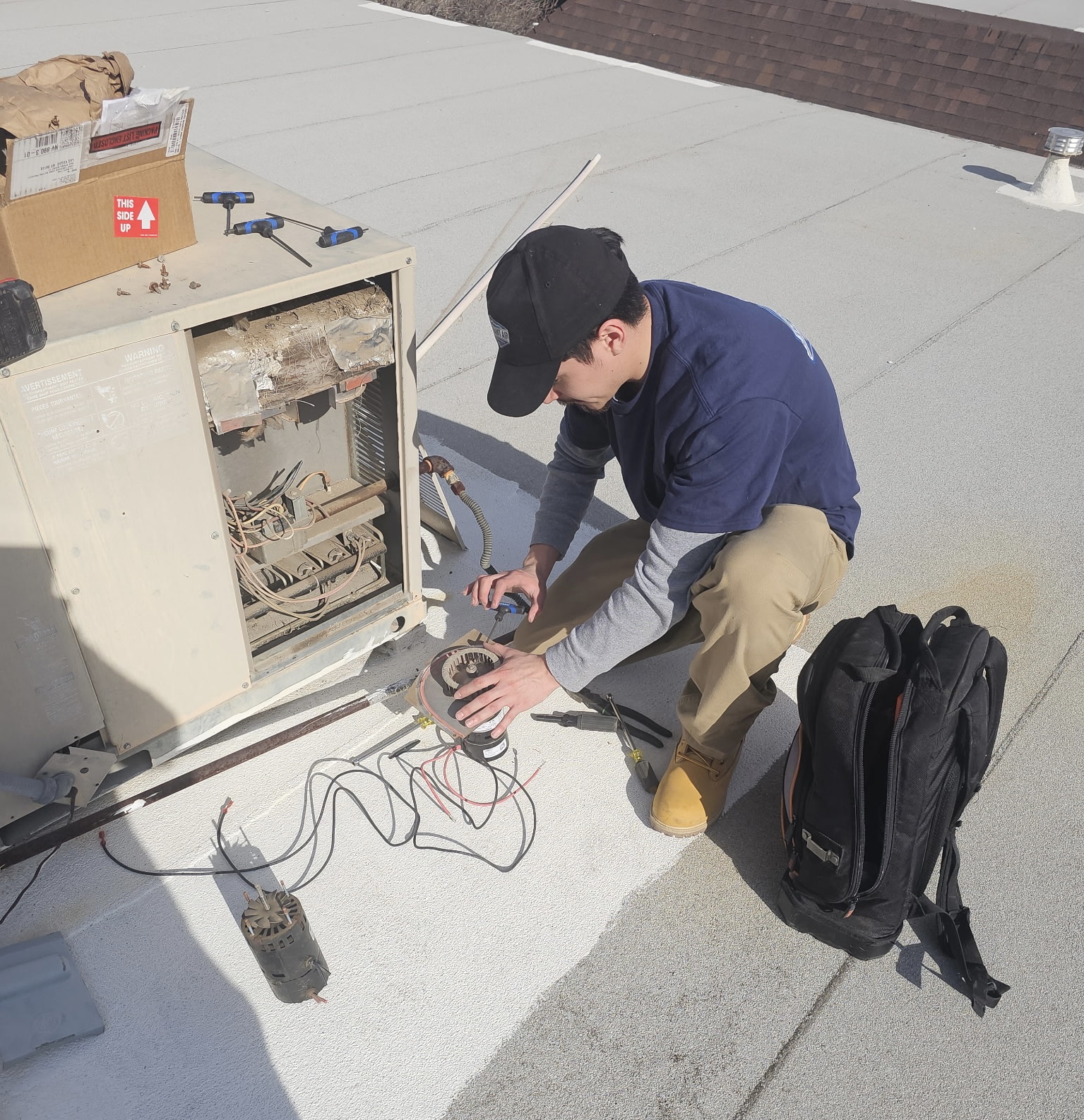
A furnace changeout in an existing home usually takes a day. The parts that separate a clean job from a callback are mostly invisible when the doors close: gas line pressure-tested rather than soap-bubbled and assumed, venting sized and pitched to the manufacturer’s tables, combustion air verified, condensate handled correctly on condensing models, and the blower configured to the ductwork’s real static pressure instead of left on factory defaults. That last one is where our instruments come out. High static is epidemic in valley homes, and a new furnace pushing against a choked return will be loud, inefficient, and short-lived no matter the brand.
Then commissioning: we run the system and measure delivery at the registers, room by room, the same air balancing discipline we bring to every install. Heat that reaches the thermostat but not the nursery is not heat you paid for. If your furnace shares ductwork with your AC, and it almost certainly does, this balancing pass improves both seasons at once. Considering the cooling side at the same time? Our post on what a proper HVAC installation looks like covers full-system replacement.
Winter Here Is Dry Season: Solve Both at Once
The weeks your furnace runs are the driest indoor air of the year. Heated desert air routinely drops a home into the teens for relative humidity, which is why winter brings itchy skin, nosebleeds, static shocks, and gapping hardwood floors. Install day is the cheapest moment to fix that for good: a whole-home humidifier mounts on the new furnace in the same visit, shares its controls, and holds the house in the healthy 35 to 45 percent range all season. We wrote a full guide to whole-home humidifier installation and the dry-air symptoms it ends. If those winter complaints sound like your house, handle the furnace and the humidity as one project.
Furnace Installation FAQ
When is the best time to replace a furnace in Las Vegas?
Fall, before the first cold snap, when schedules are open and you are not choosing equipment while the house is cold. If the old furnace has already failed mid-season, we handle that too, but planned replacements always go smoother.
How much does a furnace installation cost?
It depends on the equipment stage and efficiency tier, the venting the home needs, and the condition of the ductwork. We give you a firm quote after a real look at the house. Synchrony financing is available if you want to spread it out.
Should I add a humidifier during the furnace install?
If your winters come with itchy skin, static, or hardwood gaps, yes. Mounting it during the changeout costs less than a separate retrofit, and the controls integrate from day one. The humidifier only runs when the house needs it, so there is no downside in summer.
Is a heat pump a better fit than a furnace here?
Sometimes. Mild winters are exactly where heat pumps shine, and pairing one with your cooling replacement can make sense. We size and compare both honestly, and our heat pump service team supports whichever direction you choose.
Why do some rooms stay cold even with a new furnace?
Because the ductwork, not the furnace, decides where the heat goes. Undersized runs, leaky joints, and unset dampers starve the far rooms. That is an airflow problem, and it is measurable and fixable. It is also the exact specialty this company was built on.
A Furnace Sized for the Winter You Actually Have
Load-calculated sizing, honest efficiency advice, and every install verified at the registers. Family-run, 28 years in the trade.
Free Quote (702) 840-5163Read our full Furnace Installation page · More posts · Get a free quote