
The single most common complaint we hear from Las Vegas, NV homeowners is some version of “my bedroom is always hot” or “my home office is freezing.” The thermostat shows 74°F. The living room feels fine. But a specific room — usually upstairs, over the garage, or on a corner — is a different climate entirely. If that describes your home, you don’t need a new HVAC system. You need air balancing.
This post explains why Las Vegas, NV homes develop hot and cold rooms, why bigger equipment doesn’t solve it, and how a single balancing visit fixes 90% of cases. Written from 28 years of residential work by Constant Air Balancing & Services.
Why Do Some Rooms Get So Hot in My Las Vegas, NV Home?
Hot rooms are almost always rooms that receive less airflow than they need. The reasons vary, but the four most common in Las Vegas, NV homes are:
- Duct run too long. A ceiling register at the far end of a 40-foot duct run delivers less air than one at the 10-foot run. The farther room always runs hotter.
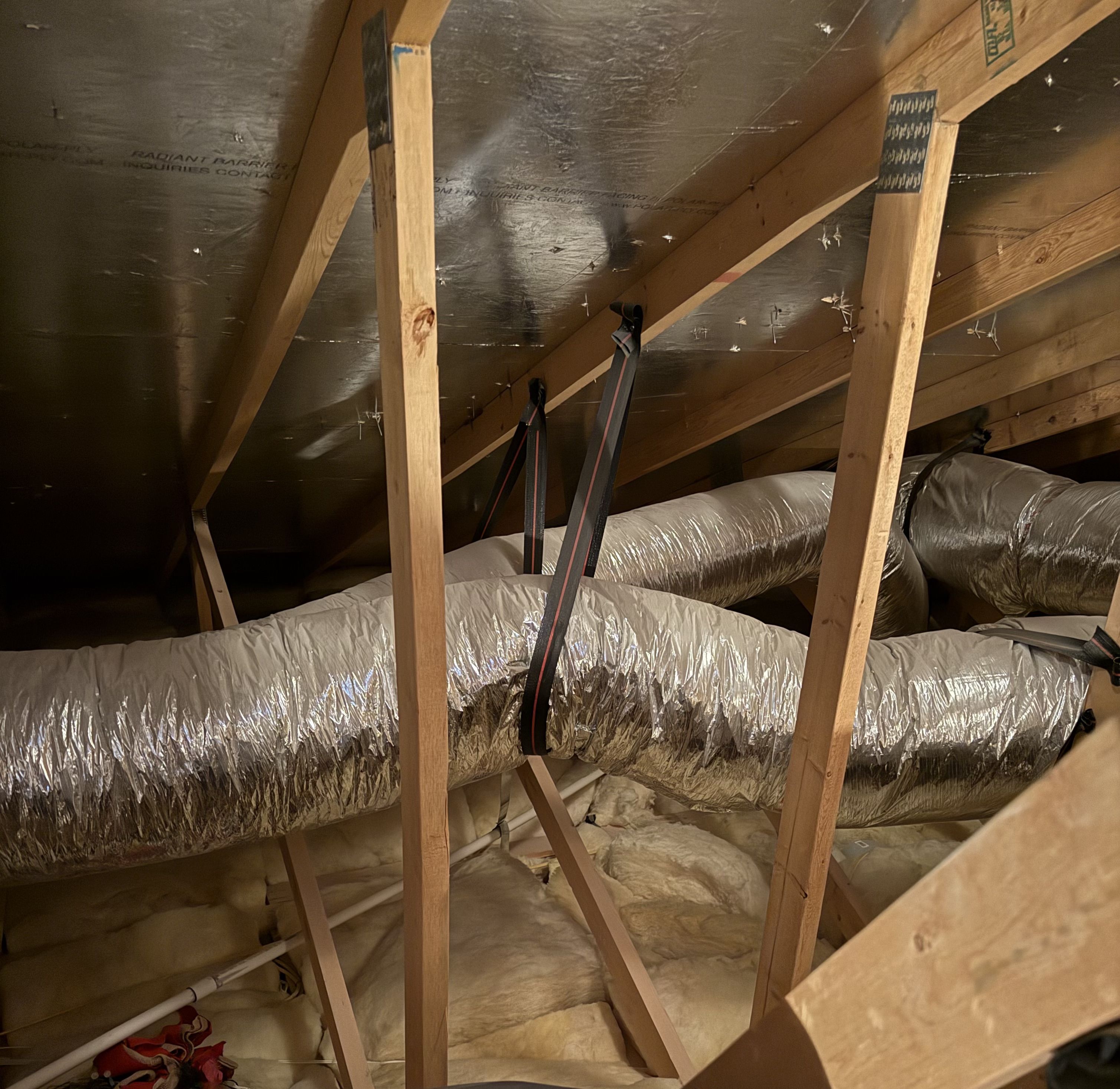
- Damper partially closed. Someone moved a volume damper in the attic and the zone downstream is starved.
- Register blocked or undersized. A ceiling register covered with a throw rug blockade, or sized for a smaller room.
- Solar load higher than design. West-facing rooms in Las Vegas, NV take the afternoon sun load, and most houses weren’t designed for the actual load they carry in July.
Why Do Upstairs Bedrooms Get So Hot?
Physics. Hot air rises. If your home has a single HVAC unit serving both floors, the upstairs gets more of the heat and less of the cooling. Bedrooms over the garage add insult to injury because the garage is unconditioned and sun-baked.
Why Is My Home Office Always Cold?
Usually the opposite — too much airflow. Either the duct run is short and easy, the damper is wide open, or the room is oversized on registers for its load. A balance identifies which and trims the excess back.
Won’t a Bigger HVAC System Fix the Problem?
No. A bigger system blows more air total, but it blows the same proportion to each room. If your hot bedroom gets 50% of its design airflow today, a bigger system will give it 50% of a higher design. Still proportionally starved. Still hot. The proportion is the problem, not the total capacity.
This is the single most expensive mistake Las Vegas, NV homeowners make: paying $12,000 for new equipment when the fix was a $750 balance.
What About Closing Registers in Cold Rooms to Push Air to Hot Rooms?
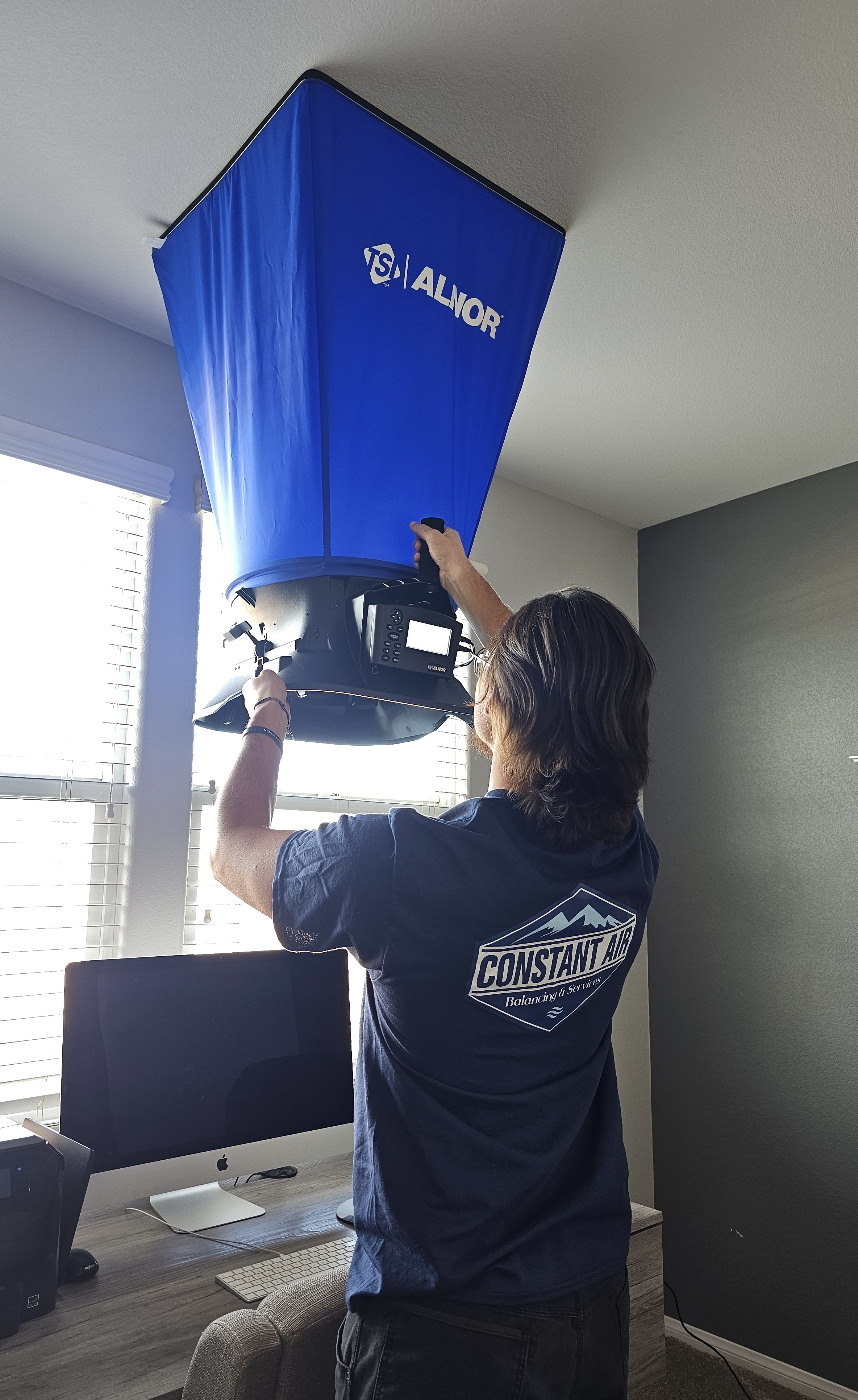
Tempting, rarely effective, sometimes harmful. Closing registers increases static pressure in the duct system. That static pressure fights the blower, reduces total CFM, and can overheat the blower motor. If you’re going to redirect airflow, use proper volume dampers (in the ductwork, not at the register) and measure the result with a flow hood.
How Does Residential Air Balancing Actually Fix Hot and Cold Rooms?
In three steps:
- Measure actual CFM at every register. Now we know the specific delta per room from design.
- Adjust volume dampers in the ductwork to increase airflow to starved rooms and decrease to over-supplied rooms.
- Re-measure to verify. Every room is within 10% of design CFM.
Usually the temperature difference between the coldest and hottest room drops from 8-10°F to 2-3°F after a proper balance. Enough that nobody’s fiddling with the thermostat anymore.
Are There Cases Where Balancing Alone Won’t Fix It?
Yes. If the ductwork itself is undersized for the room, no amount of damper adjustment will push enough air through. In those cases, we recommend adding a duct run or upsizing an existing one. A balance visit identifies whether your problem is adjustable or whether ducting needs upgraded — before you spend money on equipment.
What About Zoning Systems?
A zoning system (dampers + multiple thermostats controlling different parts of the home) can help with multi-story or large homes, but it’s a $3,000 to $8,000 solution for a problem that often just needs a $750 balance first. Try balancing before zoning.
How Long Does the Fix Last?
5 to 7 years typically, unless something changes — renovation, new HVAC equipment, ductwork modification, or a major filter type change. A one-time balance holds.
What Do I Need to Do Before the Balancing Tech Arrives?
- Make a list of which rooms run hot and which run cold
- Note what time of day the problem is worst (morning, afternoon, evening)
- Make sure the attic is accessible — most volume dampers live there
- Move furniture away from any returns (blocked returns throw the whole balance off)
- Have your most recent electric bill handy if possible
Is My Home Eligible for Balancing?
If you have central HVAC and accessible ductwork (attic, basement, or crawlspace), yes. Mini-split systems don’t balance the same way because each indoor unit is its own zone. For mini-splits, we adjust individual unit settings instead.
How Do I Know If This Is My Problem?
Walk the house with a thermometer at the same time of day. If the reading in your coldest room vs your hottest room is more than 4°F different, you have an airflow imbalance. The bigger the spread, the worse the imbalance.
Schedule Residential Air Balancing in Las Vegas, NV
Call Constant Air Balancing & Services at (702) 840-5163 or book a home visit online. We serve Las Vegas, Henderson, Paradise, Spring Valley, and Enterprise. One morning on site usually fixes the problem for years.